Join us on a literary world trip!
Add this book to bookshelf
Grey
Write a new comment Default profile 50px
Grey
Subscribe to read the full book or read the first pages for free!
All characters reduced
War and Peace - cover

War and Peace

Leo graf Tolstoy

Translator Aylmer Maude, Louise Maude

Publisher: DigiCat

  • 0
  • 0
  • 0

Summary

In "War and Peace," Leo Tolstoy masterfully weaves a sprawling narrative that interlaces the lives of several aristocratic families against the backdrop of the Napoleonic Wars. The novel employs a unique blend of historical detail and philosophical exploration, presenting a vivid depiction of this tumultuous era. Tolstoy's rich prose captures both the grandiosity of war and the intimate struggles of individual characters, revealing his profound insights into the nature of fate, free will, and human connectivity. The intertwining of historical events with deeply personal narratives exemplifies the epic scope of the novel, which transcends mere chronicle to deliver a reflective meditation on society and history. Leo Tolstoy, a Russian author and moral philosopher, was profoundly influenced by his own experiences in warfare and his subsequent introspection. Writing during a period of intense social change and personal awakening, Tolstoy sought to question prevailing notions of morality, duty, and human existence. His extensive life experiences and deep philosophical inquiries are evident throughout "War and Peace," encapsulating his beliefs about the complexities of life and the importance of love and understanding amid chaos. This monumental work is recommended for readers seeking not only an expansive historical narrative but also a profound exploration of human relationships and the moral dilemmas of life. Tolstoy's intricate characterizations and rich thematic depth make "War and Peace" an essential reading for anyone interested in the intersections of history, philosophy, and literature.
Available since: 05/28/2022.
Print length: 1407 pages.
Other books that might interest you

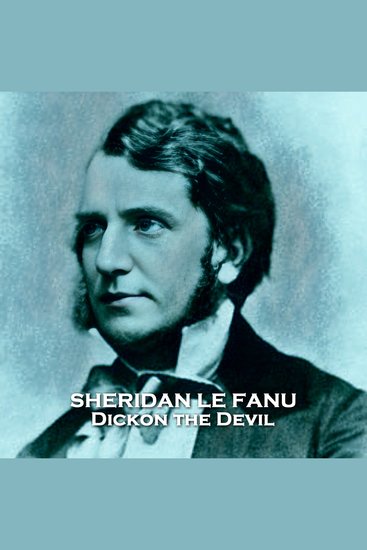
  • Dickon the Devil - From their pens to your ears genius in every story - cover

    Dickon the Devil - From their...

    Sheridan Le Fanu

    • 0
    • 0
    • 0
    Joseph Sheridan Le Fanu was born on 28th August 1814 in Dublin into a literary family with Huguenot, Irish and English roots.   
    For a time he and his siblings were tutored but Le Fanu would often immerse himself in the books of his father’s library. 
    In 1833 Le Fanu began his Law studies at Trinity College, Dublin and graduated in 1839. Although called to the bar he instead began a career in journalism.   
    He was also writing. His first fiction story ‘The Ghost and the Bonesetter’ was published in 1838.  In 1843 came the novella ‘Spalatro: From the Notes of Fra Giacomo’, a hero with a particular necrophiliac passion for an undead blood-drinking beauty, a forerunner to his later female vampire ‘Carmilla’.  
    In 1844 Le Fanu married Susanna Bennett with whom he had 4 children. The following year his first novel ‘The C'ock and Anchor’ was published. Works now flowed from his pen and with a rapid increase in family finances they moved, in 1851, to Merrion Square, Dublin, where he remained until his death.  
    In 1858 Susanna died and Le Fanu became reclusive. It was during this period that he produced some of his best work.  Working only by candlelight he wrote through the night, burnishing his reputation as a major figure of 19th Century supernaturalism with many classics including; ‘Green Tea’, ‘Mr Justice Harbottle’, and ‘In a Glass Darkly’.  
    Joseph Thomas Sheridan Le Fanu died in Merrion Square in his native Dublin on February 7th, 1873, at the age of 58.
    Show book
  • A Christmas Carol - cover

    A Christmas Carol

    Charles Dickens

    • 0
    • 0
    • 0
    The greatest Christmas story ever written is brought to life by the inimitable Jason Isaacs.
    ''If I had my way, every idiot who goes around with Merry Christmas on his lips, would be boiled with his own pudding, and buried with a stake of holly through his heart. Merry Christmas? Bah humbug!'
    
    To bitter, miserly Ebenezer Scrooge, Christmas is just another day. But all that changes when the ghost of his long-dead business partner appears, alongside the Ghost of Christmas Past, Present, and Yet to Come, warning Scrooge to change his ways before it's too late.
    Show book
  • By the Rule of Contrary (Unabridged) - cover

    By the Rule of Contrary...

    L. M. Montgomery

    • 0
    • 0
    • 0
    Lucy Maud Montgomery (November 30, 1874 - April 24, 1942), published as L. M. Montgomery, was a Canadian author best known for a series of novels beginning in 1908 with Anne of Green Gables. The book was an immediate success. The title character, orphan Anne Shirley, made Montgomery famous in her lifetime and gave her an international following.
    By the Rule of Contrary: "Look here, Burton," said old John Ellis in an ominous tone of voice, "I want to know if what that old busybody of a Mary Keane came here today gossiping about is true. If it is well, I've something to say about the matter!
    Show book
  • The Odyssey - cover

    The Odyssey

    Homer Homer

    • 0
    • 0
    • 0
    "The Odyssey" is an ancient Greek epic poem traditionally attributed to Homer, dating back to the 8th century BCE. It is the sequel to "The Iliad" and focuses on the hero Odysseus's long journey home to Ithaca after the fall of Troy. Along the way, he encounters mythical creatures, gods, and goddesses, and undergoes numerous trials and adventures. The epic also follows his wife Penelope and son Telemachus as they contend with suitors who have invaded their home during Odysseus's absence. "The Odyssey" explores themes of heroism, homecoming, loyalty, and the human condition.
    Show book
  • A Ghost Story - From their pens to your ears genius in every story - cover

    A Ghost Story - From their pens...

    Mark Twain

    • 0
    • 0
    • 0
    Samuel Langhorne Clemens was born in Florida, Missouri on the 30th November 1835 and is far better known by his pen name of Mark Twain.  An American writer and humorist of the first order he is perhaps best known for his novels ‘The Adventures of Tom Sawyer’ and its sequel ‘The Adventures of Huckleberry Finn’ which are often described with that mythic line The Great American Novel. 
    Twain grew up in Hannibal, Missouri which would later provide the backdrop to these great novels.  Apprenticed to a printer he also became a typesetter and then a master riverboat pilot on the Mississippi.  Later, heading west with his brother Orion to make his fortune, he failed at gold mining and instead turned to journalism and thence his true calling as a writer of humorous stories where his wit and humor sparkled from every paragraph, his craft evident with every page and punctured target. 
    A staunch supporter of copyright protections this helped him keep much of the wealth his writing created, though much money was also lost on investments that he pursued in his love for science and technology as well as investing in his own inventions. 
    Twain was born during a visit by Halley’s comet, and he predicted that he would go out with it as well.  He died the day after its subsequent return on 21st April 1910, at his house, Stormfield, located in Redding, Connecticut.
    Show book
  • Gulliver’s Travels (Legend Classics) - cover

    Gulliver’s Travels (Legend...

    Jonathan Swift

    • 0
    • 0
    • 0
    “Every man desires to live long, but no man wishes to be old.” 
    As a survivor of a shipwreck, Lemuel Gulliver encounters some entirely absurd things – at first, he is in the land of Lilliputians, the tiny men; but later he ventures to the land of the giants. The tale continues to oscillate between the extremes as he meets immensely wise and scientifically aware people before being faced with excessive self-preoccupation and ignorance. Whatever that societal order, Gulliver consistently is a witness to the abuse of power. The satire often overemphasises the contraries in order to accentuate our individual and societal flaws and proneness to being corrupt and biased. In such a distinct way it rebukes human narrow-mindedness and accentuates our subjectivity. 
    The novel’s multivalence has made it a celebrated children’s bedtime read – in particular, the first book – as well as a treasury of satirical metaphors and allusions that expose human and societal flaws in general and those of the English nobility in particular. The novel is an answer to Robinson Crusoe – it mocks Defoe’s protagonist’s too-good-to-be-true human aptness and reason. While some might find Swift’s modus operandi misanthropic, others will see him as a pragmatist who exemplifies how the excesses and polarities are detrimental and yet inescapable. Silly and bizarre, thought-provoking and alarming, this work is meant to be read and re-read as equally a jolly story and a philosophical or political collage of insights. 
    The Legend Classics series:Around the World in Eighty DaysThe Adventures of Huckleberry FinnThe Importance of Being EarnestAlice's Adventures in WonderlandThe MetamorphosisThe Railway ChildrenThe Hound of the BaskervillesFrankensteinWuthering HeightsThree Men in a BoatThe Time MachineLittle WomenAnne of Green GablesThe Jungle BookThe Yellow Wallpaper and Other StoriesDraculaA Study in ScarletLeaves of GrassThe Secret GardenThe War of the WorldsA Christmas CarolStrange Case of Dr Jekyll and Mr HydeHeart of DarknessThe Scarlet LetterThis Side of ParadiseOliver TwistThe Picture of Dorian GrayTreasure IslandThe Turn of the ScrewThe Adventures of Tom SawyerEmmaThe TrialA Selection of Short Stories by Edgar Allan PoeGrimm Fairy TalesThe AwakeningMrs DallowayGulliver’s TravelsThe Castle of OtrantoSilas MarnerHard Times
    Show book