Unisciti a noi in un viaggio nel mondo dei libri!
Aggiungi questo libro allo scaffale
Grey
Scrivi un nuovo commento Default profile 50px
Grey
Iscriviti per leggere l'intero libro o leggi le prime pagine gratuitamente!
All characters reduced
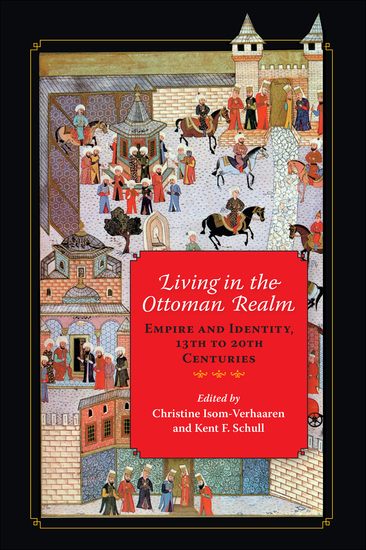
Living in the Ottoman Realm - Empire and Identity 13th to 20th Centuries - cover

Living in the Ottoman Realm - Empire and Identity 13th to 20th Centuries

Kent F. Schull, Christine Isom-Verhaaren

Casa editrice: Indiana University Press

  • 0
  • 0
  • 0

Sinossi

Living in the Ottoman Realm brings the Ottoman Empire to life in all of its ethnic, religious, linguistic, and geographic diversity. The contributors explore the development and transformation of identity over the long span of the empire's existence. They offer engaging accounts of individuals, groups, and communities by drawing on a rich array of primary sources, some available in English translation for the first time. These materials are examined with new methodological approaches to gain a deeper understanding of what it meant to be Ottoman. Designed for use as a course text, each chapter includes study questions and suggestions for further reading.
Disponibile da: 11/04/2016.
Lunghezza di stampa: 385 pagine.


Altri libri che potrebbero interessarti

  • The Secrets of Hygge - How to Achieve Happiness Through the Danish Method: Create a Cozy Atmosphere and Enjoy the Sense of Comfort with Loved Ones - cover

    The Secrets of Hygge - How to...

    Astrid Johansen

    • 0
    • 0
    • 0
    How would you describe that well-being you experience when you are at home and at peace with yourself and with the world around you? Here, this is the meaning of Hygge. Are you still missing the concept? If we want to speak in pictures, close your eyes and think you are sitting in your favorite armchair, in front of the lit fireplace, and holding a nice cup of coffee. This is also Hygge.You will therefore have understood that the concept of this word is not tangible and concrete. Instead, it is made up of everything that can be felt through flavors, aromas, sounds, and sensations.According to statistics, the Danes are considered to be among the happiest people in the world.The reasons are many, of course. But one of them is their constant search for happiness, for what makes them feel good. It is the Hygge philosophy, in fact. In this short manual, you will find explained in a simple way everything you need to create your cozy nest, where you can take refuge with loved ones and feel happy and protected.After all, where are you better off than in your sweet home?So don't waste your time looking elsewhere, grab your copy now!
    Mostra libro
  • Raising Confident Kids - How to Raise Happy Kind Responsible and Emotionally Intelligent Children - cover

    Raising Confident Kids - How to...

    Chloe Morgan

    • 0
    • 0
    • 0
    Do you find yourself constantly worried about your child's future?Are you struggling to instill values like kindness and responsibility in your kids?Do you wish your children could manage their emotions better?Are you tired of the daily battles and want a more peaceful household?Do you feel overwhelmed by parenting advice and don't know where to start?Are you concerned about your child's happiness and self-esteem?Do you want your kids to grow up as compassionate and emotionally intelligent individuals? 
    I understand how overwhelming and challenging parenting can be. You want the best for your children but sometimes it feels like you're swimming against the tide. It's time to change that. 
    Imagine for a second, what if you could...Enjoy a harmonious and loving household every day.See your child face challenges with confidence and resilience.Foster a deep, trusting bond with your children.Watch your child thrive in social settings and build strong friendships.Have stress-free mornings and peaceful bedtimes.Raise a child who is empathetic and kind-hearted. 
    Here’s a little sneak preview of what you’ll get:Understanding how children think and perceive the worldExploring the root causes of insecurity in kidsLearning strategies to encourage perseveranceDiscovering the impacts of negative environmentsIdentifying key influences on a child’s self-esteemAvoiding common pitfalls that undermine self-esteemPractical activities to help your child develop social skillsTeaching essential life skills from a young ageReady to transform your parenting journey? Take the first step towards a brighter, more fulfilling family life!
    Mostra libro
  • Satavahana Empire - Buddhism Trade and the Power of the Deccan - cover

    Satavahana Empire - Buddhism...

    Rolf Hedger

    • 0
    • 0
    • 0
    The Satavahana Empire, one of the earliest and most influential dynasties in ancient India, emerged in the Deccan region after the decline of the Mauryan Empire. The origins of the Satavahanas remain a subject of historical debate, but they are believed to have belonged to the Andhra region, gaining prominence as local chieftains before consolidating their rule into a powerful dynasty. Their rise marked a significant transition in Indian history, bridging the gap between the Mauryan administration and later regional powers. 
    The early history of the Satavahanas is primarily reconstructed through inscriptions, numismatic evidence, and references in ancient texts. The Puranas mention them as the Andhra dynasty, while inscriptions such as the Naneghat and Nasik inscriptions provide valuable insights into their rulers and governance. The first known ruler of the dynasty, Simuka, is credited with establishing Satavahana rule by overthrowing remnants of Mauryan authority in the Deccan and expanding his control over parts of present-day Maharashtra, Telangana, and Andhra Pradesh. His successors continued to strengthen the empire, laying the foundation for centuries of Satavahana dominance. 
    Following Simuka, his brother and successor Krishna further expanded the territory, but it was under the reign of Satakarni I that the empire gained considerable power. Satakarni I led successful military campaigns, extending his influence northward to the Narmada region and challenging the Shunga and Kshatrapa rulers. His achievements were commemorated in inscriptions and coins, some of which depict him performing Vedic sacrifices such as the Ashvamedha, indicating his aspirations for imperial legitimacy. This period also saw the Satavahanas emerging as key players in trade, administration, and culture, integrating diverse communities into their governance system.
    Mostra libro
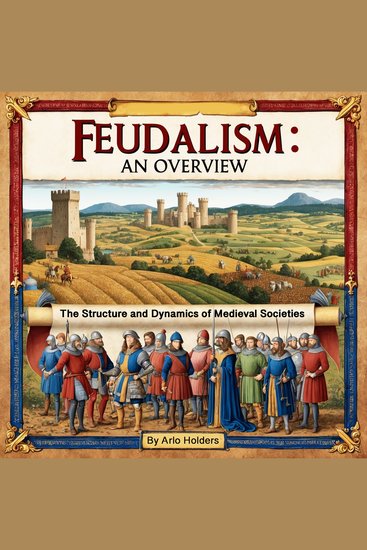
  • Feudalism: An Overview - The Structure and Dynamics of Medieval Societies - cover

    Feudalism: An Overview - The...

    Arlo Holders

    • 0
    • 0
    • 0
    Feudalism is often regarded as one of the defining features of medieval European society, deeply influencing the social, political, and economic structures from the 9th to the 15th century. At its core, feudalism is a system of reciprocal relationships based on land ownership, loyalty, and service. It is a hierarchical structure where power and land are distributed among various levels of society, creating an intricate web of obligations and rights. Understanding the foundations of feudalism requires examining its emergence, the key concepts involved, and its significance in shaping medieval societies. 
    The origins of feudalism can be traced back to the collapse of the Western Roman Empire in the 5th century. With the fall of centralized Roman authority, European territories faced instability and frequent invasions, notably from the Vikings, Magyars, and Muslims. As local rulers sought to protect their lands and people, they established systems of landholding that were based on personal loyalty rather than the centralized control of a king or emperor. This shift marked the beginning of feudalism. The need for defense and local governance led to a system where lords granted land, known as fiefs, to vassals in exchange for military service or other forms of support. The vassals, in turn, would offer protection and land to lower-ranking individuals, establishing a hierarchical pyramid of power. 
    At the heart of feudalism lies the concept of mutual obligations. Lords, who were often nobility or monarchs, provided land to their vassals, who were typically knights or lesser nobles. In return, vassals pledged their loyalty, military service, and counsel to their lords.
    Mostra libro
  • The Will to Power - An Attempted Transvaluation of All Values - cover

    The Will to Power - An Attempted...

    Friedrich Nietzsche

    • 0
    • 0
    • 0
    "The Will to Power: An Attempted Transvaluation of All Values" by Friedrich Nietzsche delves into the profound philosophical exploration of power as the fundamental driving force in human life. Compiled from Nietzsche's notes, this work presents his radical ideas on morality, culture, and the nature of existence. Nietzsche challenges conventional values, advocating for the re-evaluation of societal norms and the embracement of individual strength and creativity. This provocative text remains a cornerstone of existential and philosophical thought, inspiring deep reflection on the essence of human ambition and purpose.
    Mostra libro
  • Walking the Way of Harriet Tubman - Public Mystic and Freedom Fighter - cover

    Walking the Way of Harriet...

    Therese Taylor-Stinson

    • 0
    • 0
    • 0
    Harriet Tubman, freedom fighter and leader in the Underground Railroad, is one of the most significant figures in US history. Her courage and determination in bringing enslaved people to freedom have established her as an icon of the abolitionist movement. But behind the history of the heroine called "Moses" was a woman of deep faith. 


    In Walking the Way of Harriet Tubman, Therese Taylor-Stinson introduces Harriet, a woman born into slavery whose unwavering faith and practices in spirituality and contemplation carried her through insufferable abuse and hardship to become a leader for her people. Her profound internal liberation came from deep roots in mysticism, Christianity, nature spirituality, and African Indigenous beliefs that empowered her own escape from enslavement—giving her the strength and purpose to lead others on the road to freedom. 


    Harriet's lived spirituality illuminates a profound path forward for those of us longing for internal freedom, as well as justice and equity in our communities. As people of color, we must cultivate our full selves for our own liberation and the liberation of our communities. As the luminous significance of Harriet Tubman's spiritual life is revealed, so too is the path to our own spiritual truth, advocacy, and racial justice as we follow in her footsteps.
    Mostra libro