Junte-se a nós em uma viagem ao mundo dos livros!
Adicionar este livro à prateleira
Grey
Deixe um novo comentário Default profile 50px
Grey
Assine para ler o livro completo ou leia as primeiras páginas de graça!
All characters reduced
One Hundred Poems - cover
LER

One Hundred Poems

Kabir

Tradutor Rabindranath Tagore

Editora: DigiCat

  • 0
  • 0
  • 0

Sinopse

In "One Hundred Poems," Kabir weaves a profound tapestry of spirituality and human experience, presenting verses that resonate with the universal quest for meaning. Known for his unique stylistic fusion of folk traditions and mystical themes, Kabir's poetry transcends time and space, showcasing a blend of simplicity and depth. The collection delves into subjects such as love, devotion, and the pursuit of truth, often utilizing metaphors drawn from nature and daily life, which render his reflections both accessible and poignant within the broader context of Bhakti literature in India. Kabir, a 15th-century mystic poet and saint, emerged from a diverse socio-religious background, straddling Hindu and Islamic traditions. His experiential journey and commitment to a personal God inspired him to convey profound truths through poetry that challenged societal norms and dogmas. Kabir's life as a weaver offered him a unique perspective, which he transformed into powerful verses that advocate for love, equality, and spiritual awakening, thus making him a pivotal figure in the Sufi and Bhakti movements. This collection is highly recommended for readers seeking an authentic exploration of spirituality and seeks to understand the essence of human experience. "One Hundred Poems" serves not only as a window into Kabir's mystic thought but also as a guide for contemporary seekers of truth, urging them to embrace a path of love and inner discovery.
Disponível desde: 29/05/2022.
Comprimento de impressão: 43 páginas.
Outros livros que poderiam interessá-lo

  • 44 Poems on Being with Each Other - A Poetry Unbound Collection - cover

    44 Poems on Being with Each...

    Pádraig Ó Tuama

    • 0
    • 0
    • 0
    This celebratory anthology explores human connection through forty-four poems curated by Pádraig Ó Tuama, the host of On Being's Poetry Unbound podcast. 


    44 Poems on Being with Each Other is a new volume that offers immersive reflections on the human connection. With an observant eye, Pádraig Ó Tuama shares an enlightening meditation on each poem, revealing the ways we relate to each other, the world around us, and ourselves. Among the selections, Ó Tuama examines friendship and its loss through Langston Hughes's "I Loved My Friend," changing familial bonds in Rita Dove's "Eurydice, Turning," the relationship with the past in Mary Oliver's "The Uses of Sorrow," the power of declaration in Lucille Clifton's "Won't You Celebrate with Me," and the necessity of connection to land in Joy Harjo's "Conflict Resolution for Holy Beings." 


    Blending humor with insight, tension with tenderness, complexity with care, 44 Poems on Being with Each Other articulates the power of poetry itself. Through careful and incisive readings, it illuminates aspects of the human condition, particularly the ways we are inextricably linked to each other, and provides inspiration for grounded self-reflection. It is an anthology that will delight listeners, just as Pádraig's podcast has done for millions around the world.
    Ver livro
  • Blue Mist - cover

    Blue Mist

    Mohamed-Zain Dada

    • 0
    • 0
    • 0
    'Shisha lounges are an essential part of the Muslim experience, bruv, like the Fillet-O-Fish.'
    Chunkyz Shisha Lounge is a home away from home for Jihad, Rashid and Asif, a space where community whispers are heard, jokes are told, and new hustles are born. But its future is under threat, having become a target for local politicians.
    Aspiring journalist Jihad wants to fight back. After winning a competition to produce his own documentary, he sets out to create something that gives a voice to his community and challenges the usual stereotypes that fill the airwaves. Will he be able to create something that makes his boys proud? Or will his dreams of becoming a journalist come at a cost too high to bear?
    Mohamed-Zain Dada's debut play, Blue Mist is a story about South Asian Muslim men navigating a system that isn't built for them. It premiered at the Royal Court Theatre, London, in October 2023, directed by Milli Bhatia, in a co-production with SISTER.
    Blue Mist won Best Stage Production at the 2024 Asian Media Awards.
    Ver livro
  • The Busybody - cover

    The Busybody

    Susanna Centlivre

    • 0
    • 0
    • 0
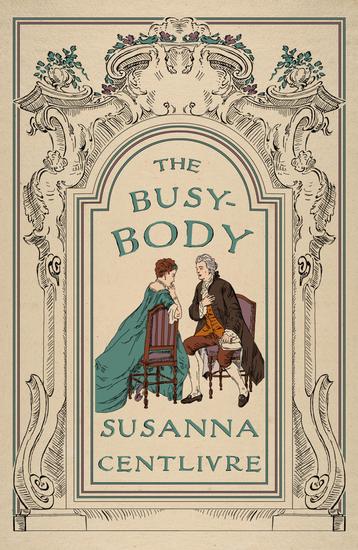
    The Busybody is the most popular comedy by the eighteenth-century playwright Susanna Centlivre. The play centres on two couples trying to form a relationship against the wills of their guardians, and in a battle of wits, playing with many conventions from theatre traditions across the continent, a conclusion is eventually reached.
    Like her predecessor Aphra Behn, Centlivre was immensely successful in her day, drawing huge crowds to extended runs of her numerous plays, but the stabbing male pens of the nineteenth and twentieth centuries decried her work as being louche and dangerous, and her name slowly sunk into obscurity.
    This edition, published with William Hazlitt's prefatory note and extra material on Centlivre's life and writing, seeks to highlight the dexterity with which she took on the stage.
    Ver livro
  • The Tragedy of Timon of Athens - cover

    The Tragedy of Timon of Athens

    William Shakespeare

    • 0
    • 0
    • 0
    The Tragedy of Timon of Athens (The Life of Tymon of Athens) is a play by William Shakespeare, probably written in collaboration with Thomas Middleton in about 1605–1606, which was published in the First Folio in 1623. It is about the fortunes of an Athenian named Timon. The central character is a beloved citizen of Athens who through tremendous generosity spends his entire fortune on corrupt hangers-on only interested in getting the next payout.
    The earliest-known production of the play was in 1674, when Thomas Shadwell wrote an adaptation under the title The History of Timon of Athens, The Man-hater. Multiple other adaptations followed over the next century, by writers such as Thomas Hull, James Love and Richard Cumberland. The straight Shakespearean text was performed at Smock Alley in Dublin in 1761, but adaptations continued to dominate the stage until well into the 20th century.
    ... Flavius arrives. He wants the money as well, but he also wants Timon to come back into society. Timon acknowledges that he has had one true friend in Flavius, a shining example of an otherwise diseased and impure race, but laments that this man is a mere servant. He invites the last envoys from Athens, who hoped Timon might placate Alcibiades, to go hang themselves, and then dies in the wilderness. Alcibiades, marching on Athens, then throws down his glove, and ends the play reading the bitter epitaph Timon wrote for himself, part of which was composed by Callimachus:
    "Here lies a wretched corpse of wretched soul bereft:
    Seek not my name: a plague consume you wicked caitiffs left!"
    Here lie I, Timon, who alive, all living men did hate,
    Pass by, and curse thy fill, but pass and stay not here thy gait...
    Among the most significant works William Shakespeare: Hamlet, Othello, King Lear, Macbeth, Orpheus, Romeo and Juliet, Julius Caesar, Troilus and Cressida, The Tempest, Venus and Adonis, Antony and Cleopatra, Measure for Measure, The Winter's Tale and many more.
    Ver livro
  • Lent - cover

    Lent

    Kate Cayley

    • 0
    • 0
    • 0
    Longlisted for the 2024 Fred Cogswell Award For Excellence In Poetry
    
    Finalist for the 2023 Foreword INDIES Book of the Year Awards
    
    In these peculiar times, we are thrust back into ourselves in a kind of suspension: one in which only private life exists yet threatens to become trivial through a sense of mutual, overarching dread.
    Lent from award-winning writer Kate Cayley is built from this tension, exploring domestic and artistic life amidst the environmental crisis and the surprising ways that every philosophical quandary—large and small—converges in the home, in small objects, conversations, and moments. The grotesque and the tedious, the baroque and the banal, intertwine in the first three sections. Meticulous depictions of spectacle run into the repetition of daily domestic life: trying to explain time to children, day trips to the planetarium, and the warnings of strangers; these are interspersed with depictions such as Mary Shelley recalling the monster, the inner life of a seventeenth century portrait sitter, and Ted Hughes's second wife telling her story to the dead Sylvia Plath. The title section explores religious faith; how belief is itself a repetition, a slow accumulation over time, just like love or forgiveness.
    Lent is an exquisite work of our era, asking us to contemplate what it means to live in a broken world—and why we still find it beautiful.
    Ver livro
  • On Hearing That Constantinople Was Swallowed Up By An Earthquake - Poem by a 18th Century female author who was also an abolitionist pioneer - cover

    On Hearing That Constantinople...

    Amelia Opie

    • 0
    • 0
    • 0
    Amelia Alderson, an only child, was born on the 12th November 1769 in Norwich, England. 
    After the death of her mother on New Year’s Eve 1784 she became her father's housekeeper and hostess. 
    The young Amelia was energetic, attractive, and an admirer of fashion.  She spent much of her youth writing poetry and plays and putting on local amateur theatricals.  At 18 she had published anonymously ‘The Dangers of Coquetry’. 
    Amelia married in the spring of 1798 to the artist John Opie at the Church of St Marylebone, in Westminster, and together they lived in Berners Street where Amelia was already living. 
    Her next novel in 1801 ‘Father and Daughter’, was very popular even though it dealt with such themes as illegitimacy, a socially difficult subject for its times.  From this point on published works were far more regular.  The following year her volume ‘Poems’ appeared and was again very popular.  Novels continued to flow and she never once abandoned her social activism and her call for better treatment of women and the dispossessed in her works.  She was also keenly involved in a love of society and its attendant frills. 
    Encouraged by her husband to write more she published Adeline Mowbray in 1804, an exploration of women's education, marriage, and the abolition of slavery.  
    Her husband died in 1807 and she paused from writing for a few years before resuming with further novels and poems.  Of particular interest was her short poem ‘The Black Man's Lament’ in 1826.  Her life now was in the main spent travelling and working for charities and against slavery.  She even helped create a Ladies Anti-Slavery Society in Norwich which organised a parliamentary petition of 187,000 names of which hers was the first name. 
    After a visit to Cromer, a seaside resort on the North Norfolk coast, she caught a chill and retired to her bedroom.  
    Amelia Opie died on the 2nd December 1853 in Norwich.  She was 84.
    Ver livro