Begleiten Sie uns auf eine literarische Weltreise!
Buch zum Bücherregal hinzufügen
Grey
Einen neuen Kommentar schreiben Default profile 50px
Grey
Jetzt das ganze Buch im Abo oder die ersten Seiten gratis lesen!
All characters reduced
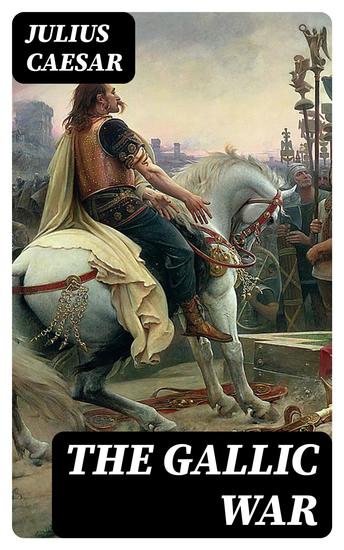
The Gallic War - Including "The Civil War" - cover

The Gallic War - Including "The Civil War"

Julius Caesar

Übersetzer W. A. McDevitte, W. S. Bohn

Verlag: DigiCat

  • 0
  • 0
  • 0

Beschreibung

In "The Gallic War," Julius Caesar presents a detailed account of his military campaigns against the Gallic tribes from 58 to 50 BCE. Written in an incisive, direct style, the work is characterized by its clarity and vivid descriptions, effectively drawing the reader into the complexities of warfare. Employing the third person, Caesar not only documents his strategic decisions but also reflects on the sociopolitical landscape of Gaul, offering insights into the cultures of the tribes he encountered. This text serves as an early example of a political-military narrative, merging the genres of autobiography and historical documentation while articulating themes of power, conquest, and leadership amidst the backdrop of Roman expansionism. Julius Caesar, a prominent figure in Roman history, was not only a military general but also a skilled orator and statesman. His unique position allowed him to witness firsthand the events he chronicled. The personal nature of his narrative suggests an intent to bolster his political standing in Rome, countering rivals and humanizing the commander in the eyes of his contemporaries. His profound understanding of military strategy and governance contributes significantly to the work's authenticity and enduring relevance. I highly recommend "The Gallic War" to readers interested in military history, leadership, and classical literature. It invites us to explore the nuanced interplay between power and identity while providing a fascinating glimpse into the intricacies of ancient warfare. This seminal text not only enriches our understanding of Roman history but also serves as a timeless commentary on the nature of ambition and authority.
Verfügbar seit: 11.10.2022.
Drucklänge: 295 Seiten.


Weitere Bücher, die Sie mögen werden

  • The Trauma Beat - A Case for Re-Thinking the Business of Bad News - cover

    The Trauma Beat - A Case for...

    Tamara Cherry

    • 0
    • 0
    • 0
    A groundbreaking and thorough examination of the trauma caused by the media covering crimes, both to victims and journalists, from a respected journalist and victim advocate 


    In The Trauma Beat, an eye-opening combination of investigative journalism and memoir, former big-city crime reporter Tamara Cherry calls on her award-winning skills as a journalist to examine the impact of the media on trauma survivors and the impact of trauma on members of the media. As Tamara documents the experiences of those who were forced to suffer on the public stage, she is confronted by everything she got wrong on the crime beat. 


    Covering murders and traffic fatalities to sexual violence and mass violence, Cherry exposes a system set up to fail trauma survivors and journalists. Why do some families endure a swell of unwanted attention after the murder of a loved one, while others suffer from a lack of attention? What is it like to have a microphone shoved in your face seconds after escaping the latest mass shooting? What is the lasting impact on the reporter holding that microphone? The Trauma Beat explores these issues with the raw, reflective detail of a journalist moving from ignorance to understanding and shame to healing.
    Zum Buch
  • Climate Hope - Stories of Action in an Age of Global Crisis - cover

    Climate Hope - Stories of Action...

    David Geselbracht

    • 0
    • 0
    • 0
    Climate change is a problem so enormous and complex—with threats so frightening in their implications—that many of us fend off confusion and hopelessness by simply turning away. Meanwhile, with delayed action, missed targets, and increasingly dire reports at the international level, a notion that the crisis is intractable continues to spread. And the proposed solutions can be just as daunting. They often involve jargon about gigatons of carbon and kilowatt-hours of electricity. In a deeply polarized political environment, any sense of the common purpose required to make these work seems to dissolve into denial or paralysis. With all this fear and conflict, the question must be asked: How do we find the tools and the hope we need to tackle such a wickedly difficult issue? 


    In Climate Hope, journalist David Geselbracht blends in-depth research, expert interviews, and on-the-ground reporting in multiple countries, revealing remarkable efforts to identify the causes and impacts of climate change—and devise crucial ways to address them. The scale of the challenge is clear in the range of fields he covers, from glaciology and climate science to law and diplomacy. But in drawing these approaches together, he shares stories of hope, awe, and wonder that encourage us to confront this long-term, world-warping phenomenon with a renewed sense of purpose and possibility.
    Zum Buch
  • The Essential François Mauriac - Saint Margaret of Cortona Letters on Art and Literature and Proust’s Way - cover

    The Essential François Mauriac -...

    François Mauriac

    • 0
    • 0
    • 0
    Three great nonfiction works from the Nobel Prize–winning, Catholic, French author of Thérèse Desqueyroux.Saint Margaret of CortonaFor François Mauriac, Saint Margaret of Cortona became a source of fascination and solace during the Nazi occupation of France. During that time, feeling himself and all his countrymen to be among the downtrodden, he wrote this biography of the thirteenth-century Italian penitent who would become the patron saint of the homeless . . .Born in 1247 to a farming family in a small village outside Perugia, Margaret of Cortona was willful and reckless in her youth. At age seventeen, she became a wealthy man’s mistress—even bearing his son out of wedlock. But her life of sin ended when she found her lover murdered.Devoting herself to prayer and penance, Margaret eventually joined the Third Order of St. Francis and took a vow of poverty. She established a hospital for the poor and homeless at Cortona. On divine command, she challenged her own bishop for his lavish and warlike lifestyle. Canonized by Pope Benedict XIII in 1728, she became a patron saint of the downtrodden, including the falsely accused, homeless, orphaned, and mentally ill, as well as midwives, penitents, single mothers, reformed prostitutes, and third children.Letters on Art and LiteratureIn this collection of letters, Mauriacshares fascinating insights through correspondence with Albert Camus, Jean Cocteau, and other authors, artists, intellectuals, as well as the readers of his various articles and columns. The letters delve into a variety of topics—from the death of Georges Bernanos to the correspondence between Paul Claudel and Andre Gide, and the Routier youth movement.Proust’s Way The thinking and suffering of the author of Remembrance of Things Past are intimately exposed in these letters to Mauriac.
    Zum Buch
  • The Age of Empires - Conquest and Colonization - cover

    The Age of Empires - Conquest...

    Nova Ashford

    • 0
    • 0
    • 0
    The Age of Empires, a period marked by conquest and colonization, spans several centuries and had a profound impact on global history. From the late 15th century through the early 20th century, European powers embarked on ambitious campaigns of territorial expansion, driven by the pursuit of wealth, resources, and political dominance. This era saw the rise and fall of vast empires, each of which left an indelible mark on the world. The motivations behind empire-building were multifaceted, rooted in the quest for economic gain, military supremacy, and the spread of cultural, religious, and political ideologies. 
    The Age of Empires can trace its origins to the Renaissance, a period of intellectual and cultural awakening in Europe. The revival of classical learning, coupled with advancements in navigation, shipbuilding, and cartography, laid the groundwork for the age of exploration. This era saw European nations eager to find new trade routes and territories, driven by the promise of wealth from spices, silks, and other exotic goods. The expansion of European power also coincided with a period of intense competition among European states, each vying to claim territories and secure dominance over lucrative trade routes. 
    In 1492, Christopher Columbus’ famous voyage to the New World marked the beginning of a new era in exploration and conquest. Columbus’ journey, sponsored by Spain, led to the discovery of the Americas, setting off a wave of Spanish, Portuguese, British, French, and Dutch exploration and colonization. Spain and Portugal were the earliest and most successful empires in this period, establishing colonies in the Americas, Africa, and Asia. The Spanish empire, in particular, amassed incredible wealth through the exploitation of native populations and the vast resources found in the Americas, including precious metals like gold and silver.
    Zum Buch
  • The Upside-Down World - Meetings with the Dutch Masters - cover

    The Upside-Down World - Meetings...

    Benjamin Moser

    • 0
    • 0
    • 0
    Arriving as a young writer in an ancient Dutch town, Benjamin Moser found himself visiting—casually at first, and then more and more obsessively—the country's great museums. 


    Beyond the sainted Rembrandt—who harbored a startling darkness—and the mysterious Vermeer, whose true subject, it turned out, was lurking in plain sight, Moser got to know a whole galaxy of geniuses: the doomed virtuoso Carel Fabritius, the anguished wunderkind Jan Lievens, the deaf prodigy Hendrik Avercamp. 


    Year after year, as he tried to make a life for himself in the Netherlands, Moser found friends among these centuries-dead artists. And he found that they, too, were struggling with the same questions that he was. Why do we make art? What even is art, anyway—and what is an artist? What does it mean to succeed as an artist, and what does it mean to fail? 


    The Upside-Down World is an invitation to ask these questions, and to turn them on their heads: to look, and then to look again. This is Holland and its great artists as we've never seen them before. And it's a highly personal coming-of-age-story, twenty years in the making: a revealing self-portrait by one of the most acclaimed writers of his generation.
    Zum Buch
  • A Classic Interview with Music Icon Tiny Tim - cover

    A Classic Interview with Music...

    Tiny Tim

    • 0
    • 0
    • 0
    Herbert Butros Khaury (April 12, 1932 - November 30, 1996), also known as Herbert Buckingham Khaury, and known professionally as Tiny Tim, was an American musician and musical archivist. He is especially known for his 1968 hit recording of "Tiptoe Through the Tulips," a cover of the popular song from the 1929 musical Gold Diggers of Broadway. Tiny Tim was renowned for his wide vocal range, in particular his far-reaching falsetto. The following interview was recorded in July 1988.
    Zum Buch