Join us on a literary world trip!
Add this book to bookshelf
Grey
Write a new comment Default profile 50px
Grey
Subscribe to read the full book or read the first pages for free!
All characters reduced
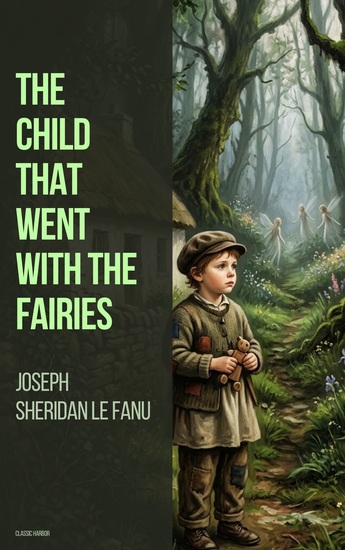
The Child That Went With The Fairies - cover

The Child That Went With The Fairies

Joseph Sheridan Le Fanu

Publisher: Classic Harbor

  • 0
  • 0
  • 0

Summary

A mysterious disappearance draws a family into a world where folklore, fairies, and supernatural forces become frighteningly real.

Joseph Sheridan Le Fanu's The Child That Went with the Fairies combines traditional folklore with the unsettling atmosphere of Victorian Gothic fiction.

The story explores the mysterious disappearance of a child and the strange beliefs surrounding supernatural beings and the fairy world. Le Fanu transforms familiar folklore into something darker and more mysterious, creating an atmosphere where the boundary between everyday life and the supernatural becomes uncertain.

Ideal for readers who enjoy classic fairy tales with a darker edge, Gothic mysteries, supernatural fiction, and Victorian ghost stories.

Enter a world where ancient folklore comes alive and a child's disappearance reveals something far more mysterious than it first appears.
Available since: 09/28/2026.
Print length: 25 pages.

Other books that might interest you

  • About Love - From their pens to your ears genius in every story - cover

    About Love - From their pens to...

    Anton Chekhov

    • 0
    • 0
    • 0
    Anton Pavlovich Chekhov was born on 29th January 1860 in Taganrog, on the south coast of Russia.  
    His family life was difficult; his father was strict and over-bearing but his mother was a passionate story-teller, a subject Chekhov warmed to. As he later said; ‘our talents we got from our father, but our soul from our mother’.  
    At school Chekhov was distinctly average. At 16 his father mis-managed his finances and was declared bankrupt. His family fled to Moscow. Chekhov remained and eked out a living by various means, including writing and selling short sketches to newspapers, to finish his schooling. That completed and with a scholarship to Moscow University obtained he rejoined his family. 
    He was able to help support them by selling satirical sketches and vignettes of Russian lifestyles and gradually obtained further commissions. In 1884, he qualified as a physician and, although it earned him little, he often treated the poor for free, he was fond of saying ‘Medicine is my lawful wife, and literature is my mistress.’ 
    His own health was now an issue as he began to cough up blood, a symptom of tuberculosis.  Despite this his writing success enabled him to move the family into more comfortable accommodation.  
    Chekhov wrote over 500 short stories which included many, many classics including ‘The Kiss’ and ‘The Lady with a Dog’.  His collection ‘At Dusk’ won him the coveted Pushkin Prize when was only 26.  
    He was also a major playwright beginning with the huge success of ‘Ivanov’ in 1887.   
    In 1892 Chekhov bought a country estate north of Moscow. Here his medical skills and money helped the peasants tackle outbreaks of cholera and bouts of famine. He also built three schools, a fire station and a clinic.  It left him with less time for writing but the interactions with real people gained him detailed knowledge about the peasantry and their living conditions for his stories.  
    His most famous work, ‘The Seagull’ was received disastrously at its premiere in St Petersburg. It was later restaged in Moscow to highlight its psychological aspects and was a huge success. It led to ‘Uncle Vanya’, ‘The Three Sisters’ and ‘The Cherry Orchard’.  
    Chekhov suffered a major lung hemorrhage in 1897 while visiting Moscow. A formal diagnosis confirmed tuberculosis and the doctors ordered changes to his lifestyle.  
    Despite a dread of weddings the elusive literary bachelor quietly married the actress Olga Knipper, whom he had met at rehearsals for ‘The Seagull’, on 25th May 1901. 
    By May 1904 with his tuberculosis worsening and death imminent he set off for the German town of Badenweiler writing cheerful, witty letters to his family and assuring them his health was improving.  
    On 15th July 1904 Anton Chekhov died at Badenweiler.  He was 44.
    Show book
  • Eugénie Grandet - Scenes of Provincial Life - cover

    Eugénie Grandet - Scenes of...

    Honoré de Balzac

    • 0
    • 0
    • 0
    A miser in a provincial town has a fortune nobody suspects and a daughter whose whole inheritance he intends to keep from her; then a bankrupt cousin arrives from Paris with good manners. Balzac wrote it in 1833 and made cheeseparing into tragedy: every candle counted, every sou hoarded, and a life spent in one room.
    Show book
  • Tales of Unrest - Five Stories of the Outposts - cover

    Tales of Unrest - Five Stories...

    Joseph Conrad

    • 0
    • 0
    • 0
    Five early stories of men posted where the empire runs out: a Dutch trader married into a Malay family and despised by both sides, a colonial agent alone at a river station, a Breton farm where the peasants deal with a fool. Conrad's first collection, written while he was still deciding whether he was a sailor who wrote or a writer who had sailed. The lagoon and the outpost are already his. Fifty-eight plates of river views, Borneo gardens and campfire scenes by painters including Marianne North and Edmund Marriner Gill carry the outpost world of the stories in paint.
    Show book
  • The song of tiadatha - cover

    The song of tiadatha

    OWEN RUTTER

    • 0
    • 0
    • 0
    This scarce antiquarian book is a facsimile reprint of the original. Due to its age, it may contain imperfections such as marks, notations, marginalia and flawed pages. Because we believe this work is culturally important, we have made it available as part of our commitment for protecting, preserving, and promoting the worlds literature in affordable, high quality, modern editions that are true to the original work.
    Show book
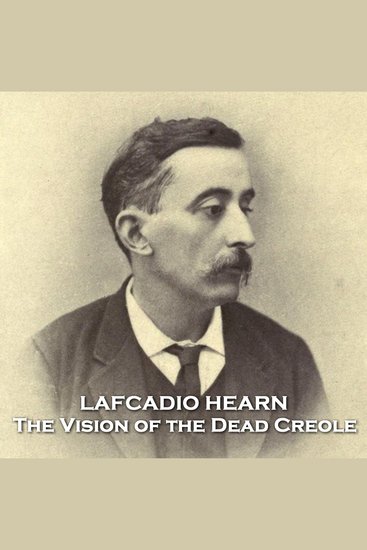
  • The Vision of the Dead Creole - From their pens to your ears genius in every story - cover

    The Vision of the Dead Creole -...

    Lafcadio Hearn

    • 0
    • 0
    • 0
    Lafcadio Hearn was born on the 27th June 1850 on the Ionian isle of Levkás in Greece to a British Army officer and a Greek Mother. 
    His father, fearing for his career prospects at being married to a Greek Orthodox wife, sent them to Dublin whilst he continued to advance his career with further postings.  Life there was difficult for mother and son.  His father returned, wounded and traumatised, when Lafcadio was three.  He annulled the marriage and she remarried but had to give up care of Lafcadio to her sister-in law.   
    After brief periods for Catholic education in England and France he emigrated to Ohio in the United States when he was 19, taking on a series of casual jobs before embarking on a career as a journalist, publishing poems and essays in Cincinnati.  It was whilst here that he began a side-line in translating, starting with Gautier and Flaubert.  He married in 1874 to a 20 year old African-American woman in violation of Ohio's anti-miscegenation law.  The marriage soon failed. 
    In 1877 he relocated to New Orleans to write on a variety of themes before picking up a two year assignment from Harper’s to write in the West Indies, where he also wrote his first novel. 
    In 1890 Harper’s sent him to Japan.  Here he left journalism and took the remarkable decision to become a schoolteacher in the north of Japan.   Enraptured by the culture he was driven to explain it in various Western publications to those who had little, if any, knowledge of its culture.  Within the year he had fallen in love with, and married, a high-born Japanese lady, together they would have four children.   
    In 1895 he became a Japanese national and took the name Koizumi Yakumo, Koizumi being his wife’s family name. 
    The following few years, whilst a professor of Literature at the Imperial University of Japan, were his most creative and admired period.   
    Lafcadio Hearn died of heart failure on the 26th of September 1904, in Tokyo, Japan shortly before leaving to deliver a series of lectures at Cornell University in New York State.  He was 54.
    Show book
  • Maud Marian Artist - or The Studio Mariano - cover

    Maud Marian Artist - or The...

    Eglanton Thorne

    • 0
    • 0
    • 0
    A rich man's daughter, kept from every difficulty, decides she will be a painter, and finds that a studio is not a drawing-room and that talent is not enough. Eglanton Thorne wrote for girls on the edge of independence in the 1890s. The scenes in the Studio Mariano — the criticism, the models, the money — are done with more knowledge than the genre required. Thirty-seven plates of studio rooms, mothers and children, and quiet interiors by painters including Vilhelm Hammershøi and Mary Cassatt follow the novel's own argument about what a woman sees when she works.
    Show book