Join us on a literary world trip!
Add this book to bookshelf
Grey
Write a new comment Default profile 50px
Grey
Subscribe to read the full book or read the first pages for free!
All characters reduced
History of the Reformation in the Sixteenth Century (Vol1-5) - Complete Edition - cover

History of the Reformation in the Sixteenth Century (Vol1-5) - Complete Edition

Jean-Henri Merle d'Aubigné

Translator Henry Beveridge, Henry White

Publisher: DigiCat

  • 0
  • 0
  • 0

Summary

In "History of the Reformation in the Sixteenth Century," Jean-Henri Merle d'Aubigné presents a comprehensive chronicle that explores the major theological upheaval that reshaped Europe. Spanning five volumes, this meticulously researched work employs a narrative style that intertwines rich historical detail with the passionate discourse of faith and individual conscience. D'Aubigné's Protestant perspective informs his analysis, emphasizing the role of key figures such as Martin Luther and John Calvin while situating their movements within the broader socio-political and religious currents of the time. His thoughtful examination of primary sources imbues the text with authenticity, inviting readers to witness the fervent struggles of believers striving for spiritual renewal against a backdrop of institutional corruption and conflict. Jean-Henri Merle d'Aubigné was a prominent Swiss historian and theologian, deeply influenced by his own experiences of religious persecution and the Enlightenment. As a staunch supporter of the Protestant Reformation, his insights derive from a profound commitment to the principles of reform and a desire to document its historical significance. Having effectively aligned himself with the Reformed tradition, he was motivated to write this extensive history to not only provide a testament to the struggles of his faith but also to educate the public on the transformative impact of the Reformation. This monumental work is recommended for scholars, students, and anyone interested in understanding the intricate tapestry of the Reformation. D'Aubigné's eloquence and thorough analysis offer both historical education and spiritual insight, making it an indispensable resource for comprehending the profound changes in religious thought that continue to resonate today. Readers will find themselves not only informed but also moved by the passionate narratives that shaped the landscapes of faith and politics.
Available since: 11/08/2023.
Print length: 2383 pages.

Other books that might interest you

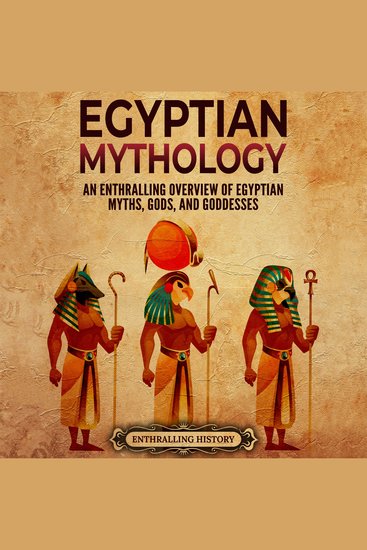
  • Egyptian Mythology: An Enthralling Overview of Egyptian Myths Gods and Goddesses - cover

    Egyptian Mythology: An...

    Enthralling History

    • 0
    • 0
    • 0
    Did you know that the ancient Egyptians believed in life after death? You will be amazed at how hard they prepared for the afterlife!  
    This audiobook is loaded with stories of the lives of the ancient Egyptians, their gods, and some of the greatest myths in antiquity. The gods played an important role in people’s lives; you might be surprised to see how much they impacted everyday life! 
    In this audiobook, you will find yourself on an exciting journey to one of the most influential kingdoms in history. On your way, you will learn more about some of the following: 
    • The origin and foundations of the world from an Egyptian perspective; 
    • The Egyptian myths about the time the gods ruled the earth; 
    • The multi-versioned stories about the lives of the gods and goddesses of ancient Egypt; 
    • The incredible legends in Egyptian mythology; 
    • The elaborate funerary culture in ancient Egypt; 
    • The journey to the afterlife from an Egyptian perspective; 
    • Attributes of the most famous gods and goddesses in the Egyptian pantheon; 
    • And much, much more! 
    So if you want to explore the fascinating mythology and myths of ancient Egypt, then scroll up and click the “add to cart” button!
    Show book
  • My America - Langston Hughes on Democracy - cover

    My America - Langston Hughes on...

    Randal Maurice Jelks

    • 0
    • 0
    • 0
    Best known as the leader of the Harlem Renaissance, the celebrated poet and writer Langston Hughes believed in the power of art as resistance. What can we learn from his works today? 
    Randal M. Jelks delivers this revelatory portrait of the celebrated poet, essayist, playwright, and American artist Langston Hughes. My America traces Hughes's journey from a child captivated by the wonder of Kansas City to cosmopolitan witness in Paris, New York, Mexico City, and Madrid. We encounter Hughes as a young man discovering the pulse of modern life in a world on the verge of exploding metaphorically and literally. His experiences informed his work and his thinking on art, democracy, and activism. 
    Langston Hughes is one of the few American writers who consistently wrote about democracy from a joyous perspective, and My America explores how his works speak to the political anxieties and crises we face today. Jelks deftly examines the themes in Hughes's work, including creative expression, communal dignity, class struggle, and human suffering and what they mean for our inner well-being as democratic persons and political participants. 
    With care and no-holds-barred insight, My America removes the veneer of respectability often placed on Hughes's work and life to reveal his political adeptness. In a world threatened by fascism, Hughes's writing wasn't afforded the luxury of subtlety. He made a spiritual and political decision to stand on the side of the oppressed. He believed art should be practiced for the sake of justice. And democracy can be practiced with joy.
    Show book
  • Illuminati Cabal - cover

    Illuminati Cabal

    Raphael Terra

    • 0
    • 0
    • 0
    This audiobook has been recorded using Text to speech (TTS). 
     
    Mankind has come a long way since he learned how to control fire. And yet now in the 21st century he has created more than fire, he has created chains to bind himself into a system whereby he passes on the control of his own life to others. 
     
    Businesses, religions, royalty’s and governments have all sought to gain power by having control over our mental and physical states. They have utilized our own nature to achieve this. And these powers joined forces into a secret cabal we call the Illuminati. They have created a true Matrix of deceit and we are all being manipulated. 
     
    From the market place to the school, all-manner of magical devices have been dreamed up to entice and entrap us. We have closed our eyes and minds to the truth of the system we are now part of. And because of this we are now totally unaware of the deceit in which we reside. In fact we even perpetuate it by repeating the propaganda of those in power. Almost everything we think and do is the result of illusion created by those in power. 
     
    It is time to unlock these secrets and find freedom.
    Show book
  • Constantine the Great - The Roman Emperor Who Made Christianity the Main Religion - cover

    Constantine the Great - The...

    Kelly Mass

    • 0
    • 0
    • 0
    Constantine I, often called Constantine the Great, was one of the most significant emperors of ancient Rome, reigning from 306 to 337 AD. Born in Naissus, in the province of Dacia Mediterranea (modern-day Niš, Serbia), he was the son of Flavius Constantius, a Roman army officer and a prominent figure in the Tetrarchy, and Helena, a woman of humble Greek origins. His father's position as one of the four emperors in the Tetrarchy was instrumental in shaping Constantine's early life and military career. Under emperors Diocletian and Galerius, Constantine demonstrated his military prowess, initially fighting against barbarian tribes and the Persians in the eastern provinces. In 305 AD, he was summoned to the West to aid his father in campaigns in Britain, where he earned further distinction. 
    Following the death of his father in 306 AD, Constantine’s soldiers declared him emperor at Eboracum (modern York, England). Over the next two decades, he would overcome rival emperors, such as Maxentius and Licinius, in a series of civil wars, eventually becoming the sole ruler of the Roman Empire by 324 AD. His reign marked a period of significant transformation, both militarily and administratively. 
    To strengthen the empire, Constantine initiated a series of reforms. He reorganized the imperial administration, separating civil and military powers to create a more efficient system of governance. Acknowledging the need for economic stability, he introduced the solidus, a new gold coin that helped curb inflation. This currency would become the standard for Byzantine and European economies for nearly a millennium. He also restructured the Roman army, creating specialized units that could respond swiftly to internal threats and barbarian invasions.
    Show book
  • Is There a God? - cover

    Is There a God?

    Raphael Terra

    • 0
    • 0
    • 0
    This audiobook has been recorded using Text to speech (TTS). 
     
    Francis Bacon said: “If a man will begin with certainties, he shall end in doubts; but if he will be content to begin with doubts, he shall end in certainties.” 
     
    This book is about the ultimate question. There is nothing that has been pondered more by mankind and nothing more divisive. Is there a God? 
     
    We divide ourselves into groups because of the different answers we have created. Many misunderstand or create concepts of what God actually means and believe it to be the one defined by Christians, Jews or Muslims. And yet, many, when pushed with some profound philosophical questions about the origin of the universe have no answer, other than we came from nothing. 
     
    Did we come from the mind of a creator, or from absolutely nothing? These are our stark choices. To have faith and believe. To deny all and accept existence from nothing. Or to accept we still do not know. What are you?
    Show book
  • Grass is Singing by Doris Lessing The (Book Analysis) - Detailed Summary Analysis and Reading Guide - cover

    Grass is Singing by Doris...

    Bright Summaries

    • 0
    • 0
    • 0
    Unlock the more straightforward side of The Grass is Singing with this concise and insightful summary and analysis!This engaging summary presents an analysis of The Grass is Singing by Doris Lessing, which tells the story of a white couple in Southern Rhodesia during apartheid. Dick Turner is a farmer who continually struggles but fails to make a profit on his farm; Mary gave up her independence and married him out of shame at still being single in her 30s. Their marriage is failing and they both feel frustrated with their lives and frequently lash out at the black workers on the farm where they live. However, Mary, starved of social interaction and intellectual stimulation, gradually becomes close to the black cook Moses, with disastrous consequences for the Turners and for their white compatriots. The Grass is Singing is an excellent example of the realism for which Lessing's writing is celebrated, and remains one of her best-known and most acclaimed works.Find out everything you need to know about The Grass is Singing in a fraction of the time!This in-depth and informative reading guide brings you:• A complete plot summary• Character studies• Key themes and symbols• Questions for further reflectionWhy choose BrightSummaries.com?Available in print and digital format, our publications are designed to accompany you on your reading journey. The clear and concise style makes for easy understanding, providing the perfect opportunity to improve your literary knowledge in no time.See the very best of literature in a whole new light with BrightSummaries.com!
    Show book