Unisciti a noi in un viaggio nel mondo dei libri!
Aggiungi questo libro allo scaffale
Grey
Scrivi un nuovo commento Default profile 50px
Grey
Iscriviti per leggere l'intero libro o leggi le prime pagine gratuitamente!
All characters reduced
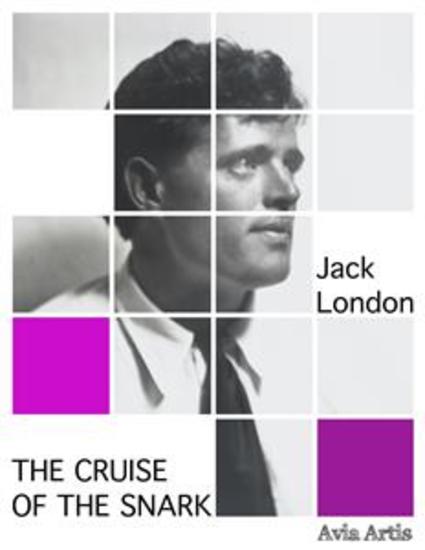
The Cruise of the Snark - cover

The Cruise of the Snark

Jack London

Casa editrice: Avia Artis

  • 0
  • 0
  • 0

Sinossi

“The Cruise of the Snark” is a book by Jack London, an American novelist. A pioneer of commercial fiction and an innovator in the genre that would later become known as science fiction.

The Cruise of the Snark is a non-fictional book by Jack London chronicling his sailing adventure in 1907 across the south Pacific in his ketch the Snark. Accompanying London on this voyage was his wife Charmian London and a small crew. London taught himself celestial navigation and the basics of sailing and of boats during the course of this adventure and describes these details to the reader. He visits exotic locations including the Solomon Islands and Hawaii, and his first-person accounts provide insight into these remote places at the beginning of the 20th century.
Disponibile da: 03/12/2021.

Altri libri che potrebbero interessarti

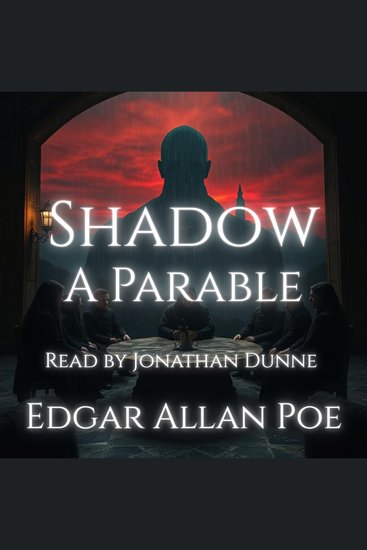
  • Shadow - A Parable - cover

    Shadow - A Parable

    Edgar Allan Poe

    • 0
    • 0
    • 0
    Title: Shadow – A Parable 
    Author: Edgar Allan Poe 
    Narrator: Jonathan Dunne 
    Original Publication: 1835 
    Public Domain: Yes 
    Series Placement: Number 42 in the Timeless Terrors series 
    Description: 
    “Shadow – A Parable” by Edgar Allan Poe is a brief yet profound meditation on death, memory, and the fragile line between the living and the departed. Set amid the aftermath of pestilence, seven figures gather in a dimly lit chamber, haunted by the ghostly presence of a shifting shadow that speaks not to the ear but to the soul. 
    First published in 1835, this early work reveals Poe’s mastery of atmosphere and allegory — a fusion of Biblical solemnity and gothic despair. The story’s vision of mortality and the dissolution of self foreshadows the existential darkness that would come to define Poe’s later works. 
    Narrated by Amazon bestselling horror author Jonathan Dunne, this performance imbues Poe’s haunting prose with a spectral intensity — a voice that rises from the silence of the grave to whisper of humanity’s inevitable end. While the text is in the public domain, this narration is an original performance and copyright © 2025 Jonathan Dunne. 
    Part of Timeless Terrors, a series devoted to resurrecting the masters of the macabre, Shadow – A Parable stands as an eerie meditation on the universality of death — a moment when even the proudest voices of the living fall silent beneath the eternal shadow.
    Mostra libro
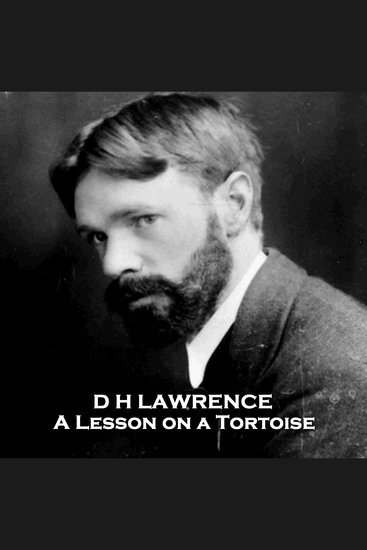
  • A Lesson on a Tortoise - From their pens to your ears genius in every story - cover

    A Lesson on a Tortoise - From...

    D H Lawrence

    • 0
    • 0
    • 0
    David Herbert Lawrence was born on the 11th September 1885 in Eastwood, Nottinghamshire, a coal mining town where the reality of a harsh life was only useful as experiences for future literary works. 
    He was educated at Beauvale Board School and became the first local boy to receive a scholarship to attend Nottingham High School. After 3 years he became a junior clerk in Haywood’s surgical appliances factory. He was also attempting a literary career which, in the short term, led to a teacher training position in Eastwood and later a teaching qualification from University College, Nottingham.  
    Lawrence’s first efforts were poems, short stories and a draft of ‘The White Peacock’. Moving to London and a teaching position in Croydon his writing attracted the attention of Ford Madox Ford, editor of The English Review, and he commissioned him to write ‘Odour of Chrysanthemums’.  
    Wanting to write full-time he now began work on what would become ‘Sons and Lovers.   
    In 1912 he met the older and married mother-of-three Frieda Weekley. They eloped to Germany and here Lawrence could see for himself the growing tensions with France.  So keen was his interest that he was arrested and accused of being a British spy.  
    In early 1914 Frieda obtained her divorce and they returned to Britain to be married just days before the outbreak of war. Owing to her German parentage, and his own public dislike of militarism and violence, the couple were treated with contempt and suspicion throughout the war years.  
    Despite this he continued to write but his reputation in England was so tarnished and, mirrored by his own disdain for the country, he and Frieda left England in November 1919, first for Europe and then America via Ceylon and Australia. 
    They bought a ranch in Taos, New Mexico and visited Mexico several times. The third visit in March 1925 caused a near fatal attack of malaria. To convalesce they moved to Florence. Here he continued work on ‘Lady Chatterley’s Lover’ which for many years would cause controversy. A renewed interest in oil painting resulted in an exhibition in 1929 which was raided by the police and several works were confiscated.  
    D H Lawrence died of complications arising from a bout of tuberculosis on the 2nd of March 1930 in Vence, France.  He was 44.
    Mostra libro
  • Rilla of Ingleside - cover

    Rilla of Ingleside

    L. M. Montgomery

    • 0
    • 0
    • 0
    "Rilla is Anne and Gilbert Blythe’s youngest daughter, an excitable 15-year-old who is unaware of how the world works, and is only interested in having fun. But the world is on the brink of a global war, and soon Rilla’s family and life are turned upside down, as several of her brothers enlist in the army and are sent to fight overseas.The book follows Rilla’s life through the duration of World War I, as she grows up quickly from the responsibilities put on young women in this time. She adopts an orphaned child and raises him, runs the local Junior Red Cross, falls in love with a soldier just before he deploys, and even assists in the elopement of a soldier to his beloved.This novel captures the anxiety of living with one’s family away at war, as well as captures the unique perspective of a woman’s life at home during the First World War (and is the only Canadian novel that shows this perspective written by a contemporary of the war). Through the sadness and bleak moments brought to the world in this war, and the loss that the Blythes face, there is yet again hope to be found in the love of the families and neighbors of Ingleside."
    Mostra libro
  • The Shooting Party - cover

    The Shooting Party

    Anton Chekhov

    • 0
    • 0
    • 0
    The only full-length novel which Chekhov authored, The Shooting Party revolves around Olga, the pretty young daughter of a drunken worker on a country estate, and her relationships with the men in her life.
    
    Loved by Urbenin, whom she eventually marries; desired by the Count Karneyev; and adored by Zinovyev, who knows the sadness at the heart of her marriage, a murderous attack begins a spiral of alarm, mistrust, and deceit.
    Anton Chekhov (1860-1904) was a Russian playwright and is still considered one of the greatest short story writers of all time.
    Mostra libro
  • A Room with a View - cover

    A Room with a View

    E. M. Forster

    • 0
    • 0
    • 0
    "A Room with a View" is a 1908 novel by English writer E. M. Forster, about a young woman in the restrained culture of Edwardian era England. The novel  is both a romance and a humorous critique of English society at the beginning of the 20th century.
    Mostra libro
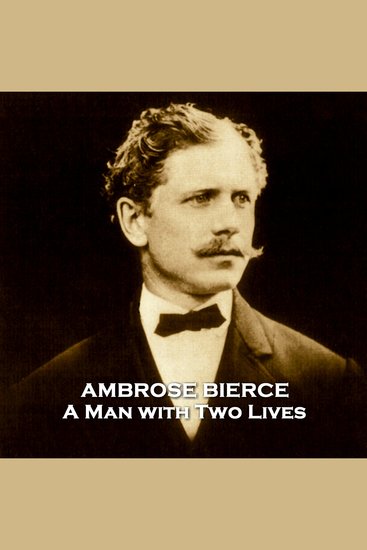
  • A Man with Two Lives - From their pens to your ears genius in every story - cover

    A Man with Two Lives - From...

    Ambrose Bierce

    • 0
    • 0
    • 0
    Ambrose Gwinnett Bierce was born on 24th June 1842 at Horse Cave Creek in Meigs County, Ohio. His parents were poor but they introduced him to literature at an early age, instilling in him a deep appreciation of books, the written word and the elegance of language.  
    Growing up in Koscuisko County, Indiana poverty and religion were defining features of his childhood, and he would later describe his parents as “unwashed savages” and fanatically religious, showing him little affection but always quick to punish. He came to resent religion, and his introduction to literature appears to be their only positive effect. 
    At age 15 Bierce left home to become a printer’s devil, mixing ink and fetching type at The Northern Indian, a small Ohio paper. Falsely accused of theft he returned to his farm and spent time sending out work in the hopes of being published. 
    His Uncle Lucius advised he be sent to the Kentucky Military Institute. A year later he was commissioned as an Officer.  As the Civil War started Bierce enlisted in the 9th Indiana Infantry Regiment.  
    In April 1862 Bierce fought at the Battle of Shiloh, an experience which, though terrifying, became the source of several short stories. Two years later he sustained a serious head wound and was off duty for several months. He was discharged in early 1865.  
    A later expedition to inspect military outposts across the Great Plains took him all the way to San Francisco. He remained there to become involved with publishing and editing and to marry, Mary Ellen on Christmas Day 1871.  They had a child, Day, the following year.  
    In 1872 the family moved to England for 3 years where he wrote for Fun magazine. His son, Leigh, was born, and first book, ‘The Fiend’s Delight’, was published.  
    They returned to San Francisco and to work for a number of papers where he gained admiration for his crime reporting. In 1887 he began a column at the William Randolph Hearst’s San Francisco Examiner.  
    Bierce’s marriage fell apart when he discovered compromising letters to his wife from a secret admirer. The following year, 1889 his son Day committed suicide, depressed by romantic rejection. 
    In 1891 Bierce wrote and published the collection of 26 short stories which included ‘An Occurrence at Owl Creek Bridge’.  Success and further works including poetry followed.  
    Bierce with Hearst’s resources helped uncover a financial plot by a railroad to turn 130 million dollars of loans into a handout. Confronted by the railroad and asked to name his price Bierce answered “my price is $130 million dollars. If, when you are ready to pay, I happen to be out of town, you may hand it over to my friend, the Treasurer of the United States”.  
    He now began his first foray as a fabulist, publishing ‘Fantastic Fables’ in 1899.  But tragedy again struck two years later when his second son Leigh died of pneumonia relating to his alcoholism.  
    He continued to write short stories and poetry and also published ‘The Devil’s Dictionary’.  
    At the age of 71, in 1913 Bierce departed from Washington, D.C., for a tour of the battlefields where he had fought during the civil war. At the city of Chihuahua he wrote his last known communication, a letter to a friend. It’s closing words were “as to me, I leave here tomorrow for an unknown destination,” Ambrose Bierce then vanished without trace.
    Mostra libro