Begleiten Sie uns auf eine literarische Weltreise!
Buch zum Bücherregal hinzufügen
Grey
Einen neuen Kommentar schreiben Default profile 50px
Grey
Jetzt das ganze Buch im Abo oder die ersten Seiten gratis lesen!
All characters reduced
The Huntress - cover

The Huntress

Hulbert Footner

Verlag: Classica Libris

  • 0
  • 0
  • 0

Beschreibung

“From within the teepee of Charley Whitefish issued the sounds of a family brawl. It was of frequent occurrence in this teepee. Men at the doors of other lodges, engaged in cleaning their guns, or in other light occupations suitable to the manly dignity, shrugged with strong scorn for the man who could not keep his women in order. With the shrugs went warning glances toward their own laborious spouses.Each man’s scorn might well have been mitigated with thankfulness that he was not cursed with a daughter like Charley’s Bela. Bela was a firebrand in the village, a scandal to the whole tribe. Some said she was possessed of a devil; according to others she was a girl born with the heart of a man.This phenomenon was unique in their experience and being a simple folk, they resented it. Bela refused to accept the common lot of women. It was not enough for her that such and such a thing had always been so in the tribe.She would not do a woman’s tasks (unless she happened to feel like it); she would not hold her tongue in the presence of men. Indeed, she had been known to talk back to the head man himself, and she had had the last word into the bargain.Not content with her own misbehaviour, Bela lost no opportunity of gibing at the other women, the hard-working girls, the silent, patient squaws, for submitting to their fathers, brothers, and husbands. This naturally enraged all the men.Charley Whitefish was violently objurgated on the subject, but he was a poor-spirited creature who dared not take a stick to Bela. It must be said that Bela did not get much sympathy from the women. Most of them hated her with an astonishing bitterness.”
Verfügbar seit: 20.02.2019.
Weitere Bücher, die Sie mögen werden

  • Prophet The - Audiobook - cover

    Prophet The - Audiobook

    Kahlil Gibran, Classic...

    • 0
    • 0
    • 0
    A timeless masterpiece of spiritual wisdom, The Prophet weaves together profound insights on the human experience, offering solace and inspiration to seekers across the ages. Through the poetic voice of Almustafa, a wise prophet preparing to depart a foreign city after twelve years, Gibran explores life's most enduring themes—love, work, freedom, joy, and sorrow.Each chapter unfolds as an intimate dialogue, blending lyrical beauty with universal truths that resonate deeply in the soul. Whether you are searching for guidance or simply yearning for meaning, The Prophet is a transformative journey that reminds us of our shared humanity and the eternal dance of life.Perfect for readers of all backgrounds, this poetic treasure remains a beacon of light for anyone seeking wisdom and understanding.
    Zum Buch
  • The Prophet - cover

    The Prophet

    Kahlil Gibran

    • 0
    • 0
    • 0
    'You give but little when you give of your possessions. It is when you give of yourself that you truly give.'
    
    One of the bestselling books of all time, and translated into over one hundred languages, The Prophet is a stunning collection of prose poetry fables that investigate the human condition.
    
    Timeless and written with profound philosophical reflection, Gibran's tale follows Almustafa, a wise prophet on the edge of death. The local townspeople, deep in their grief, ask Almustafa to share the most significant lessons he's learned from life. He obliges, sharing his insights on love, marriage, work, freedom joy, sorrow and so much more. Written in lyrical, soulful prose, this beloved classic invites its reader to reflect on life's beauty and mystery, offering gentle wisdom and inspiration that has come to resonate with people across cultures and generations. This audiobook edition is beautifully narrated by Nicholas Boulton.
    Kahlil Gibran (1883 – 1931) was a Lebanese– American writer and artist. Famed for his inspirational book, The Prophet, his literary works blend Eastern influences with Western thought, and often explores themes such as love, freedom and humanity.
    Zum Buch
  • The Picture of Dorian Gray - cover

    The Picture of Dorian Gray

    Oscar Wilde

    • 0
    • 0
    • 0
    Oscar Wilde's "The Picture of Dorian Gray" immerses readers in a world where the pursuit of beauty and pleasure supersedes morality. The young, handsome Dorian Gray remains eternally youthful, while a portrait of him reflects his soul's decay, bearing the consequences of his hedonistic actions. As Dorian navigates high society with a sinister invulnerability, his external allure contrasts starkly with his internal corruption. A haunting and philosophical tale of vanity, obsession, and the dark depths of human nature.
    Zum Buch
  • On the Makaloa Mat - cover

    On the Makaloa Mat

    Jack London

    • 0
    • 0
    • 0
    A woven mat. A fading world. Stories told before tradition disappears forever.
    Set in the lush landscapes of Hawaii, On the Makaloa Mat gathers powerful stories of love, loss, loyalty, and cultural change. Through intimate encounters and quiet tragedies, Jack London captures a way of life caught between ancient customs and the encroaching modern world. Each tale is rich with emotion, beauty, and a deep respect for human dignity.
    
    Praised as "some of London's most tender and evocative storytelling," this collection reveals a softer, lyrical side of the author best known for rugged adventure. Its themes of memory, honor, and cultural identity resonate long after the final page.
    
    If you love immersive settings, emotionally grounded stories, and classic literature that preserves vanishing worlds, this book is a moving and unforgettable read.
    
    Open the book—and sit on the makaloa mat to hear stories the past still whispers.
    Zum Buch
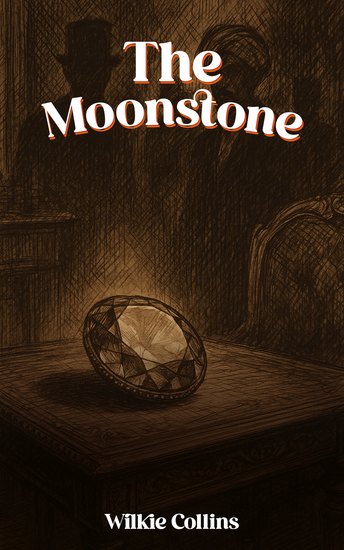
  • The Moonstone - cover

    The Moonstone

    Wilkie Collins

    • 0
    • 0
    • 0
    Widely regarded as the first modern detective novel in English literature, The Moonstone is Wilkie Collins's masterful blend of mystery, suspense, and psychological insight. With its intricate plot and unforgettable characters, the novel set the foundation for the detective genre and remains one of the most influential works of Victorian fiction.
    
    The story begins with the theft of a priceless yellow diamond—known as the Moonstone—during a lavish English country house celebration. The gem carries a dark and ancient curse, having been taken from an Indian temple, and its disappearance sets off a chain of suspicion, secrecy, and unexpected revelations. As the mystery deepens, the truth is pursued through a series of personal narratives, each offering a different perspective and uncovering hidden motives.
    
    At the heart of the novel is the brilliant use of multiple narrators, a groundbreaking technique that allows readers to piece together the mystery alongside the characters. From the steadfast loyalty of Betteredge to the sharp intellect of the iconic Sergeant Cuff, Collins creates a rich cast whose personal flaws and virtues drive the investigation forward. Beneath the surface of the crime lies a deeper exploration of guilt, colonialism, obsession, and the fragile boundaries between reason and emotion.
    
    More than a puzzle to be solved, The Moonstone is a profound study of human nature and social order. Collins combines suspense with humor, romance, and moral complexity, crafting a narrative that is as intellectually engaging as it is entertaining.
    
    A timeless classic, The Moonstone is essential reading for fans of mystery, classic literature, and detective fiction. Its enduring influence can be seen in the works of Arthur Conan Doyle, Agatha Christie, and countless others who followed in Collins's footsteps.
    Zum Buch
  • Betty Brown the St Giles Orange Girl - From their pens to your ears genius in every story - cover

    Betty Brown the St Giles Orange...

    Hannah More

    • 0
    • 0
    • 0
    Hannah More was born on February 2nd, 1745 at Fishponds in the parish of Stapleton, near Bristol. She was the fourth of five daughters. 
    The City of Bristol, at that time, was a centre for slave-trading and Hannah would, over time, become one of its staunchest critics.  
    She was keen to learn, possessed a sharp intellect and was assiduous in studying.  Hannah first wrote in 1762 with The Search after Happiness (by the mid-1780s some 10,000 copies had been sold). 
    In 1767 Hannah became engaged to William Turner.  After six years, with no wedding in sight, the engagement was broken off.  Turner then bestowed upon her an annual annuity of £200.  This was enough to meet her needs and set her free to pursue a literary career.   
    Her first play, The Inflexible Captive, was staged at Bath in 1775. The famous David Garrick himself produced her next play, Percy, in 1777 as well as writing both the Prologue and Epilogue for it.  It was a great success when performed at Covent Garden in December of that year.  
    Hannah turned to religious writing with Sacred Dramas in 1782; it rapidly ran through nineteen editions. These and the poems Bas-Bleu and Florio (1786) mark her gradual transition to a more serious and considered view of life. 
    Hannah contributed much to the newly-founded Abolition Society including, in February 1788, her publication of Slavery, a Poem recognised as one of the most important of the abolition period.   
    Her work now became more evangelical.  In the 1790s she wrote several Cheap Repository Tracts which covered moral, religious and political topics and were both for sale or distributed to literate poor people.  The most famous is, perhaps, The Shepherd of Salisbury Plain, describing a family of incredible frugality and contentment. Two million copies of these were circulated, in one year. 
    In 1789, she purchased a small house at Cowslip Green in Somerset. She was instrumental in setting up twelve schools in the area by 1800. 
    She continued to oppose slavery throughout her life, but at the time of the Abolition Bill of 1807, her health did not permit her to take as active a role in the movement as she had done in the late 1780s, although she maintained a correspondence with Wilberforce and others.  
    In July 1833, the Bill to abolish slavery throughout the British Empire passed in the House of Commons, followed by the House of Lords on August 1st. 
    Hannah More died on September 7th, 1833.
    Zum Buch