¡Acompáñanos a viajar por el mundo de los libros!
Añadir este libro a la estantería
Grey
Escribe un nuevo comentario Default profile 50px
Grey
Suscríbete para leer el libro completo o lee las primeras páginas gratis.
All characters reduced
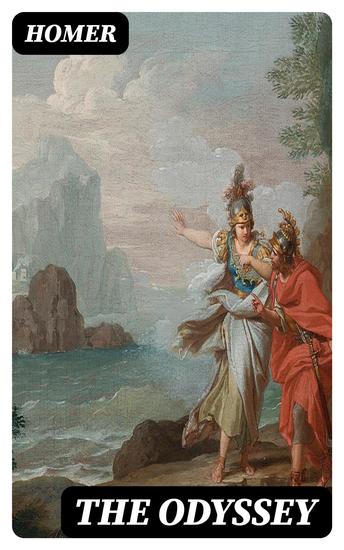
The Odyssey - cover

The Odyssey

Homer Homer

Traductor Alexander Pope

Editorial: DigiCat

  • 0
  • 0
  • 0

Sinopsis

Homer's "The Odyssey" is an epic poem that intricately weaves the themes of adventure, loyalty, and identity through the odyssey of its protagonist, Odysseus, as he journeys home after the Trojan War. Composed in the 8th century BCE, this foundational work of Western literature combines lyrical beauty with complex narrative techniques, including the use of in medias res storytelling and the interplay of free will versus fate. Rich in symbolism and character development, the poem examines the struggles of human existence, the nature of suffering, and the enduring power of home and family against the backdrop of ancient Greek culture and mythology. Homer, traditionally believed to be a blind bard from ancient Greece, is often hailed as the father of Western literature. His intimate knowledge of oral storytelling techniques likely shaped the structure and poetic form of "The Odyssey." The poem serves as both a personal reflection of the challenges of return and a social commentary on heroism, emphasizing the values of courage, perseverance, and the bonds of kinship. Homer's own historical context, marked by the Greek Dark Ages, profoundly influenced the themes of nostalgia and loss found within this narrative. I highly recommend "The Odyssey" to readers seeking profound insights into the human condition through the lens of timeless storytelling. This epic not only provides a thrilling adventure filled with mythical creatures and divine interventions but also prompts readers to reflect on their own journeys of self-discovery, belonging, and the intricate relationships that shape our lives.
Disponible desde: 28/05/2022.
Longitud de impresión: 311 páginas.

Otros libros que te pueden interesar

  • Sense and Sensibility - cover

    Sense and Sensibility

    Jane Austen

    • 0
    • 0
    • 0
    "Sense and Sensibility" is the story of two sisters, Elinor and Marianne Dashwood, who have contrasting temperaments. On the surface Elinor, the older sister represents sense or reason while Marianne represents sensibility or emotion, however upon closer examination we find that they both exhibit varying aspects of each characteristic. A classic coming of age story "Sense and Sensibility" was Jane Austen's first published novel.
    
    ©2020 Pandora's Box (P)2020 Pandora's Box
    Ver libro
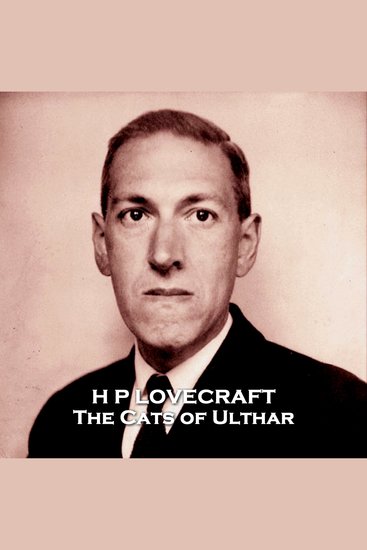
  • The Cats of Ulthar - From their pens to your ears genius in every story - cover

    The Cats of Ulthar - From their...

    HP Lovecraft

    • 0
    • 0
    • 0
    Howard Phillips Lovecraft is among the greatest American masters of fantasy and the supernatural.  
    Born in 1890, a native of Providence, Rhode Island, his health was uncertain from childhood and he led a sheltered early life. His semi-invalidism enabled him to read omnivorously, and as a shy imaginative child he began to invent what would in his adult life become a whole macabre fantastic world of his own, peopled by creatures out of his own weird imagination.  
    As an adult he was retiring, almost a recluse. Tall, thin and pale, but with bright alert eyes, he was much given to wandering his native city in the dark hours of the night, and he became a devoted student of its antiquities.  
    Although he began to write early he had nothing published until he was in his twenties. He set many of his stories around the imaginary town of Arkham, and invented an entire mythology of his own, its core being the demoniac cult of Cthulhu, based on the lore or legend that the world was at one time inhabited by another race who, in practising black magic, lost their foothold or were expelled, yet live on outside, ever ready to take possession of this earth again. 
    Since his early death in 1937 his stories have continued to attract attention and praise from an ever-growing audience.
    Ver libro
  • Better Dead - From their pens to your ears genius in every story - cover

    Better Dead - From their pens to...

    J M Barrie

    • 0
    • 0
    • 0
    Sir James Matthew Barrie, 1st Baronet, OM, was born in Kirriemuir, Angus on 9th May, 1860.  
    Barrie knew from an early age that he wished to be an author. His family wished otherwise. The compromise was that he would attend university to study literature at the University of Edinburgh. He graduated with an M.A. in April, 1882. 
    His first job was as a staff journalist for the Nottingham Journal. The London editor of the St. James's Gazette "liked that Scotch thing" in Barrie’s work and he wrote several stories for them and later several novels based on his mother’s early life.  
    Barrie though was increasingly drawn to working in the theatre.  His first plays achieved little attention but in 1901 and 1902, Barrie had back-to-back theatre successes with Quality Street and The Admirable Crichton. 
    The character of ‘Peter Pan’ first appeared in The Little White Bird in 1902. This most famous and enduring of his works; Peter Pan, or The Boy Who Wouldn't Grow Up had its first stage performance on December 27th, 1904.  
    Peter Pan would overshadow all his other works.  But his short stories cannot be overlooked.  Indeed, from today’s vantage point they are excellent gems of social manners, of class and the way characters, sometimes in the most mundane of circumstances, react in the most surprising of ways.
    Ver libro
  • Her Lover - From their pens to your ears genius in every story - cover

    Her Lover - From their pens to...

    Maxim Gorky

    • 0
    • 0
    • 0
    Alexei Maximovich Peshkov was born on 28th March 1868, in Nizhny Novgorod, Russia. 
    Better known as Maxim Gorky he was orphaned at 11 and ran away from home at 12.  At 19 he had already attempted suicide and thereafter travelled, by foot, across the Russian Empire for 5 years. 
    His first book ‘Essays & Stories’ in 1898 was a sensation and so began a long career as an author of short stories, novels and plays.  Gorky saw writing as a moral and political act that would help to change the unjust world around him.  He was an ardent early advocate of the emerging Marxist movement and publicly opposed the Tsarist regime leading several times to his arrest.  
    In 1904 he began his own theatre but the censor banned every play and Gorky was forced to abandon the project. 
    But Gorky was a financially successful author, editor, and playwright and gave monies to political parties as well as for civil rights and social reform.  The brutal shooting of workers, which set in motion the Revolution of 1905, pushed Gorky more decisively toward radical solutions.  
    In 1906 he went to the United States to raise funds for the Bolsheviks. Those experiences including a scandal over travelling with his lover and not his wife deepened his contempt for the ‘bourgeois soul.’ 
    Gorky now moved to Capri in Italy, both for health reasons and to escape the increasingly repressive times in Russia.  
    An amnesty for the 300th anniversary of the Romanov dynasty saw him return to Russia in 1914. His politics remained close to the Bolshevik cause.  But soon, after the 1918 revolution, his essays referred to Lenin as a tyrant for his senseless arrests and repression.  He was soon appealing to the outside world for food aid after the catastrophic crop failure. 
    In October 1921 Gorky returned to Italy, now in Fascist hands, and settled in Sorrento until 1932.  His health worsened with the onset of tuberculosis. 
    He wrote several successful books there but now decided to find an understanding with the communist regime. Stalin invited him home and his return was hailed as a major propaganda victory.  He was decorated with the Order of Lenin, and a province, a park, and various streets re-named in his honour. 
    But he had his faults too.  In 1933, Gorky co-edited a book on the White Sea-Baltic Canal and denied even a single prisoner died during its construction, but thousands had. As well, knowing that some Nazis were homosexual, a phrase was attributed to him that said ‘exterminate all homosexuals and fascism will vanish’.  Although he was himself was quoting another he was decidedly homophobic. 
    With the increase of Stalinist repression in 1935 Gorky was placed under unannounced house arrest. 
    Maxim Gorky died on the 18th June 1936 from pneumonia.  He was 68. 
    Stalin and Molotov were among those who carried Gorky's urn of ashes at his funeral.
    Ver libro
  • Twenty Thousand Leagues under the Sea - cover

    Twenty Thousand Leagues under...

    Jules Verne

    • 0
    • 0
    • 0
    "Twenty Thousand Leagues Under the Sea" by Jules Verne is a classic science fiction novel written in the late 19th century. The story revolves around the mysterious appearances of a massive sea creature, which generates widespread sensation and scientific debate regarding its existence.  
    The narrative focuses on Professor Pierre Aronnax, his servant Conseil, and Canadian whaler Ned Land as they embark on a journey to confront this enigmatic creature, which turns out to be far more than anyone anticipated. The novel opens by detailing the excitement surrounding sightings of a colossal sea creature reported by various ships across the oceans.  
    Professor Aronnax, who has just returned from a scientific expedition, becomes engrossed in the heated debate over the creature's existence. He decides to join the U.S. expedition aboard the frigate Abraham Lincoln, along with his companions Conseil and Ned Land, as they pursue the supposed monster. Tension builds as they prepare for their confrontation, creating a sense of suspense and wonder about what lies beneath the ocean's depths.
    Ver libro
  • Treasure Island (Part 5: My Sea Adventure) - cover

    Treasure Island (Part 5: My Sea...

    Robert Louis Stevenson

    • 0
    • 0
    • 0
    Part 5: My Sea Adventure from Treasure Island:
    "For sheer storytelling delight and pure adventure, Treasure Island has never been surpassed. From the moment young Jim Hawkins first encounters the sinister Blind Pew at the Admiral Benbow Inn until the climactic battle for treasure on a tropic isle, the novel creates scenes and characters that have fired the imaginations of generations of readers. Written by a superb prose stylist, a master of both action and atmosphere, the story centers upon the conflict between good and evil - but in this case a particularly engaging form of evil. It is the villainy of that most ambiguous rogue Long John Silver that sets the tempo of this tale of treachery, greed, and daring. Designed to forever kindle a dream of high romance and distant horizons, Treasure Island is, in the words of G. K. Chesterton, 'the realization of an ideal, that which is promised in its provocative and beckoning map; a vision not only of white skeletons but also green palm trees and sapphire seas.' G. S. Fraser terms it 'an utterly original book' and goes on to write: 'There will always be a place for stories like Treasure Island that can keep boys and old men happy.'
    Ver libro