¡Acompáñanos a viajar por el mundo de los libros!
Añadir este libro a la estantería
Grey
Escribe un nuevo comentario Default profile 50px
Grey
Suscríbete para leer el libro completo o lee las primeras páginas gratis.
All characters reduced
The Aspern Papers - cover

The Aspern Papers

Henry James

Editorial: Classica Libris

  • 0
  • 0
  • 0

Sinopsis

In this classic 1888 novella, an anonymous narrator relates his obsessive quest to acquire some letters and other private documents that once belonged to the deceased Romantic poet Jeffrey Aspern. Attempting to gain access to the papers, the property of Aspern’s former mistress, he rents a room in a decaying Venetian villa where the woman lives with her aging niece. Led by his zeal into increasingly unscrupulous behavior, the narrator is faced in the end with relinquishing his heart’s desire or attaining it an an overwhelming price.Inspired by an actual incident involving Claire Clairmont, once the mistress of Lord Byron, this masterfully written tale incorporates all those elements expected from James: psychological subtlety, deft plotting, the clash of cultures, and profoundly nuanced representation of scene, mood, and character.
Disponible desde: 12/10/2018.

Otros libros que te pueden interesar

  • Washington Irving - A Short Story Collection - One of the "founding fathers" of American literature this collection includes classics and lesser known yet equally pristine stories - cover

    Washington Irving - A Short...

    Washington Irving

    • 0
    • 0
    • 0
    Washington Irving was born on 3rd April, 1783, the youngest of 11, in New York. 
      
    Irving found his real interests away from school in literature and the theatre.  An outbreak of yellow fever at 15 moved him away from Manhattan and into the surrounding countryside providing valuable settings for later works such as ‘The Legend of Sleepy Hollow’. 
     
    By 19 Irving was writing regularly to the New York Morning Chronicle, commenting on the theatrical and social scenes.  When his health began to fail, he was sent on the Grand Tour of Europe.  Bizarrely he ignored most of the great sights on offer to concentrate on developing his social and conversational powers.  His health, though, did improve.  
     
    In 1806, back in New York to study law, he scraped a pass at the bar and then founded with several others the literary magazine Salmagundi. Irving nicknamed the city ‘Gotham City’, a name still in use today.  Moderately successful, the magazine spread Irving’s reputation beyond New York. 
     
    In 1809 while mourning the death of his teenage fiancée Irving finished his first significant book, ‘A History of New-York from the Beginning of the World to the End of the Dutch Dynsasty, by Diedrich Knickerbocker’.  It satirised local history, local historians and politics.  It received great critical acclaim. 
     
    Unfortunately his family’s established trading company was now facing great upheavals and Irving was dispatched to England to try to sort it out.  After two years he could see no way out but bankruptcy.  This left him in England with no real employment prospects, and so he returned to writing.  
     
    He sent some short stories back to New York to be published as ‘The Sketch Book of Geoffrey Crayon, Gent’.  The first part included ‘Rip Van Winkle’ and was extremely successful.  The sixth part contained ‘The Legend of Sleepy Hollow’.  
     
    Beset by literary piracy, with no copyright law at the time, he set about publishing legitimate copies in England to outwit the bootleggers.  From now on Irving published concurrently in America and England in order to render piracy obsolete.  
     
    In August 1824, he published ‘Tales of a Traveller’, which included the famed ‘The Devil and Tom Walker’.  
     
    In 1826, the American Minister to Spain, invited him to Madrid where he could examine the many historical documents that he had access to.  Irving reveled in both the size of the libraries he was granted access to and their rich quality.  Historical works flowed from his pen further enhancing his reputation and fortune.   
     
    Following the completion of ‘Tales of the Alhambra’ in 1832, Irving returned to America after 17 years abroad. He was now a figurehead of American literature and dispensed advice to Edgar Allan Poe amongst others.  Irving also became an advocate for American copyright legislation.  
     
    A later appointment as Minister to Spain in 1842 left him disheartened at the antics of the various political factions he encountered.  It also afforded him no time to write as he had hoped.  
     
    On his return home he began an ‘Author’s Revised Edition’ of his works agreeing an unprecedented deal for 12 per cent of the retail profits.  
     
    Washington Irving died of a heart attack at his ‘Sunnyside’ home on the 28th November 1859 at the age of 76, a few months after completing his five volume George Washington biography, in whose honour he had been named. 
     
    01 - Washington Irving - A Short Story Collection - An Introduction 
    02 - The Legend of Sleepy Hollow by Washington Irving 
    03 - The Devil and Tom Walker by Washington Irving 
    04 - The Art of Book-Making by Washington Irving 
    05 - The Conquest of the Earth by the Moon by Washington Irving 
    06 - John Bull by Washington Irving
    Ver libro
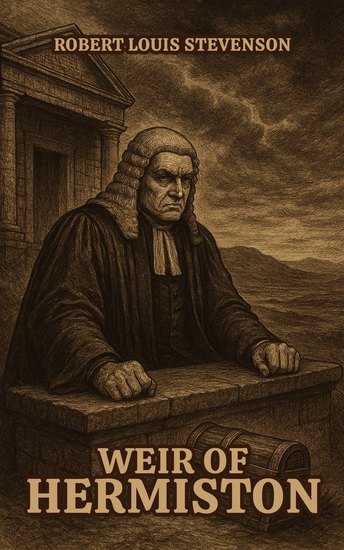
  • Weir of Hermiston - cover

    Weir of Hermiston

    Robert Louis Stevenson

    • 0
    • 0
    • 0
    First published posthumously in 1896, Weir of Hermiston is widely regarded as one of Robert Louis Stevenson's most powerful and mature novels, a dark and compelling exploration of authority, justice, and human conflict.
    
    Set in early 19th-century Scotland, the novel centers on the intense and tragic relationship between Archie Weir and his father, Adam Weir, the formidable Lord Hermiston. As a harsh and unyielding judge, Lord Hermiston embodies the rigid moral and legal authority of his time, ruling from the bench with uncompromising severity. Archie, sensitive and idealistic, struggles to reconcile his sense of justice and compassion with his father's cold absolutism.
    
    Seeking refuge from this oppressive relationship, Archie retreats to the countryside, where he becomes entangled in a passionate and dangerous romance that draws him into a web of jealousy, betrayal, and violence. As personal loyalties clash with moral duty, the novel builds toward an inevitable and haunting tragedy.
    
    Stevenson's prose in Weir of Hermiston is rich, atmospheric, and psychologically profound. Through vividly drawn characters and a stark Scottish landscape, he examines the destructive consequences of inflexible authority and the emotional cost of moral rigidity. Although left unfinished at Stevenson's death, the novel remains remarkably complete in its emotional power and thematic depth.
    
    Weir of Hermiston stands as a masterwork of classic literature—somber, intense, and deeply human. It is an essential read for those who appreciate literary fiction that confronts the complexities of justice, family, and the darker corners of the human heart.
    Ver libro
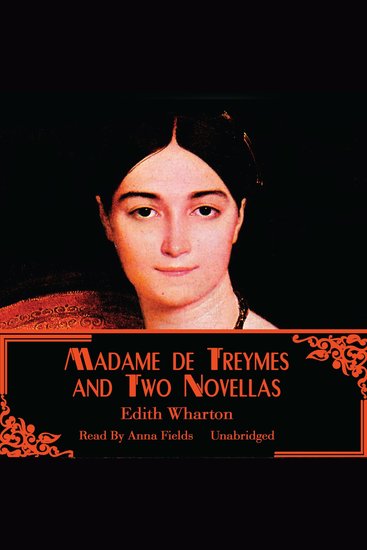
  • Madame de Treymes and Two Novellas - cover

    Madame de Treymes and Two Novellas

    Edith Wharton

    • 0
    • 0
    • 0
    Madame de Treymes follows the fortunes of two innocents abroad: Fanny Frisbee of New York, unhappily married to the dissolute Marquis de Malrive, scion of a great house of the Faubourg St. Germain; and John Durham, her childhood friend, who arrives in Paris intent on persuading Fanny to divorce her husband and marry him instead. A scintillating picture of American and French society at the turn of the century, it is also a subtle investigation of the clash of cultures and the role of women in the social hierarchy. 
    This edition also includes the novellas Sanctuary and Bunner Sisters, two short works rich in the social satire and cunning insight that characterized Wharton’s acclaimed novels The House of Mirth and The Age of Innocence.
    Ver libro
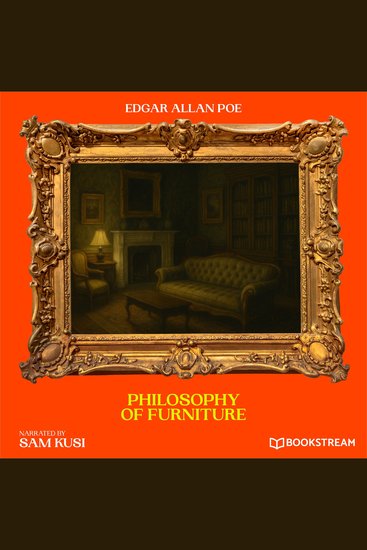
  • Philosophy of Furniture - cover

    Philosophy of Furniture

    Edgar Allan Poe

    • 0
    • 0
    • 0
    "The Philosophy of Furniture" is an essay written by American author Edgar Allan Poe and published in 1840. It presents Poe's theories on interior decorating.
    Poe begins by suggesting that the English are the "supreme" examples of internal decoration, above the Italians, French, Chinese, Scotch, Dutch, Spanish and Russians. "Yankees", he says, "are preposterous". He blames this American failing on a lack of aristocracy by blood, having instead "an aristocracy of dollars". Because of that, decoration in America has become a "mere parade of costly appurtenances" to create an "impression of the beautiful". He contrasts this with England, where wealth is not the loftiest ambition to constitute "nobility".
    Ver libro
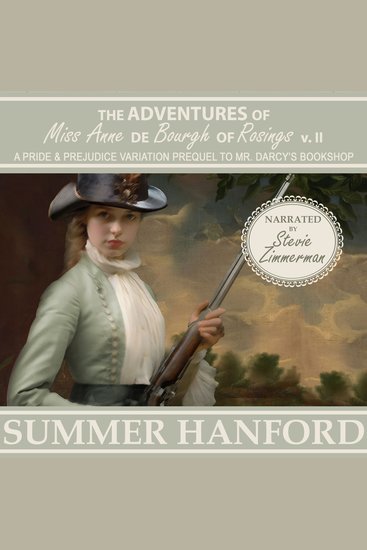
  • The Adventures of Miss Anne de Bourgh of Rosings v II - A Pride and Prejudice Prequel to Mr Darcy's Bookshop - cover

    The Adventures of Miss Anne de...

    Summer Hanford

    • 0
    • 0
    • 0
    Please Note: This is a short novella. 
    Miss Anne de Bourgh might be a girl, but that doesn't stop her from hunting, shooting, riding, and fencing as well as her cousins, and when her cousin Richard is about to make a life-ruining mistake, Anne hatches a plot to put things right. But in order to do so, she'll need to team up with her personal nemesis. 
    That's right, this time Anne must collude not against, but with, her least favorite cousin . . . Henry, heir to the Earl of Matlock. 
    The Adventures of Miss Anne de Bourgh of Rosings v. II is a short novella prequel to Mr. Darcy's Bookshop and takes place about a year after The Adventures of Miss Anne de Bourgh of Rosings v. I. Enjoy!
    Ver libro
  • The Remarkable Rocket - cover

    The Remarkable Rocket

    Oscar Wilde

    • 0
    • 0
    • 0
    Oscar Wilde’s The Remarkable Rocket is a witty and satirical fairy tale about vanity, pride, and self-importance. Through the story of a boastful rocket who believes himself destined for greatness, Wilde delivers a clever moral fable filled with humor, irony, and sharp social commentary. Elegant, imaginative, and timeless, this classic tale is perfect for readers who enjoy literary fairy tales, Victorian satire, and short stories with deeper meaning.
    Ver libro