Join us on a literary world trip!
Add this book to bookshelf
Grey
Write a new comment Default profile 50px
Grey
Subscribe to read the full book or read the first pages for free!
All characters reduced
The History Of Tom Jones A Foundling - cover

The History Of Tom Jones A Foundling

Henry Fielding

Publisher: Caelwick Press

  • 0
  • 0
  • 0

Summary

A baby is deposited in the bed of Squire Allworthy, a wealthy widower in Georgian England. The baby is given the name of Tom Jones and given to Allworthy's live-in sister to raise. She soon marries and has her own son, and the two boys are raised together, with the usual household rivalries and jealousies. As Tom reaches his late teenage years, he discovers the several young ladies that surround, but especially the one that lives next door. Circumstances eventually lead to Tom being thrown out of Allworthy's house, and the bulk of the novel is about the resulting adventures and pursuit of his beloved Sophia. Tom Jones is many things: a coming-of-age story, a romance, a picaresque, but it is first and foremost a comedy. It is also one of the earliest English novels, and was hugely popular when it was released, going through four printings in its first year. Fielding used the first chapter of each of its eighteen "books" to weigh in on a wide-range of topics, from critics to religion, and his narrator is as important a character in the novel as Tom himself. Highly regarded and highly popular, it is still in print over three-and-a-half centuries after its initial success. Henry Fielding (died 1754) was one of the foundational figures of Western literary tradition. Their work has endured across generations and continues to be read and studied worldwide. As a work of classic literary fiction, The History Of Tom Jones A Foundling exemplifies the narrative craft and social insight that defined great storytelling of its era. Literary fiction of this period was characterized by careful attention to character psychology, social milieu, and the moral questions that animated public discourse.
Available since: 05/19/2026.
Print length: 1182 pages.

Other books that might interest you

  • A Modern Utopia - cover

    A Modern Utopia

    H. G. Wells

    • 0
    • 0
    • 0
    A thought-provoking look at an ideal world.
    
    The novel presents a detailed vision of a perfect society, exploring governance, equality, and human behavior. It challenges readers to rethink existing systems and imagine new possibilities.
    
    Blending fiction with philosophy, it offers both insight and imagination.
    
    Written by H. G. Wells.
    
    Download now to explore a world of ideas.
    Show book
  • Conan the Barbarian: The Collection - cover

    Conan the Barbarian: The Collection

    Robert E. Howard

    • 0
    • 0
    • 0
    This Audiobook contains:01. The Phoenix on the Sword Starts at chapter 102. The Scarlet Citadel Starts at chapter 603. The Tower of the Elephant Starts at chapter 1104. Black Colossus Starts at chapter 1405. The Pool Of The Black One Starts at chapter 1806. Rogues in the House Starts at chapter 2107. Queen of the Black Coast Starts at chapter 2408. The Devil in Iron Starts at chapter 2909. The People of the Black Circle  Starts at chapter 3510. A Witch Shall be Born Starts at chapter 4511. Jewels of Gwahlur Starts at chapter 5112. Beyond the Black River Starts at chapter 5513. Shadows in Zamboula Starts at chapter 6314. The Hour of the Dragon Starts at chapter 6715. Red Nails Starts at chapter 8816. Gods of the North Starts at chapter 9517. The Hyborian Age Starts at chapter 96
    Show book
  • A Pair of Blue Eyes - cover

    A Pair of Blue Eyes

    Thomas Hardy

    • 0
    • 0
    • 0
    A young architect is sent to a remote Cornish parish to survey a church tower and falls in love with the rector's daughter; so, later, does the London critic who reviews his work. Hardy had been that architect, restoring churches for a living, and he set the novel on the cliffs he knew — where he also invented the cliffhanger, quite literally, in the most famous chapter.
    Show book
  • Hadji Murat - cover

    Hadji Murat

    Leo Tolstoy

    • 0
    • 0
    • 0
    Tolstoy’s final work—a gripping novella about the struggle between the Muslim Chechens and their inept occupiers—is a powerful moral fable for our time. 
     
    Inspired by a historical figure Tolstoy heard about while serving in the Caucasus, this story brings to life the famed warrior Hadji Murat, a Chechen rebel who has fought fiercely and courageously against the Russian empire. After a feud with his commander he defects to the Russians, only to find that he is now trusted by neither side. He is first welcomed but then imprisoned by the Russians under suspicion of being a spy, and when he hears news of his wife and son held captive by the Chechens, Murat risks all to try to save his family. In the award-winning Pevear and Volokhonsky translation, Hadji Murat is a thrilling and provocative portrait of a tragic figure that has lost none of its relevance. 
     
    This audiobook is expertly read by Constantine Gregory, with audio engineering by Mike Thal. It was produced and published by Echo Point Books & Media, an independent bookseller in Brattleboro, Vermont.
    Show book
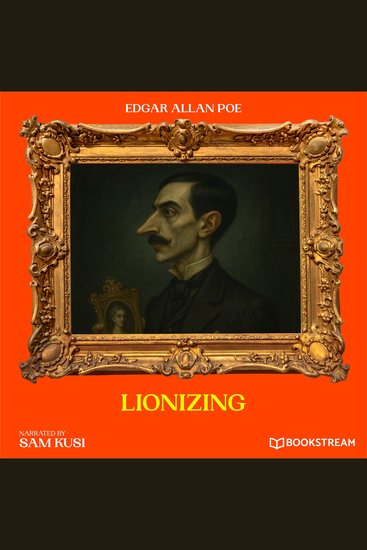
  • Lionizing - cover

    Lionizing

    Edgar Allan Poe

    • 0
    • 0
    • 0
    Lion-izing (A Tale): I am — that is to say, I was, a great man. But I am neither the author of Junius, nor the man in the mask — for my name is Thomas Smith, and I was born somewhere in the city of Fum-Fudge. The first action of my life was the taking hold of my nose with both hands. My mother saw this and called me a genius. My father wept for joy, and bought me a treatise on Nosology.
    Show book
  • A Man with Two Lives - From their pens to your ears genius in every story - cover

    A Man with Two Lives - From...

    Ambrose Bierce

    • 0
    • 0
    • 0
    Ambrose Gwinnett Bierce was born on 24th June 1842 at Horse Cave Creek in Meigs County, Ohio. His parents were poor but they introduced him to literature at an early age, instilling in him a deep appreciation of books, the written word and the elegance of language.  
    Growing up in Koscuisko County, Indiana poverty and religion were defining features of his childhood, and he would later describe his parents as “unwashed savages” and fanatically religious, showing him little affection but always quick to punish. He came to resent religion, and his introduction to literature appears to be their only positive effect. 
    At age 15 Bierce left home to become a printer’s devil, mixing ink and fetching type at The Northern Indian, a small Ohio paper. Falsely accused of theft he returned to his farm and spent time sending out work in the hopes of being published. 
    His Uncle Lucius advised he be sent to the Kentucky Military Institute. A year later he was commissioned as an Officer.  As the Civil War started Bierce enlisted in the 9th Indiana Infantry Regiment.  
    In April 1862 Bierce fought at the Battle of Shiloh, an experience which, though terrifying, became the source of several short stories. Two years later he sustained a serious head wound and was off duty for several months. He was discharged in early 1865.  
    A later expedition to inspect military outposts across the Great Plains took him all the way to San Francisco. He remained there to become involved with publishing and editing and to marry, Mary Ellen on Christmas Day 1871.  They had a child, Day, the following year.  
    In 1872 the family moved to England for 3 years where he wrote for Fun magazine. His son, Leigh, was born, and first book, ‘The Fiend’s Delight’, was published.  
    They returned to San Francisco and to work for a number of papers where he gained admiration for his crime reporting. In 1887 he began a column at the William Randolph Hearst’s San Francisco Examiner.  
    Bierce’s marriage fell apart when he discovered compromising letters to his wife from a secret admirer. The following year, 1889 his son Day committed suicide, depressed by romantic rejection. 
    In 1891 Bierce wrote and published the collection of 26 short stories which included ‘An Occurrence at Owl Creek Bridge’.  Success and further works including poetry followed.  
    Bierce with Hearst’s resources helped uncover a financial plot by a railroad to turn 130 million dollars of loans into a handout. Confronted by the railroad and asked to name his price Bierce answered “my price is $130 million dollars. If, when you are ready to pay, I happen to be out of town, you may hand it over to my friend, the Treasurer of the United States”.  
    He now began his first foray as a fabulist, publishing ‘Fantastic Fables’ in 1899.  But tragedy again struck two years later when his second son Leigh died of pneumonia relating to his alcoholism.  
    He continued to write short stories and poetry and also published ‘The Devil’s Dictionary’.  
    At the age of 71, in 1913 Bierce departed from Washington, D.C., for a tour of the battlefields where he had fought during the civil war. At the city of Chihuahua he wrote his last known communication, a letter to a friend. It’s closing words were “as to me, I leave here tomorrow for an unknown destination,” Ambrose Bierce then vanished without trace.
    Show book