Join us on a literary world trip!
Add this book to bookshelf
Grey
Write a new comment Default profile 50px
Grey
Subscribe to read the full book or read the first pages for free!
All characters reduced
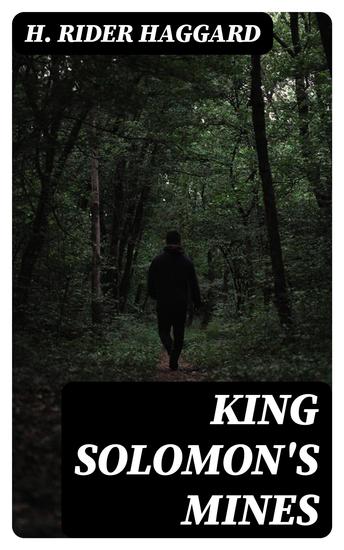
King Solomon's Mines - cover

King Solomon's Mines

H. Rider Haggard

Publisher: DigiCat

  • 0
  • 0
  • 0

Summary

In "King Solomon's Mines," H. Rider Haggard crafts a pioneering tale of adventure that weaves together elements of exploration, treasure hunting, and the clash of cultures. Set against the backdrop of unexplored African landscapes, the narrative follows the intrepid Allan Quatermain as he embarks on a perilous quest to locate the legendary mines of King Solomon. Haggard's vivid descriptions and robust characterization are emblematic of the late 19th-century literary landscape, where colonial exploration narratives gained prominence, infusing the tale with both excitement and an undercurrent of social commentary regarding Western attitudes toward Africa. Haggard's own experiences in Africa as an explorer and surveyor significantly shaped his writing. Born in 1856, he was influenced by the prevailing imperialistic sentiment of his time but also revealed a nuanced understanding of African cultures through his encounters. His literary output is often marked by a fascination with adventure and discovery, reflecting the zeitgeist of an era marked by colonial ambition but also a burgeoning awareness of its complex implications. "King Solomon's Mines" is highly recommended for readers who appreciate thrilling adventure literature steeped in historical context. Haggard's work not only entertains but also invites reflection on the complexities of empire and identity, making it a seminal read for anyone interested in the intersections of adventure, imperial literature, and cultural exploration.
Available since: 06/13/2022.
Print length: 194 pages.

Other books that might interest you

  • The Red Badge Of Courage - cover

    The Red Badge Of Courage

    Stephen Crane

    • 0
    • 0
    • 0
    Stephen Crane's "The Red Badge of Courage" is a classic novel of American literature that offers a candid portrayal of the experiences and emotions of a young soldier during the American Civil War. Centered around Henry Fleming, a young and naive Union soldier, the novel delves into his internal struggles with fear, courage, and the harsh realities of warfare. Crane's work stands out for its vivid descriptions and its profound psychological depth, which offers a stark contrast to the romanticized depictions of war. The novel paints a raw, unvarnished picture of the battlefield and the metamorphosis of its protagonist, making it one of the most realistic war novels of its time.
    Show book
  • A Birthday - cover

    A Birthday

    Katherine Mansfield

    • 0
    • 0
    • 0
    In A Birthday by Katherine Mansfield we have the theme of responsibility, selfishness, gender roles, appearance, suffering and paralysis. Taken from her In a German Pension collection the story is narrated in the third person by an unnamed narrator and after reading the story the reader realises that Mansfield may be exploring the theme of responsibility. Andreas if anything thinks only of himself. True he goes to fetch Doctor Erb but apart from this Andreas takes no responsibility for the condition that Anna may be in.
    Show book
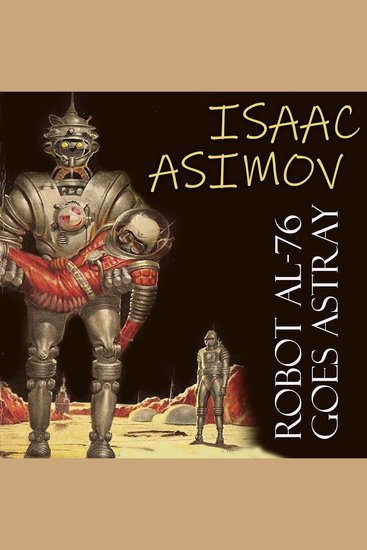
  • Robot AL-76 Goes Astray - cover

    Robot AL-76 Goes Astray

    Isaac Asimov

    • 0
    • 0
    • 0
    "Robot AL-76 Goes Astray" is a humorous science fiction short story by Isaac Asimov, originally published in the February 1942 issue of Amazing Stories and included in the collections The Rest of the Robots (1964) and The Complete Robot (1982). Asimov selected the story for inclusion in the 1949 anthology My Best Science Fiction Story.
    Show book
  • The Odes of Anacreon - cover

    The Odes of Anacreon

    Anacreon

    • 0
    • 0
    • 0
    Anacreon (582 BCE–485 BCE) was a Greek lyric poet born in Teos, an Ionian city on the coast of Asia Minor. He likely moved to Thrace in 545 BCE with others from his city when it was attacked by Persians. He then moved to Samos, to Athens, and possibly again to Thessaly, seeking a safe place to write his poems as his patrons (including Polycrates, tyrant of Samos, and Hipparchus, brother of Athenian tyrant Hippias) kept being murdered. It is unknown where Anacreon died, though he lived to the unusually advanced age of 85. 
    Few of Anacreon's works survive, but those that do focus on wine, love (homosexual and heterosexual), and the overall pleasures of the legendary Roman symposium. Anacreon used various techniques in his writings, including self-deprecation and irony. The collection of miscellaneous Greek poems from the Hellenistic Age and beyond known as the Anacreontea was "mistakenly labeled" with Anacreon's name. Despite later appreciation for Anacreon's true poems, his works were not appreciated during his lifetime.
    This work is a collection of the Odes of Anacreon, translated into English by Thomas Moore.
    Show book
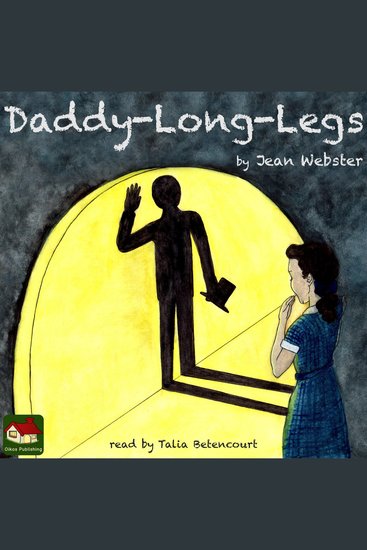
  • Daddy-Long-Legs - cover

    Daddy-Long-Legs

    Jean Webster

    • 0
    • 0
    • 0
    When Jerusha Abbott, an eighteen-year-old girl living in an orphan asylum, was told that a mysterious millionaire had agreed to pay for her education, it was like a dream come true. For the first time in her life, she had someone she could pretend was "family." But everything was not perfect, for he chose to remain anonymous and asked that she only write him concerning her progress in school. Who was this mysterious gentleman and would Jerusha ever meet him?
    Show book
  • Master and Man - cover

    Master and Man

    Leo Tolstoy

    • 0
    • 0
    • 0
    "The thought that he might, and very probably would die that night occurred to him, but did not seem particularly unpleasant or dreadful."
    Master and Man is the haunting tale of a landowner and his servant caught in a snowstorm, where survival hinges not on status but on sacrifice. As the cold deepens and death looms, Tolstoy strips away social pretenses to reveal the redemptive power of selflessness.
    Leo Tolstoy (1828–1910) was a Russian novelist, philosopher, and social reformer, widely regarded as one of the greatest writers of all time. He is best known for his epic novels War and Peace and Anna Karenina, both celebrated for their intricate character development and profound exploration of moral dilemmas and human nature. In his later years, Tolstoy experienced a spiritual awakening which led him to reject materialism and embrace a life of simplicity, seeking to align his life with his beliefs about nonviolence and compassion. Tolstoy's legacy endures not only through his literary masterpieces but also through his profound impact on literature and philosophy.
    Show book