Begleiten Sie uns auf eine literarische Weltreise!
Buch zum Bücherregal hinzufügen
Grey
Einen neuen Kommentar schreiben Default profile 50px
Grey
Jetzt das ganze Buch im Abo oder die ersten Seiten gratis lesen!
All characters reduced
Prejudices First Series - cover

Prejudices First Series

H. L. Mencken

Verlag: DigiCat

  • 0
  • 0
  • 0

Beschreibung

In "Prejudices, First Series," H. L. Mencken presents a collection of essays that keenly dissect contemporary American culture, politics, and societal norms during the early 20th century. Mencken's literary style is characterized by his sardonic wit and incisive critiques, employing a blend of observational humor and profound cynicism. The essays reflect a broader literary context of modernism and the rise of critical realism, often engaging with the tensions between traditional American values and the evolving cultural landscape. Through sharp prose and eloquent rhetoric, Mencken challenges the prevailing prejudices of his time, addressing topics such as the American way of life, democracy, and the hypocrisy of public sentiment. Born in 1880 in Baltimore, Mencken emerged as one of the most influential literary figures in America, serving as an editor and journalist. His upbringing in a German-American community profoundly influenced his perspectives on American society, inspiring him to critique the mediocrity he perceived around him. Mencken's unique voice and unrestrained critique make "Prejudices, First Series" an essential work for understanding the cultural dynamics of his era. This collection is highly recommended for readers seeking astute social commentary blended with humor and irony. Mencken's fearless challenge against societal norms renders this book not only intellectually stimulating but also entertaining, making it an invaluable addition to the libraries of both casual readers and scholars alike.
Verfügbar seit: 13.06.2022.
Drucklänge: 141 Seiten.
Weitere Bücher, die Sie mögen werden

  • Egyptian Art and Architecture - From the Old Kingdom to the New Kingdom - cover

    Egyptian Art and Architecture -...

    Omar Khalil

    • 0
    • 0
    • 0
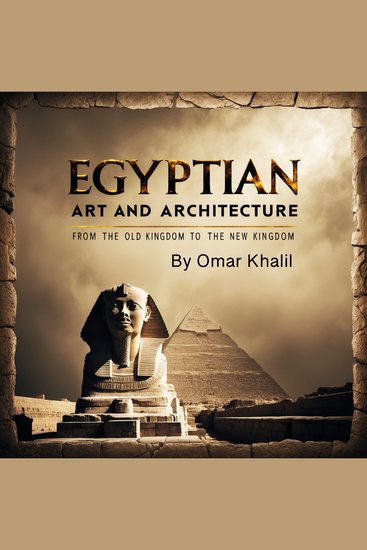
    The art and architecture of ancient Egypt are deeply intertwined with the civilization’s religious beliefs and cultural practices. Spanning over three millennia, these artistic expressions were not merely decorative but held profound symbolic meanings, reflecting the Egyptians’ worldview and their connection with the divine. The foundations of Egyptian art and architecture were laid during the early dynastic period, evolving through distinct stages that shaped the visual language of one of history’s most iconic civilizations. 
    Religion played a central role in shaping the aesthetic and thematic aspects of Egyptian art. Temples, tombs, and monuments were designed as sacred spaces, serving as a bridge between the human and divine realms. The concept of Ma’at, representing order and harmony, influenced the geometric precision and symmetrical layouts seen in temple complexes and pyramid construction. Deities were depicted with specific attributes, emphasizing their powers and roles within the cosmos. This symbolic representation extended to Pharaohs, who were portrayed as divine intermediaries, blending human and godly features to signify their sacred status. 
    Symbolism permeated every facet of Egyptian art, from monumental statues to delicate jewelry. Hieroglyphs and pictorial motifs were not merely decorative; they conveyed narratives, prayers, and genealogies. The ankh, symbolizing life, and the scarab, representing transformation and rebirth, are recurring motifs that held spiritual significance. Colors also played a symbolic role: red signified vitality, blue denoted divinity, and gold represented eternity. This symbolic language was meticulously maintained across centuries, creating a consistent artistic identity despite historical changes.
    Zum Buch
  • Queens of the Wild - Pagan Goddesses in Christian Europe: An Investigation - cover

    Queens of the Wild - Pagan...

    Ronald Hutton

    • 0
    • 0
    • 0
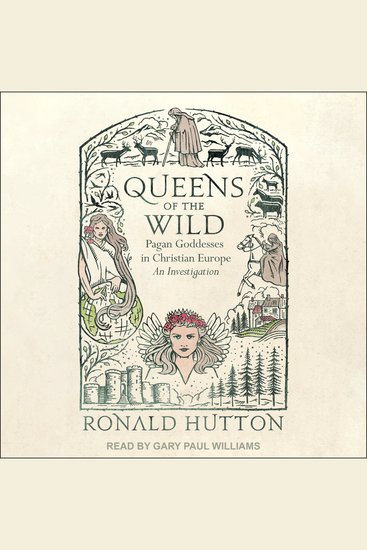
    A concise history of the goddess-like figures who evade both Christian and pagan traditions, from the medieval period to the present day 


    In this riveting account, renowned scholar Ronald Hutton explores the history of deity-like figures in Christian Europe. Drawing on anthropology, archaeology, literature, and history, Hutton shows how hags, witches, the fairy queen, and the Green Man all came to be, and how they changed over the centuries. 


    Looking closely at four main figures—Mother Earth, the Fairy Queen, the Mistress of the Night, and the Old Woman of Gaelic tradition—Hutton challenges decades of debate around the female figures who have long been thought versions of pre-Christian goddesses. He makes the compelling case that these goddess figures found in the European imagination did not descend from the pre-Christian ancient world, yet have nothing Christian about them. It was in fact nineteenth-century scholars who attempted to establish the narrative of pagan survival that persists today.
    Zum Buch
  • All Our Trials - Prisons Policing and the Feminist Fight to End Violence - cover

    All Our Trials - Prisons...

    Emily L. Thuma

    • 0
    • 0
    • 0
    During the 1970s, grassroots women activists in and outside of prisons forged a radical politics against gender violence and incarceration. Emily L. Thuma traces the making of this anticarceral feminism at the intersections of struggles for racial and economic justice, prisoners' and psychiatric patients' rights, and gender and sexual liberation. 


    All Our Trials explores the organizing, ideas, and influence of those who placed criminalized and marginalized women at the heart of their antiviolence mobilizations. This activism confronted a "tough on crime" political agenda and clashed with the mainstream women's movement's strategy of resorting to the criminal legal system as a solution to sexual and domestic violence. Drawing on extensive archival research and first-person narratives, Thuma weaves together the stories of mass defense campaigns, prisoner uprisings, broad-based local coalitions, national gatherings, and radical print cultures that cut through prison walls. In the process, she illuminates a crucial chapter in an unfinished struggle—one that continues in today's movements against mass incarceration and in support of transformative justice.
    Zum Buch
  • Sociology of Everyday Life - Exploring Daily Interactions and Experiences (3 in 1) - cover

    Sociology of Everyday Life -...

    Fred Grandsen

    • 0
    • 0
    • 0
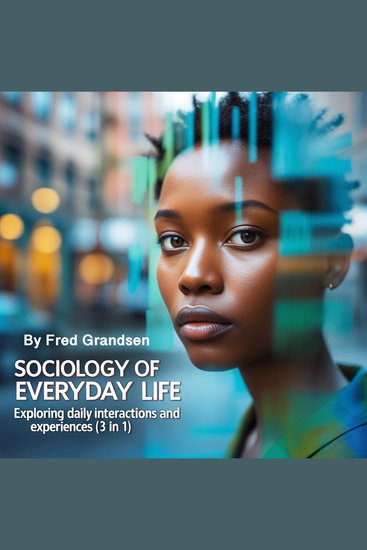
    This book offers a compelling examination of the everyday social processes that shape our lives, interactions, and personal identities. 
    The Sociology of Everyday Life looks at the seemingly mundane aspects of our daily routines, uncovering the social structures, behaviors, and practices that govern how we engage with others in everyday settings. This book explores the impact of culture, class, and social norms on routine activities like work, leisure, and family life, offering a deeper understanding of the dynamics that shape how we live, communicate, and relate to one another. 
    The Sociology of Religion explores how religion influences individual and collective behavior, social interactions, and societal structures. This book examines the role of religious beliefs and practices in shaping communities, values, and social norms. It delves into topics such as religious identity, rituals, secularism, and the ways in which religion intersects with politics, economics, and culture in different societies. 
    The Sociology of Families in Flux focuses on the evolving nature of family structures and relationships in the modern world. It looks at how families adapt to social, economic, and cultural changes, exploring themes such as divorce, single parenting, same-sex families, and the impact of globalization. This book provides insights into the ways families are redefined and how their roles continue to change in contemporary society. 
    Together, these three books offer a comprehensive understanding of how social structures influence our daily lives, interactions, and familial relationships. Through the lens of sociology, they reveal how religion, family dynamics, and everyday routines shape our experiences and interactions within the broader context of society.
    Zum Buch
  • Medieval Conspiracy Theories: The History of the Most Popular Conspiracy Theories about the Middle Ages - cover

    Medieval Conspiracy Theories:...

    Editors Charles River

    • 0
    • 0
    • 0
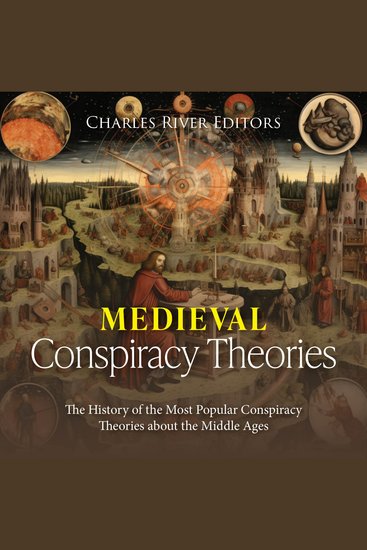
    Few eras are easier to let the imagination run wild than the Middle Ages, which have often been coined the Dark Ages based on a perceived lack of progress and information. Indeed, we can say that it is not completely unfounded because we know less about that historical period compared to those that come after it. In addition, it is a period marked by a great number of deaths caused by plague epidemics, crusades, and inquisitorial persecutions. Often, researchers are not even sure how and why certain events happened, and these mysteries still occupy the attention of historians. 
    	This era was very harsh, difficult, and often gloomy. In that greyness, burdened by various fears, people were looking for something that would light up their lives and bring them a feeling of beauty and joy. People experienced all things and events around them more intensely than people do today. They often exaggerated the events that happened, giving them a mystical and divine character. For this reason, medieval sources are taken with a grain of salt and are first carefully examined before believing.  
    	At the same time, some historical mysteries about the era may never be solved, if only because the relevant excavated material has been lost or the archaeological site has been destroyed. In other cases, it is because new evidence is unlikely to emerge, or the surviving evidence is too vague to lead to a consensus. Of course, the lack of answers only makes these enigmas more intriguing.  
    	Similarly, few stories have the power to mesmerize as much as unsolved mysteries, so codes and missing puzzle pieces fill people with excitement and intrigue. What did a source want to say with that coded message? What mysteries did they hide? 
    Zum Buch
  • Settling the Score -- Part 1: The Favor (first time gay sports erotica) - cover

    Settling the Score -- Part 1:...

    Josh Hunter

    • 0
    • 12
    • 0
    What’s worse than a bully? --A bully who’s the hottest jock in school! 
    Wade Johnson thinks that he can get away with anything, just because he’s the quarterback of our football team. He caught me staring at him during gym class freshman year, and branded me a “queer”. He and his teammates have been making my life hell ever since. 
    But golden boy Wade just slipped up, and now he’s about to lose it all: his spot on the team, his hot cheerleader girlfriend, his college scholarship. And he’s begging for my help. 
    So what am I going to do with an arrogant jock who needs to be taught a lesson?  
    • First time gay BDSM high school jock slave sex story MM erotica •
    Zum Buch