Join us on a literary world trip!
Add this book to bookshelf
Grey
Write a new comment Default profile 50px
Grey
Subscribe to read the full book or read the first pages for free!
All characters reduced
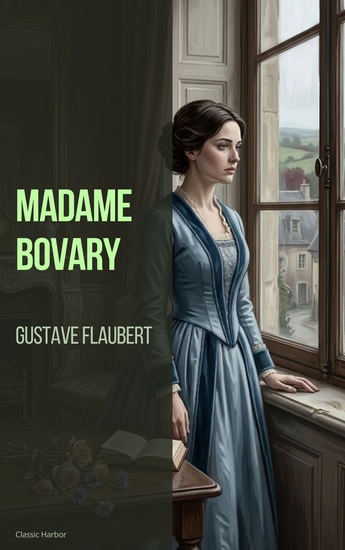
Madame Bovary - cover

Madame Bovary

Gustave Flaubert

Translator Eleanor Marx Aveling

Publisher: Classic Harbor

  • 0
  • 0
  • 0

Summary

A woman dreams of a more glamorous life, but her search for romance and fulfillment leads her into an increasingly complicated reality.

Gustave Flaubert's Madame Bovary follows Emma Bovary, a young woman whose romantic ideals clash with the limitations of provincial life.

Longing for excitement, luxury, and passionate love, Emma searches for fulfillment beyond the ordinary routines of marriage and domestic life. Her choices gradually bring her into relationships and circumstances that challenge her hopes, desires, and understanding of happiness.

Flaubert's precise prose and detailed portrayal of nineteenth-century French society make the novel an enduring work of literary realism. It explores desire, marriage, social expectations, materialism, and the gap between romantic dreams and everyday life.

Discover Flaubert's celebrated portrait of desire, illusion, and the search for a life beyond ordinary expectations.
Available since: 09/23/2026.
Print length: 170 pages.

Other books that might interest you

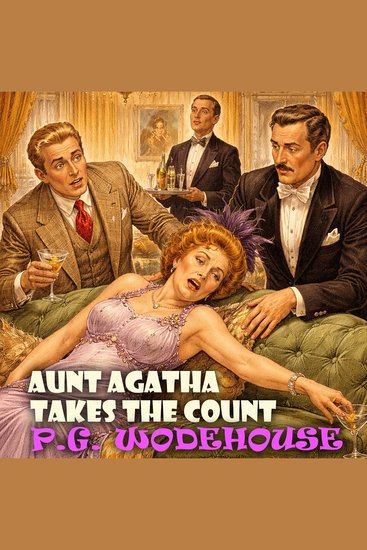
  • Aunt Agatha Takes the Count - cover

    Aunt Agatha Takes the Count

    P. G. Wodehouse

    • 0
    • 0
    • 0
    "Everything was under control… which, in retrospect, should have rung alarm bells."
    In Aunt Agatha Takes the Count, Bertie Wooster has, for once, acted with rare foresight: fled the country, secured an excellent hotel, and placed a reassuring stretch of sea between himself and his formidable Aunt Agatha. What could possibly go wrong?
    As it happens—quite a lot.
    A chance acquaintance, a dangerously winning smile, and a gesture of pure Wooster generosity… and suddenly Bertie finds himself edging into one of those situations that are not merely awkward, but the sort of thing that simply doesn't bear thinking about.
    Fortunately, Jeeves is at hand.
    Calm, imperturbable, and gifted with that quiet brilliance which has so often preserved the Wooster fortunes, he observes, deduces, and—when required—intervenes with quiet precision.
    A bright, fast-moving Wodehouse jewel: elegant, absurd, and impeccably timed. Ideal for listeners who enjoy their humor dry, their chaos refined, and their rescues flawlessly executed.
    Because in Bertie Wooster's world, disaster is never far away… but neither, thank heaven, is Jeeves.
    Show book
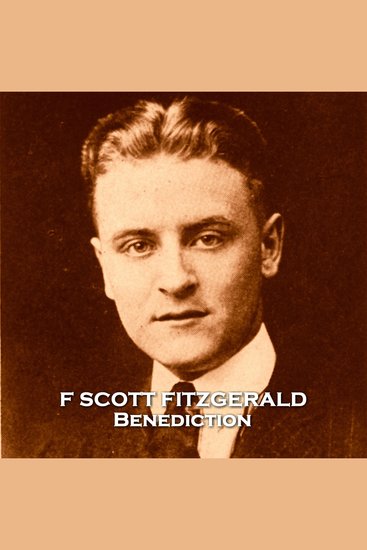
  • Benediction - From their pens to your ears genius in every story - cover

    Benediction - From their pens to...

    F. Scott Fitzgerald

    • 0
    • 0
    • 0
    Francis Scott Key Fitzgerald was born on 24th September 1896 in Saint Paul, Minnesota into an upper-middle class family. Whilst his mother was pregnant with him, his two young sisters tragically died.  Fitzgerald once said this was when his destiny as a writer was ordained. 
    His intelligence and talent was recognised from an early age, with his first story, about a detective being published in the school magazine when he was just 13.   
    In 1913 he enrolled at Princeton but his devotion to his own literary pursuits resulted in him leaving and, rather bizarrely, joining the Army.  In 1918, stationed at Fort Sheridan near Montgomery, Alabama he met and became infatuated and then inseparable from Zelda Sayre.  Initially though she refused to marry him but with the success of ‘This Side of Paradise’, the fame and the flow of money enabled them both to begin a gilded life.  For them this was The Jazz Age.  For Fitzgerald he was already an alcoholic. 
    He continued to write with great mastery and the titles of his novels and many of his 164 short stories are household names.  The Great Gatsby, often cited as The Great American Novel was published to mixed reviews.  As America moved from the Great Depression to the slaughter of the Second World War his works and himself were seen as far too entwined with the decadent twenties. The world had moved on and he hadn’t.   
    Further tragedy was never far from his life. Zelda after years of erratic and now intolerable behaviour was committed to an institution in 1936.  His own sales began to decline and he became a hack for hire in Hollywood, dependent on increasing amounts of booze and the weekly pay check.  His drunken state had often resulted in arrest or hospitalisation, further imperiling his talents.   Despite his contribution to many MGM films he received only one credit. 
    The end came all too soon for one of America’s greatest ever writers.  On 21st December 1940, at only 44 years of age in Hollywood, F Scott Fitzgerald succumbed to a heart attack.
    Show book
  • Kitty s Class Day and Other Stories - cover

    Kitty s Class Day and Other Stories

    Louisa May Alcott

    • 0
    • 0
    • 0
    Being forbidden to write anything at present I have collected various waifs and strays to appease the young people who clamor for more, forgetting that mortal brains need rest.As many girls have asked to see what sort of tales Jo March wrote at the beginning of her career, I have added "The Baron's Gloves," as a sample of the romantic rubbish which paid so well once upon a time. If it shows them what not to write it will not have been rescued from oblivion in vain.L. M. ALCOTT"A stitch in time saves nine.""O Pris, Pris, I'm really going! Here's the invitation—rough paper—Chapel—spreads—Lyceum Hall—everything splendid; and Jack to take care of me!"As Kitty burst into the room and performed a rapturous pas seul, waving the cards over her head, sister Priscilla looked up from her work with a smile of satisfaction on her quiet face."Who invites you, dear?""Why, Jack, of course,—dear old cousin Jack. Nobody else ever thinks of me, or cares whether I have a bit of pleasure now and then. Isn't he kind? Mayn't I go? and, O Pris, what shall I wear?"Kitty paused suddenly, as if the last all-important question had a solemnizing effect upon both mind and body."Why, your white muslin, silk sacque, and new hat, of course," beganPris with an air of surprise. But Kitty broke in impetuously,—"I'll never wear that old muslin again; it's full of darns, up to my knees, and all out of fashion. So is my sacque; and as for my hat, though it does well enough here, it would be absurd for Class Day.""You don't expect an entirely new suit for this occasion,—do you?" asked Pris, anxiously."Yes, I do, and I'll tell you how I mean to get it. I've planned everything; for, though I hardly dreamed of going, I amused myself by thinking how I could manage if I did get invited.""Let us hear." And Pris took up her work with an air of resignation."First, my dress," began Kitty, perching herself on the arm of the sofa, and entering into the subject with enthusiasm. "I've got the ten dollars grandpa sent me, and with eight of it I'm going to buy Lizzie King's organdie muslin. She got it in Paris; but her aunt providentially—no, unfortunately—died; so she can't wear it, and wants to get rid of it. She is bigger than I am, you know; so there is enough for a little mantle or sacque, for it isn't made up. The skirt is cut off and gored, with a splendid train—""My dear, you don't mean you are going to wear one of those absurd, new-fashioned dresses?" exclaimed Pris, lifting hands and eyes."I do! Nothing would induce me to go to Class Day without a train. It's been the desire of my heart to have one, and now I will, ifI never have another gown to my back!" returned Kitty, with immensedecision.Pris shook her head, and said, "Go on!" as if prepared for any extravagance after that."We can make it ourselves," continued Kitty, "and trim it with the same. It's white with blue stripes and daisies in the stripes; the loveliest thing you ever saw, and can't be got here. So simple, yet distingué, I know you'll like it. Next, my bonnet,"—here the solemnity of Kitty's face and manner was charming to behold. "I shall make it out of one of my new illusion undersleeves. I've never worn them; and the puffed part will be a plenty for a little fly-away bonnet of the latest style. I've got blue ribbons to tie it with, and have only to look up some daisies for the inside. With my extra two dollars I shall buy my gloves, and pay my fares,—and there I am, all complete."She looked so happy, so pretty, and full of girlish satisfaction, that sister Pris couldn't bear to disturb the little plan, much as she disapproved of it. They were poor, and every penny had to be counted. There were plenty of neighbors to gossip and criticise, and plenty of friends to make disagreeable remarks on any unusual extravagance.
    Show book

  • The Mark on the Wall - cover

    The Mark on the Wall

    Virginia Woolf

    • 0
    • 0
    • 0
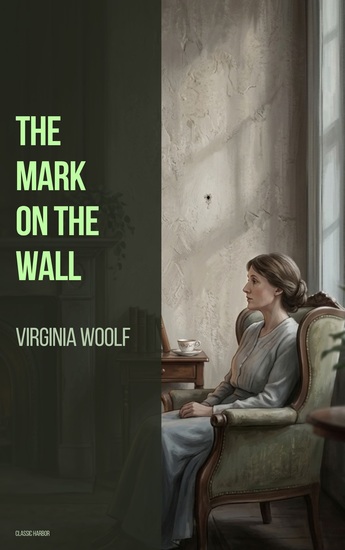
    A tiny mark on a wall becomes the starting point for a fascinating journey through memory, thought, perception, and imagination.
    
    Virginia Woolf's The Mark on the Wall transforms an ordinary moment into an exploration of the wandering human mind.
    
    As the narrator reflects on a small mark noticed on a wall, a stream of thoughts moves through memory, society, knowledge, relationships, uncertainty, and the nature of reality. Instead of following a conventional plot, Woolf focuses on consciousness itself and the unpredictable movement of thought.
    
    The story offers an accessible introduction to Woolf's experimental modernist style and her interest in perception and inner experience.
    
    Follow a seemingly simple observation into a remarkable journey through consciousness, memory, and imagination.
    Show book
  • The Watsons - cover

    The Watsons

    Jane Austen

    • 0
    • 0
    • 0
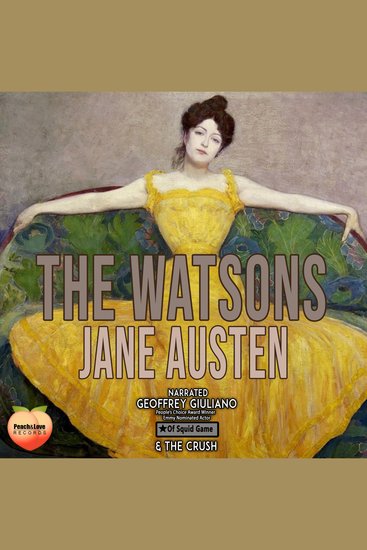
    The Watsons is an abandoned novel by Jane Austen, probably begun about 1803. There have been a number of arguments advanced as to why she did not complete it, and other authors have since attempted the task. A continuation by Austen's niece was published in 1850. The manuscript fragment itself was published in 1871. Further completions and adaptations of the story have continued to the present day.  
    The timeframe of the completed fragment covers about a fortnight and serves to introduce the main characters. Mr. Watson is a widowed and ailing clergyman with two sons and four daughters. The youngest daughter, Emma, the heroine of the story, has been brought up by a wealthy aunt and is consequently better educated and more refined than her sisters. But after her aunt contracted a foolish second marriage, Emma has been obliged to return to her father's house. There she is chagrined by the crude and reckless husband-hunting of two of her sisters, Penelope and Margaret. One particular focus for them is Tom Musgrave, who had paid attention to all of the sisters in the past. This Emma learns from her more responsible and kindly eldest sister Elizabeth.
    Show book
  • Little Men - cover

    Little Men

    Louisa May Alcott

    • 0
    • 0
    • 0
    Growing up isn't just about lessons—it's about discovering the person you're meant to become.
    
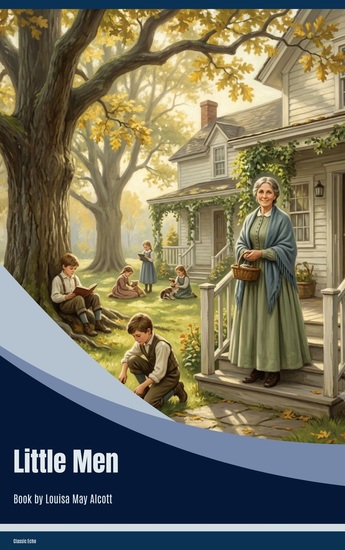
    Welcome to Plumfield School, where every day brings new adventures, valuable life lessons, and unforgettable friendships. Under the caring guidance of Jo Bhaer, a lively group of boys—and a few spirited girls—learn that kindness, honesty, courage, and compassion are just as important as reading and writing.
    
    In Little Men, Louisa May Alcott continues the beloved world of Little Women with a heartwarming story filled with laughter, mischief, and meaningful moments. Each child brings a unique personality and challenge, creating a rich tapestry of experiences that celebrate individuality, resilience, and the importance of nurturing young minds.
    
    Blending gentle humor with timeless wisdom, Alcott explores the everyday triumphs and struggles of childhood while offering enduring lessons about friendship, responsibility, perseverance, and love. Her memorable characters and heartfelt storytelling make this classic as inspiring today as it was for generations of readers before.
    
    Inside this cherished classic, you'll discover:
    
    A delightful return to the world of Little Women.
    Charming stories of friendship, family, and personal growth.
    Memorable characters whose adventures inspire readers of all ages.
    Timeless lessons about kindness, integrity, and perseverance.
    A comforting classic that celebrates education, compassion, and community.
    
    For over a century, Louisa May Alcott's stories have inspired readers with their warmth, optimism, and unforgettable characters. Little Men remains one of her most treasured works, beloved by families, educators, and classic literature enthusiasts for its uplifting message and enduring appeal.
    
    Return to Plumfield and experience a timeless story filled with laughter, learning, and lifelong friendships. Download Little Men today and rediscover a classic that continues to inspire readers across generations.
    Show book