Join us on a literary world trip!
Add this book to bookshelf
Grey
Write a new comment Default profile 50px
Grey
Subscribe to read the full book or read the first pages for free!
All characters reduced
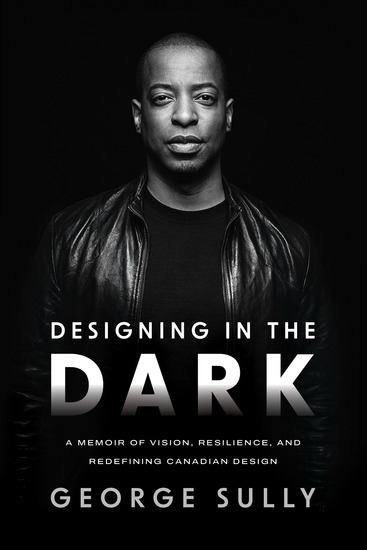
Designing in the Dark - A Memoir of Vision Resilience and Redefining Canadian Design - cover

Designing in the Dark - A Memoir of Vision Resilience and Redefining Canadian Design

George Sully

Publisher: ECW Press

  • 0
  • 0
  • 0

Summary

Award-winning designer George Sully takes readers behind the polished façade of the fashion world to reveal a story of persistence, purpose, and creative revolution.
		 
From his beginnings in public housing in Ottawa to building acclaimed brands like Sully & Son Co., House of Hayla, and Black Designers of Canada, George Sully’s journey defies the odds and the gatekeepers of an industry slow to embrace diversity.
		 
Through unflinching honesty and hard-won insight, Sully reflects on his triumphs and setbacks, navigating systemic exclusion, building his own platforms, and reimagining what it means to succeed on one’s own terms. His story extends beyond fashion to entrepreneurship, identity, and the quiet courage it takes to keep building when no one is watching.
		 
From creating the iconic Starfleet Boot for Star Trek: Discovery to mentoring the next generation of designers, Sully has left an indelible mark on Canadian culture. But Designing in the Dark is not just a memoir of success, it is a blueprint for creative survival and self-determination.
		 
Poignant, inspiring, and deeply human, Sully’s narrative illuminates the tension between legacy and reinvention, urging readers to rise above the darkness and design a life that endures beyond it.
Available since: 10/06/2026.
Print length: 168 pages.

Other books that might interest you

  • Humans are Wired for Art - cover

    Humans are Wired for Art

    Susan Magsamen, Ivy Ross

    • 0
    • 0
    • 0
    In this 2024 conversation with Justine Willis Toms, Magsamen and Ross explore the transformative power of art on human consciousness and health. They emphasize that art, in all its forms, impacts neural circuitry, physiology, and behavior, enhancing physical and mental well-being. Art can reduce stress, improve cognitive function, and foster social connections. They highlight the importance of integrating arts in healthcare, education, and community building, citing examples like music therapy for Alzheimer's and dance for Parkinson's. Ross mentions that art can lower cortisol levels and improve decision-making. They both advocate for the inclusion of arts in schools and healthcare settings, noting its cost-effective benefits and potential for significant return on investment. 
    Susan Magsamen is the founder and executive director of the International Arts + Mind Lab, Center for Applied Neuroaesthethics (known as the IAM Lab) at Johns Hopkins University School of Medicine, where she’s a faculty member in the Department of Neurology.  
    Ivy Ross is Chief Design Officer of Consumer Devices at Google and has led teams that have won hundreds of design awards. She’s a National Endowment for the Arts grant recipient and was ninth on Fast Company’s list of the 100 Most Creative People in Business in 2019. 
    Susan Magsamen and Ivy Ross are Co-authors of:Your Brain on Art: How the Arts Transform Us. (Random House 2023) 
    Interview Date: 10/14/2024         Tags: Susan Magsamen, Ivy Ross, doodling, E.O. Wilson, salience, neuro arts, neuroaesthetics, improv, endocrine system, James Pennebaker, Stuart Brown, play, neurosynapses, John Krakauer, Art & Creativity, Health & Healing, Personal Transformation
    Show book
  • Beethoven in the Bunker - Musicians under the Nazi Regime  - cover

    Beethoven in the Bunker -...

    Fred Brouwers

    • 0
    • 0
    • 0
    This compelling study examines the remarkable relationship between the Nazis and classical music through the stories of musicians, composers, and conductors across the political spectrum. 
    May 1945. A Soviet military patrol searches Hitler’s secret bunker in Berlin. They find bodies, documents, jewelry, paintings—and also an extensive collection of 78 rpm records. It comes as no surprise that this collection includes work by Beethoven, Wagner, and Bruckner. 
    The same goes for a procession of other giants promoted by the Nazi regime: “It seems as if the Nazis put a steel helmet on Mozart, girded Schubert with a saber, and wrapped barbed wire around Johann Strauss’s neck,” composer Robert Stolz once said. But how is it possible that Hitler’s favorites also included “forbidden” Jewish and Russian composers and performers? 
    While Hitler sat secretly enjoying previously recorded music in his bunker, musicians made of flesh and blood were denied a means of making a living. They died in concentration camps or in other war-related circumstances. They survived but ended up in psychiatric care; they managed to flee just in time; they sided with the regime—out of conviction or coercion—or they joined the resistance. 
    From fiery conductor Arturo Toscanini, who defied Mussolini and Hitler, to opportunistic composer Richard Strauss and antisemitic pianist Elly Ney, who collaborated with the Third Reich to varying extents and for different reasons, Brouwers profiles the complex figures of this extraordinarily fascinating chapter in music history.
    Show book
  • Swim through Shadows A: Discover Life Lessons from Four Great Minds - "Experience enlightenment with 'A Swim through Shadows'—powerful audio lessons sharing life-changing insights from four remarkable minds!" - cover

    Swim through Shadows A: Discover...

    Lucian Calloway

    • 0
    • 0
    • 0
    A Swim through Shadows: Discover Life Lessons from Four Great Minds 
    ⭐✨ Simplified Guide & Explanations Included ✨⭐   
    Are you eager to advance in your career and enrich your knowledge by uncovering profound insights through timeless Russian literature wisdom?   
    Are you in search of a complete guide that covers all the essential elements needed to explore the lessons from great literary minds?   
    Your quest ends here!   
    This guide is your ultimate companion for deepening your understanding, applying valuable insights, and engaging with thought-provoking content. With this resource, you're set for success.   
    Updated for a comprehensive exploration of the wisdom imparted by great thinkers.   
    Key Features of this Enhanced Guide: 
    - In-depth insights from influential Russian literature   
    - Thorough exploration of life lessons derived from the works of great minds   
    - Effective strategies for applying these lessons and tackling challenges   
    Our guide stands out with its extensive coverage, crucial for your intellectual growth. Rather than merely skim over topics, we delve deeply with precision and clarity.   
    Crafted with a clear structure and accessible language, our guide ensures smooth transitions between subjects. Leave behind complex jargon and embrace straightforward, precise, and informative content.   
    So, why hesitate? Click the BUY NOW button, secure your guide, and embark on your journey to uncover life lessons from four great minds!
    Show book
  • The Master of Drums - Gene Krupa and the Music He Gave the World - cover

    The Master of Drums - Gene Krupa...

    Elizabeth J. Rosenthal

    • 0
    • 0
    • 0
    From the early 1930s onward, Gene Krupa was a drum-centric rarity in the jazz world. Never before had a drummer been in the forefront as a solo artist. His galvanizing, unrestrained passion for percussion demanded it. Rocking the rafters, Gene thrilled audiences in ballrooms, nightclubs, and movies. 


    Seemingly born jazz-drum crazy in 1909 to a Polish-immigrant working-class family in South Chicago, Gene was a professional by the age of thirteen and soon made his first recordings. By the early 1930s, he was New York City's most in-demand drummer, and in 1934, joined brilliant clarinetist Benny Goodman's band, helped inaugurate the Swing Era, and played the first-ever swing concert at Carnegie Hall. He formed his own band and shattered racial boundaries by sharing the spotlight with the African-American trumpeter Roy Eldridge. But after a skyrocketing ride to the top, Gene experienced a rollercoaster ride of good and bad luck, emotional highs, and devastating depths. 


    In The Master of Drums, biographer Elizabeth J. Rosenthal crafts a celebratory, honest, and exhaustively researched portrait of a twentieth-century music legend. When he died, Gene Krupa may have left behind a world of grieving friends, colleagues, fans, students, and progeny, but as The Master of Drums proves, his dynamic musical and cultural influences live on.
    Show book
  • Dolly Parton's White Limozeen - cover

    Dolly Parton's White Limozeen

    Steacy Easton

    • 0
    • 0
    • 0
    A discussion of White Limozeen, from Dolly’s self-fashioning to a rigorous critique of her genre. White Limozeen (1989) was a commercial recovery after Dolly Parton's first major failure two years previously with the release of Rainbow. This book is a case study in how an album is sold and a persona constructed. The album had a complex relationship to the country music genre at a time when the genre was in the middle of major sonic and cultural shifts, and it represents how country music saw itself. This question of identity was especially relevant since White Limozeen was produced by Ricky Skaggs, the bluegrass prodigy who was in the middle of his own genre-widening experiments. The album reflects dense and complex production, shredding ideas of purity, studio craft, slickness, and authenticity. In it, Dolly seems to be imagining the limits of her own personae - the country girl, the blonde burlesque, the pop legend, the gospel singer. To study this album is to investigate Dolly’s calculated role in fashioning her image into the icon she is today.
    Show book
  • Red Tide - The Fight For Freedom - cover

    Red Tide - The Fight For Freedom

    Brian P Stewart

    • 0
    • 0
    • 0
    This is a fictional account of four high school buddies who are also neighbors. One is a young white male - Spike Mulligan who plays guitar sings and writes songs for revivals. The others Howie, Rufus and Ed are choir members of a black Baptist Church and ask him to sit in and play guitar in their church band and also to join their high school football team. The four become inseparable and dream of attending college together. Because of existing Alabama politics and racial prejudice they quickly realize it is not going to be that easy. The boys are drafted into the army and they all end up fighting in the jungles of Vietnam, they soon learn the only color that matters is red, representing their lives and the sacrifices they will make for one another. Only their status as returning war heroes can turn the Red Tide and swing open doors of opportunity that were unjustly locked for ages.
    Show book