Unisciti a noi in un viaggio nel mondo dei libri!
Aggiungi questo libro allo scaffale
Grey
Scrivi un nuovo commento Default profile 50px
Grey
Iscriviti per leggere l'intero libro o leggi le prime pagine gratuitamente!
All characters reduced
Will Warburton - cover

Will Warburton

George Gissing

Casa editrice: DigiCat

  • 0
  • 0
  • 0

Sinossi

In 'Will Warburton,' George Gissing explores the poignant intersections of personal ambition and societal constraints at the turn of the 20th century. The novel follows the eponymous character, a young man navigating the complex landscapes of love, ambition, and disillusionment in the rapidly transforming milieu of Edwardian England. Gissing's narrative style is marked by its psychological depth and social realism, employing rich character studies and a critical gaze on contemporary class struggles, emblematic of the author's larger body of work that often critiques the materialist values of society. George Gissing, a notable figure in the literary movement of realism, faced personal tribulations that profoundly influenced his writing. Having come from modest beginnings and personally experienced the struggles of the working class, Gissing imbues his characters with authenticity and complexity, reflecting his own challenges within a society that often stifled individuality and creativity. This novel, published in 1896, serves as both a personal reflection and a commentary on the broader societal issues of the time. Readers seeking a richly woven narrative that contemplates human aspirations against the backdrop of societal limitations will find 'Will Warburton' both engaging and thought-provoking. Gissing's exploration of the human condition, set against a vivid historical context, invites readers to reflect on their values and the generational struggles that continue to resonate today.
Disponibile da: 16/09/2022.
Lunghezza di stampa: 208 pagine.
Altri libri che potrebbero interessarti

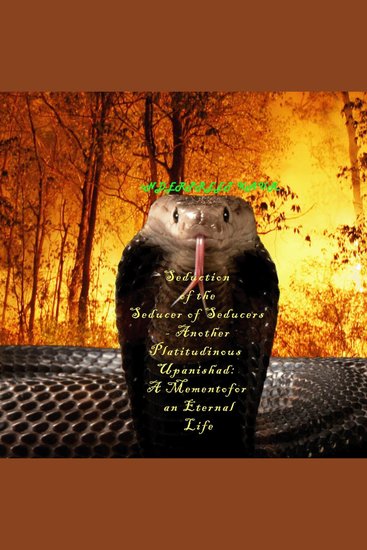
  • Seduction of the Seducer of Seducers - Another Platitudinous Upanishad - A Memento for an Eternal Life - cover

    Seduction of the Seducer of...

    Inderpreet Kaur

    • 0
    • 0
    • 0
    A hungry pythoness on the prowl for Eternal Truth ... 
    Why you should choose me over my competition is because I write from my experience that comes from being exposed to both the eastern and western style of living, where in the first half of my life it was east while the other half of my life in the west, which means it puts the burden of being that missing link that is needed to unite the east and the west!
    Mostra libro
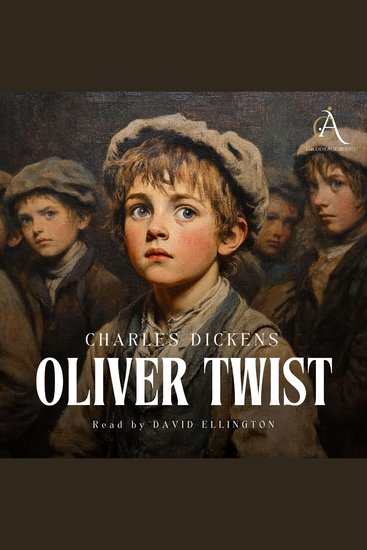
  • Oliver Twist - Audiobook - cover

    Oliver Twist - Audiobook

    Charles Dickens, Classic...

    • 0
    • 0
    • 0
    Oliver Twist is a timeless classic that explores the harsh realities of 19th-century England through the eyes of a young orphan. Born in a workhouse and raised amidst cruelty and poverty, Oliver's life is a constant struggle for survival. Despite his dire circumstances, his pure heart and unyielding spirit remain unbroken.When Oliver dares to ask for more food, his simple act of courage sets off a chain of events that leads him into a world of danger and adventure. Escaping the oppressive workhouse, he finds himself entangled with a gang of pickpockets led by the cunning Fagin and the menacing Bill Sikes. Along the way, Oliver encounters both villains and heroes, uncovering secrets about his past that could change his future forever.A poignant tale of innocence, resilience, and redemption, Oliver Twist is a powerful critique of social injustice and a celebration of the human spirit. With unforgettable characters and a gripping plot, this masterpiece by Charles Dickens continues to captivate readers of all ages.
    Mostra libro
  • The Diary of A Plain Girl - A story that shows a glimpse into the mind of a low self esteem woman - cover

    The Diary of A Plain Girl - A...

    Amy Levy

    • 0
    • 0
    • 0
    Amy Levy was born in London, England in 1861, the second of seven in a fairly wealthy Anglo-Jewish family. The children of the family read and participated in secular literary activities becoming firmly integrated into Victorian life. 
     
    Amy was educated at Brighton High School, Brighton, and studied at Newnham College, Cambridge; she was the first Jewish student when she arrived in 1879, but left after four terms. 
     
    But her writing career was to begin early; her poem "Ida Grey" appearing when she was only fourteen. Her stories "Cohen of Trinity" and "Wise in Their Generation," were published by Oscar Wilde in his magazine “Women's World," and are considered among her best. 
     
    Her first novel Romance of a Shop, written in 1888 is based on four sisters who experience the pleasures and hardships of running a business in London during the 1880s. This was followed by Reuben Sachs (also 1888) and concerned with Jewish identity and mores in the England of her time and therefore somewhat controversial); 
     
    Her other writings reveal feminist concerns; Xantippe and Other Verses, from 1881 includes a poem in the voice of Socrates's wife; the volume A Minor Poet and Other Verse from 1884 has dramatic monologues and lyric poems. 
     
    In 1886, Levy began a series of essays on Jewish culture and literature for the Jewish Chronicle, including The Ghetto at Florence, The Jew in Fiction, Jewish Humour and Jewish Children. 
     
    That same year while travelling in Florence she met writer Vernon Lee. It is generally assumed they fell in love and this inspired the poem ‘To Vernon Lee’. 
     
    Her final book of poems, A London Plane-Tree from 1889, shows the beginnings of the influence of French symbolism. 
     
    Despite many friendships and active life, Amy had suffered for a long time with major depression and this, together with her growing deafness, led her to commit suicide by inhaling carbon monoxide on September 10, 1889, at the age of twenty-seven
    Mostra libro
  • Mrs Dalloway (Legend Classics) - cover

    Mrs Dalloway (Legend Classics)

    Virginia Woolf

    • 0
    • 0
    • 0
    “He thought her beautiful, believed her impeccably wise; dreamed of her, wrote poems to her, which, ignoring the subject, she corrected in red ink.” 
    Mrs Dalloway is a novel that features two main characters and two different worldviews. On the one hand, there is Clarissa Dalloway, who being labelled as Mrs, symbolises her marital and social confinement. On the other, the readers meet Septimus Warren Smith, who is suffering from post-traumatic stress disorder. The lack of conventionally linear narrative and the stream of consciousness embedded in the text represents the author’s take on the complexities of human existence and the ambiguity of reality. While Septimus appears mad as the war memories are haunting him, Clarissa is assumingly sane, with her existential troubles being centred around the midlife crisis – both, however, share an astute sensibility about societal maladies of post-war Britain. Even though the two characters never meet, they are inextricably connected. The story takes a twist when Clarissa in her quintessential midlife meets her first love, Peter Walsh and Septimus madness takes a dramatic manifestation. Will Clarissa take any steps for the sake of her first love, or will she stay devoted to the societal pressure and her status as a statesman’s wife? What will become of Septimus’ madness? 
    The novel was developed from Woolf’s earlier short story entitled ‘Mrs Dalloway in Bond Street’. It takes you to the industrialised society, the hustle and bustle of London to represent the surface, the wrapper of modern society. The internal side is represented by ambiguous dark desires and fears of the characters. The passion and dramatic events in this whole novel take place over the course of a single day and the novel has been compared to poetry for being packed with meaning and intensity. How can a day change your whole life, how can a life built for years, crumble in the blink of an eye? This text is an exciting journey in itself with stylistic symbiosis, making it a true modernist classic. 
    The Legend Classics series:Around the World in Eighty DaysThe Adventures of Huckleberry FinnThe Importance of Being EarnestAlice's Adventures in WonderlandThe MetamorphosisThe Railway ChildrenThe Hound of the BaskervillesFrankensteinWuthering HeightsThree Men in a BoatThe Time MachineLittle WomenAnne of Green GablesThe Jungle BookThe Yellow Wallpaper and Other StoriesDraculaA Study in ScarletLeaves of GrassThe Secret GardenThe War of the WorldsA Christmas CarolStrange Case of Dr Jekyll and Mr HydeHeart of DarknessThe Scarlet LetterThis Side of ParadiseOliver TwistThe Picture of Dorian GrayTreasure IslandThe Turn of the ScrewThe Adventures of Tom SawyerEmmaThe TrialA Selection of Short Stories by Edgar Allan PoeGrimm Fairy TalesThe AwakeningMrs DallowayGulliver’s TravelsThe Castle of OtrantoSilas MarnerHard Times
    Mostra libro
  • Little Mother Up the Morderberg - cover

    Little Mother Up the Morderberg

    H. G. Wells

    • 0
    • 0
    • 0
    Herbert George Wells was perhaps best known as the author of such classic works of science fiction as The Time Machine and War of the Worlds. But it was in his short stories, written when he was a young man embarking on a literary career, that he first explored the enormous potential of the scientific discoveries of the day. He described his stories as "a miscellany of inventions," yet his enthusiasm for science was tempered by an awareness of its horrifying destructive powers and the threat it could pose to the human race. A consummate storyteller, he made fantastic creatures and machines entirely believable, and by placing ordinary men and women in extraordinary situations, he explored what it means to be alive in a century of rapid scientific progress. "Little Mother Up the Morderberg," is a humorous tale about a mother and son trekking to the top of a mountain.
    Mostra libro
  • A Country Doctor - The plight of a doctor to save a sick boy meets many osbstacles - cover

    A Country Doctor - The plight of...

    Franz Kafka

    • 0
    • 0
    • 0
    Franz Kafka was born on 3rd July 1883 in Prague, then in Bohemia, the eldest of 6, into a middle-class Jewish family. 
     
    Life for the young Kafka and his passion for literature was often made an ordeal by his over-bearing and domineering entrepreneur of a father.   
     
    In 1889 Kafka was sent to the Deutsche Knabenschule, an elementary school in Prague. His father would only allow him to be educated in German-speaking schools and even went so far as to limit visits to the synagogue to four a year. 
     
    In 1901 he graduated from the classics-oriented Altstädter Gymnasium. Kafka did well there and across a large range of subjects.  He now enrolled at the Charles Ferdinand University, to study chemistry, but quickly switched to law for which he obtained his degree in June 1906 and then performed the mandatory year of unpaid service as clerk at the civil and criminal courts. 
     
    A job at an Italian insurance company left him little time to write and after a year he took another job with the Worker's Accident Insurance Institute for the Kingdom of Bohemia where he stayed until ill health led to his resignation in 1922. 
     
    Although he saw work as a means to pay the bills and to allow him time to write, he received several promotions and was noted as a good employee. 
     
    By 1917 Kafka was suffering from tuberculosis, which required frequent periods of convalescence. Interspersed with this, were several intense affairs before he settled in Berlin with Dora Diamant, a 25-year-old kindergarten teacher who herself having left the ghetto now influenced Kafka's interest in the book of Jewish law, the Talmud. 
     
    Kafka’s on-going health was littered with problems. Apart from TB there were several other ailments, including migraines, insomnia, boils, depression, all usually brought on by excessive stresses and strains. He attempted to counteract all of this by naturopathic treatments, a vegetarian diet and consuming large quantities of unpasteurized milk. 
     
    His tuberculosis still worsened. He returned to Prague, where he died on 3rd June 1924. He was 40. 
     
    His literary works are few in number but towering in influence.  His masterpieces include ‘The Trial’, ‘The Metamorphosis’ as well as a number of short stories which reveal facets of humankind that truthfully could only be born from Kafka’s brain and pen.
    Mostra libro