Begleiten Sie uns auf eine literarische Weltreise!
Buch zum Bücherregal hinzufügen
Grey
Einen neuen Kommentar schreiben Default profile 50px
Grey
Jetzt das ganze Buch im Abo oder die ersten Seiten gratis lesen!
All characters reduced
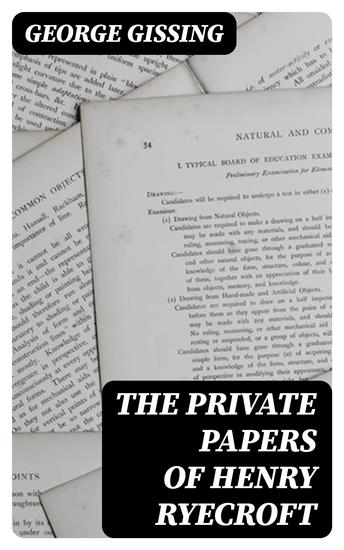
The Private Papers of Henry Ryecroft - cover

The Private Papers of Henry Ryecroft

George Gissing

Verlag: DigiCat

  • 0
  • 0
  • 0

Beschreibung

George Gissing's "The Private Papers of Henry Ryecroft" artfully combines autobiographical elements with fictional introspection, presenting a rich tapestry of the protagonist's reflections on life, society, and the existential dilemmas of modernity. Written in a prose style suffused with the lyrical qualities characteristic of Gissing's work, the novel explores themes of isolation, the struggle for self-identity, and the disconnect between the individual and the rapidly changing social landscape of late Victorian England. The narrative unfolds as a candid discourse, characterized by a deep psychological penetration that illuminates the complexities of human emotion and societal critique. Gissing himself was deeply influenced by his tumultuous experiences, including his working-class background and education, which often fueled his literary explorations of class and the intellect. His own struggles with personal and societal expectations are mirrored in Ryecroft's musings, reflecting Gissing's enduring engagement with the difficulties of finding solace in a world marked by alienation. Gissing's profound understanding of the human condition and societal constraints is palpable throughout the text, providing readers with a lens through which to examine their own lives. "The Private Papers of Henry Ryecroft" is a must-read for those interested in the intricate interplay of personal introspection and societal critique in literature. It offers invaluable insight into the Victorian mindset while resonating with contemporary issues of alienation and self-discovery. Gissing's masterful prose and deep philosophical inquiries grant readers a profound understanding of the human experience, making this book a timeless exploration of life's deeper meanings.
Verfügbar seit: 15.08.2022.
Drucklänge: 150 Seiten.

Weitere Bücher, die Sie mögen werden

  • Someone at a Distance - cover

    Someone at a Distance

    Dorothy Whipple

    • 0
    • 0
    • 0
    Someone at a Distance was Dorothy Whipple’s last book, hailed by many as her best. The story charts the gradual breakdown of a marriage through the eyes of those involved. Whipple deftly and persuasively explores the minds of her characters, particularly the two women. This audio edition is read by Susan Wooldridge.Ellen and Avery North share a stable and secure life. Everything is well looked after: their teenage children, their garden, and Avery’s elderly mother who lives nearby. In time, old Mrs North decides she is in need of a live-in companion, and Louise Lanier arrives after responding to a newspaper advert. When Louise sets out to seduce Avery for the fun of it, her behaviour threatens to destroy Ellen and Avery’s peaceful life together. Someone at a Distance is part of the Persephone Audiobook Collection, a series of forgotten classics including neglected fiction and non-fiction by women writers. First published in 1953, this edition includes a preface by author Nina Bawden.
    Zum Buch
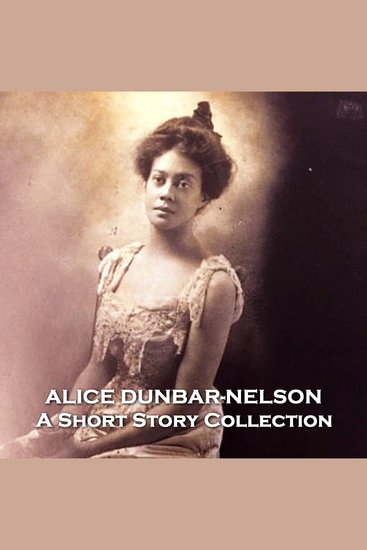
  • Alice Dunbar Nelson - A Short Story Collection - Pioneering African American woman who helped usher in the Harlem Renaissance - cover

    Alice Dunbar Nelson - A Short...

    Alice Dunbar Nelson

    • 0
    • 0
    • 0
    Alice Ruth Moore was born on 19th July 1875 in New Orleans where she was part of the multi-racial Creole community.  She was the first generation seemingly born free after the Civil War and unusually for the times, obtained a university education which led to her becoming a teacher at a public school in New Orleans.   
    In 1895, when she was 20, she published her first collection of short stories and poems, ‘Violets and Other Tales’, and moved to New York City where she co-founded and taught at the White Rose Mission, a Home for Girls.   
    Alice was always politically active and sought to advance the position of black women.  She began work as a journalist at the Woman’s Era newspaper where her work was seen by the established poet and journalist Paul Laurence Dunbar.  After corresponding for two years she joined him in Washington DC and they married in 1898.   
    It was a difficult relationship, due mainly to Dunbar’s fragile health, alcoholism and depression.  After a severe beating she left him and moved to Delaware to teach for a decade though took time out to enroll at Cornell University. 
    A short-lived marriage to Henry A. Callis, a physician and professor at Howard University ended in divorce and she became co-editor and writer for an influential publication of the African Methodist Episcopal Church.  A third marriage to civil rights activist Robert J. Nelson came about, as did affairs with several women, notably the activist Fay Jackie Robinson.   
    In Wilmington Delaware she and her husband devoted their time and writings to working for equality for African Americans and women’s suffrage.   
    Alice Dunbar Nelson was a natural and gifted writer across many genres, from novels, essays, plays to diaries, criticism, poetry and of course short stories, of which ‘Stones in the Village’ is a fine example.  The protagonist, like herself, is light skinned from New Orleans, which allows for a social mobility and a unique position in American society that Dunbar Nelson captures with an imagination and insight to explores another divisive perspective on race.  It is unsurprising that Alice was a prominent part of the early Harlem Renaissance and influenced many others including Langston Hughes and Countee Cullen. 
    Alice and her husband moved to Philadelphia in 1932 and it was here that she died on 18th September 1935, at the age of 60, from a heart ailment.
    Zum Buch
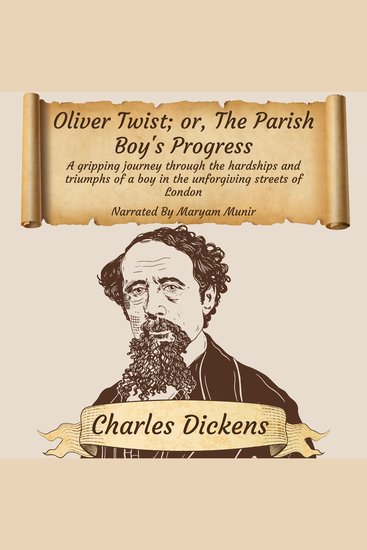
  • Oliver Twist; or The Parish Boy's Progress - A gripping journey through the hardships and triumphs of a boy in the unforgiving streets of London - cover

    Oliver Twist; or The Parish...

    Charles Dickens

    • 0
    • 0
    • 0
    ❓ Are you ready to embark on a journey through Victorian London's darkest corners? 
     🌟 Do you long for a tale of courage, survival, and ultimate triumph? 
     💔 Have you ever wondered how hope can flourish in the most desperate circumstances? 
    If you answered YES to at least one of these questions, you MUST KEEP READING... 
    🌅 Journey Through the Streets of Victorian London in a Tale of Courage and Redemption 
    In the harsh reality of 19th century London, countless children faced unimaginable hardships and cruel treatment at the hands of a society that viewed them as nothing more than burdens. Through the eyes of one remarkable boy, we witness the dark underbelly of a city where poverty and crime reign supreme, and innocence fights daily for survival. 
    Here's What You'll Discover Inside: 🏰 Rich descriptions of Victorian London's contrasting societies 👥 Unforgettable characters that will stay with you long after the last page ⚖️ Powerful commentary on social justice and human nature 🌟 Heartwarming moments of friendship and loyalty 💪 Inspiring messages about perseverance and hope 
     And much more...! 
    Don't miss the chance to experience this transformative journey. Scroll up and click the BUY NOW button to step into a story that has captured hearts for generations! 📚
    Zum Buch
  • A Story Without a Title - cover

    A Story Without a Title

    Anton Chekhov

    • 0
    • 0
    • 0
    "A Story Without a Title"  is an 1888 humorous story by Anton Chekhov.
    In a remote 5th century monastery the monks live and toil, led by an elderly abbot. The old man likes to play the organ, write music and compose Latin verses but is famous most of all for his eloquence and fiery, inspirational monologues which leave everybody around him enchanted. Then one night a drunkard knocks the door of the gates, saying he'd got lost on his way and asking them to give him food and wine. After the supper, instead of thanks, he rather shames the monks for spending their lives away, while the townsfolk keep on drowning themselves in debauchery and vice. The guest's speech sounds offensive, but the abbot sees the point and suggests that he makes a trip to the town himself.
    The monks wait for the old man for three months. He returns silent and morose, then spends the next seven days fasting, playing the organ and crying. Back from his cell, he tells them the appalling story of the sin raging in the town, its people indulging in all manner of pleasures, drinking wine, visiting brothels, watching lustful harlots dancing on tables. Unfortunately, one of his bouts of inspiration hits him and the monks are transfixed. Having described the charms of evil, the old man curses the devil and departs to shut himself up in his cell. When he comes out in the morning, there is not a monk left in the monastery; they had all fled to the town.
    Zum Buch
  • A Pair of Blue Eyes - cover

    A Pair of Blue Eyes

    Thomas Hardy

    • 0
    • 0
    • 0
    Immerse yourself in the evocative world of "A Pair of Blue Eyes" by Thomas Hardy, a tale of love, social class, and inner conflict. Follow the beautiful and naive Elfride Swancourt as she becomes entangled in a romantic triangle with the ambitious architect Stephen Smith and the intellectual but troubled Henry Knight. Set against the rugged Cornish landscape, this poignant novel explores the pressures of societal expectations and the complexities of human emotions. Hardy's rich narrative and vivid characters create an enduring story of passion, heartbreak, and self-discovery.
    Zum Buch
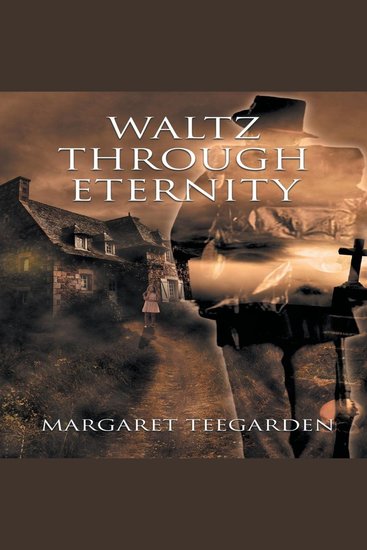
  • Waltz Through Eternity - cover

    Waltz Through Eternity

    Margaret Teegarden

    • 0
    • 0
    • 0
    Sit back and relax. Let your mind slip right into the characters of the pages that follow. When you completely drift into the lives of the characters you'll experience frustration, anger, hurt and despair and soon you'll feel pain and agony that lasts for all eternity. This type of suffering can only be relieved by truth and everlasting love.
    Zum Buch