Join us on a literary world trip!
Add this book to bookshelf
Grey
Write a new comment Default profile 50px
Grey
Subscribe to read the full book or read the first pages for free!
All characters reduced
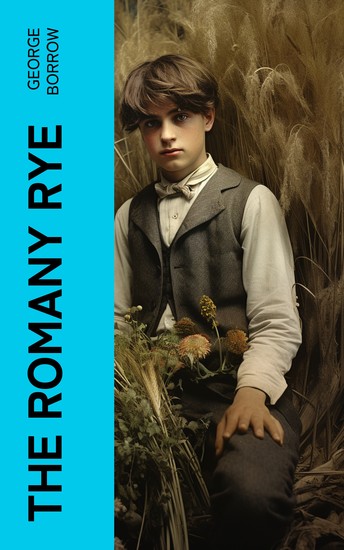
The Romany Rye (Annotated) - Enriched Edition A Sequel to 'Lavengro' - cover

The Romany Rye (Annotated) - Enriched Edition A Sequel to 'Lavengro'

George Borrow

Publisher: e-artnow

  • 0
  • 0
  • 0

Summary

The Romany Rye continues the semi-autobiographical wanderings begun in Lavengro, following Borrow's learned, restless narrator through roadsides, fairs, inns, and encampments where English society meets its margins. Part picaresque travel narrative, part linguistic memoir, and part eccentric spiritual autobiography, the book mingles vivid dialogue, Romany lore, horse-dealing, theological controversy, and abrupt essayistic digression. Its style is unmistakably Victorian yet defiantly irregular: archaic, colloquial, combative, and deeply attentive to speech as a marker of character and culture. George Borrow (1803–1881) was a gifted linguist, traveler, and sometime agent of the British and Foreign Bible Society, experiences that shaped his fascination with language, religion, and itinerant life. His early encounters with Romany communities, his mastery of unusual tongues, and his own sense of social estrangement all inform the book's unusual sympathy for outsiders, even when filtered through the prejudices and polemics of his age. Readers drawn to unconventional Victorian literature will find The Romany Rye singularly rewarding. It is less a conventional novel than a richly textured performance of memory, argument, and observation, offering an indispensable portrait of nineteenth-century wandering, linguistic curiosity, and the romance of the open road.

This enriched edition has been carefully crafted to add value to your reading experience.
- A succinct Introduction situates the work's timeless appeal and themes.
- The Synopsis outlines the central plot, highlighting key developments without spoiling critical twists.
- A detailed Historical Context immerses you in the era's events and influences that shaped the writing.
- A thorough Analysis dissects symbols, motifs, and character arcs to unearth underlying meanings.
- Reflection questions prompt you to engage personally with the work's messages, connecting them to modern life.
- Hand‐picked Memorable Quotes shine a spotlight on moments of literary brilliance.
- Interactive footnotes clarify unusual references, historical allusions, and archaic phrases for an effortless, more informed read.
Available since: 12/01/2023.
Print length: 432 pages.
Other books that might interest you

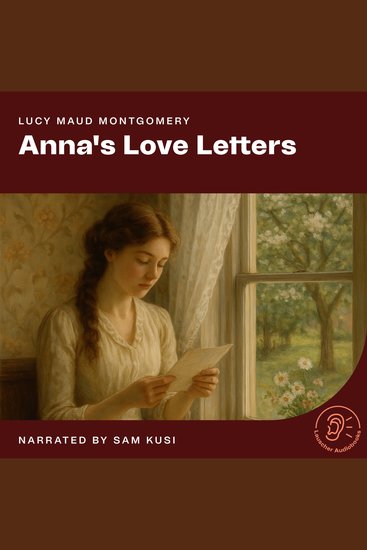
  • Anna's Love Letters - cover

    Anna's Love Letters

    Lucy Maud Montgomery

    • 0
    • 0
    • 0
    Lucy Maud Montgomery (November 30, 1874 – April 24, 1942), published as L. M. Montgomery, was a Canadian author best known for a series of novels beginning in 1908 with Anne of Green Gables. The book was an immediate success. The title character, orphan Anne Shirley, made Montgomery famous in her lifetime and gave her an international following.
    Anna's Love Letters:"Are you going to answer Gilbert's letter tonight, Anna?" asked Alma Williams, standing in the pantry doorway, tall, fair, and grey-eyed, with the sunset light coming down over the dark firs, through the window behind her, and making a primrose nimbus around her shapely head.
    Show book
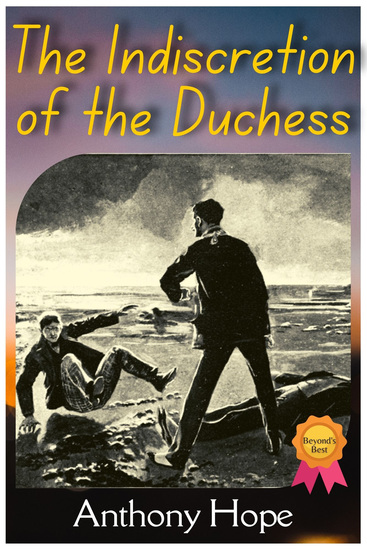
  • The Indiscretion of the Duchess - cover

    The Indiscretion of the Duchess

    Anthony Hope

    • 0
    • 0
    • 0
    The Indiscretion of the Duchess by Anthony Hope is a captivating exploration of aristocratic life, love, and scandal. This engaging tale intertwines the complexities of social status, personal desires, and the consequences of indiscretions. As you immerse yourself in The Indiscretion of the Duchess, you will be transported to a world of elegance, intrigue, and high-stakes drama. This enticing read is sure to appeal to fans of classic literature and romantic narratives.
    Show book
  • Villette - cover

    Villette

    Charlotte Brontë

    • 0
    • 0
    • 0
    Charlotte Brontë's last novel, Villette , is thought to be most closely modelled on her own experiences teaching in a pensionnat in Brussels, the place on which the fictional town of Villette is based. In the novel, first published in 1853, we follow the protagonist Lucy Snowe from the time she is fourteen and lives with her godmother in rural England, through her family tragedies and departure for the town of Villette where she finds work at a French boarding school. People from her past reappear in dramatic ways, she makes new connections, and she learns the stories and secrets of the people around her. Through it all, the reader is made privy to Lucy's thoughts, feelings, and journey of self-discovery. Charlotte Brontë (died 1855) was one of the most distinguished authors of the Victorian age. Their work has endured across generations and continues to be read and studied worldwide. As a work of classic literary fiction, Villette exemplifies the narrative craft and social insight that defined great storytelling of its era. Literary fiction of this period was characterized by careful attention to character psychology, social milieu, and the moral questions that animated public discourse.
    Show book
  • Justice Hilton Must Also Go - cover

    Justice Hilton Must Also Go

    Bhagat Singh

    • 0
    • 0
    • 0
    Justice Hilton Must Also Go by Bhagat Singh is offered here in a clean English digital edition prepared for fluent ebook reading. The work stands within classics and gives modern readers direct access to a public-domain classic with navigable structure and a restrained typographic presentation. The opening pages establish the book's atmosphere with this first movement: June 25, 1930 Lahore Conspiracy Case before the Special Tribunal opened on May 5, 1930. On May 12 the presiding judge lost his temper on the question of a song. He ordered that the accused be handcuffed. The accused resisted. They were removed from the court by force and sent back to the jails. The This edition is suited to readers who want a reliable, uncluttered version of the text for study, rediscovery, and sustained reading.
    Show book
  • The Ancient Irish Epic Tale Táin Bó Cúalnge - The Cattle-Raid of Cooley - cover

    The Ancient Irish Epic Tale Táin...

    Anonymous

    • 0
    • 0
    • 0
    The central epic of Ireland: the queen of Connacht raises the province to steal a bull, and a boy of seventeen holds the ford alone all winter while the men of Ulster lie under a curse. Joseph Dunn's 1914 translation was the first full English version of the Táin from the manuscripts. Cú Chulainn's fight with his foster-brother Ferdiad is the passage everything else in the tale is arranged around. Fifty-nine plates of Irish landscape and rural life, from Thomas Roberts to Nathaniel Hone the Younger, give the cattle-raid its own countryside.
    Show book
  • While the Auto Waits - cover

    While the Auto Waits

    O. Henry

    • 0
    • 0
    • 0
    Two strangers. Two carefully constructed identities. One automobile waiting nearby. 
     
    At twilight in a quiet New York park, a young man approaches an elegant woman sitting alone with a book. She reluctantly allows him to join her, then confesses that she belongs to the highest level of society—a world of wealth, jewels, parties, and titled suitors that has left her longing for something genuine. 
     
    The young man seems to offer exactly what she seeks. Modestly dressed and apparently untouched by privilege, he claims to earn his living as a restaurant cashier. Their conversation turns to wealth, social expectations, and whether two people from entirely different worlds could ever truly understand one another. 
     
    But as evening falls and the woman prepares to return to the automobile she says is waiting for her, carefully maintained appearances begin to unravel. 
     
    Witty, romantic, and sharply observant, While the Auto Waits is a classic O. Henry story about social class, self-invention, and the distance between who people are and who they wish to appear to be. 
     
    Narrated by Brett Carter, this charming short listen delivers sparkling dialogue, subtle humor, and a delightfully ironic conclusion.
    Show book