Join us on a literary world trip!
Add this book to bookshelf
Grey
Write a new comment Default profile 50px
Grey
Subscribe to read the full book or read the first pages for free!
All characters reduced
The Canterbury Tales - cover

The Canterbury Tales

Geoffrey Chaucer

Publisher: Bygone Books

  • 0
  • 0
  • 0

Summary

One of the greatest masterpieces of English literature, bringing together unforgettable stories, memorable characters, and timeless insights into human nature.

Discover "The Canterbury Tales" by Geoffrey Chaucer, the legendary collection of stories that laid the foundation of English literature. Rich in humor, adventure, romance, morality, and social observation, this enduring classic continues to captivate readers with its vivid portraits of medieval life and its universal understanding of the human experience.

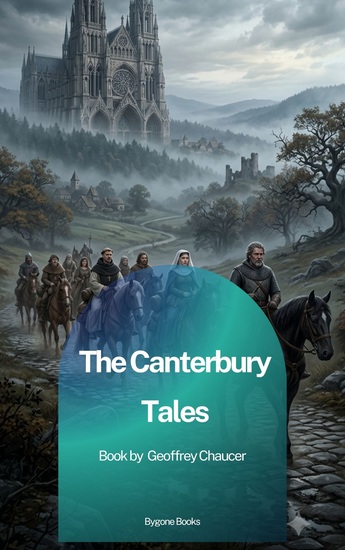
As a diverse group of pilgrims journeys toward the shrine of Thomas Becket in Canterbury, they entertain one another by sharing tales of love, honor, faith, wit, ambition, and human folly. Through an extraordinary variety of voices and storytelling styles, Chaucer creates a vibrant panorama of medieval society while exploring themes of justice, morality, friendship, devotion, and the complexities of human character. The result is a literary masterpiece whose insights remain as relevant today as they were more than six centuries ago.

Written in the late fourteenth century, "The Canterbury Tales" is widely regarded as one of the defining works of English literature and one of the greatest achievements of medieval storytelling. Its influence on literature, language, and culture has endured for generations, inspiring countless adaptations, translations, and scholarly studies.

Perfect for readers interested in classic literature, medieval history, poetry, historical fiction, literary classics, and world literature, this remarkable collection offers a rewarding journey through one of history's greatest storytelling traditions.

Experience one of the most celebrated classics ever written. Add "The Canterbury Tales" to your Kindle library today and discover a timeless collection of stories that continues to inspire, entertain, and enlighten readers around the world.
Available since: 07/08/2026.
Print length: 591 pages.
Other books that might interest you

  • Symphonies - The first Southern poet to win the Pulitzer Prize - cover

    Symphonies - The first Southern...

    John Gould Fletcher

    • 0
    • 0
    • 0
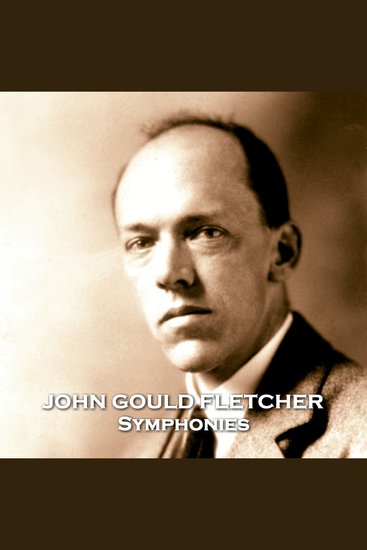
    John Gould Fletcher was born in Little Rock, Arkansas on the 3rd of January 1886 to a socially prominent family.  
     
    He was educated at Phillips Academy, Andover before advancing to Harvard University, which he attended from 1903 to 1907, before dropping out after his father's death. 
     
    As a young man Fletcher spent many years in England where he became part of the influential Imagist group of poets together with Amy Lowell and Ezra Pound.   
     
    His first marriage came from a resumed relationship with the now married Florence Emily ‘Daisy’ Arbuthnot.  Her adultery with Fletcher was the grounds for her divorce.  They married on 5th July 1916 but later divorced.  
     
    Fletcher first published in 1912, with ‘The Dominant City’ to much praise and admiration and followed this with other well-regarded volumes such as ‘Irradiations: Sand and Spray’, and ‘Goblins and Pagodas’. 
     
    In the late 1920s and 1930s Fletcher became increasingly active with a group of Southern writers and poets known as the Southern Agrarians. They published the classic ‘I'll Take My Stand: The South and the Agrarian Tradition’. 
     
    Although he was highly regarded as a poet, he was not very prolific.  However, such was the undoubted quality that in 1939 he received the Pulitzer Prize for his work ‘Selected Poems’.  He was the first poet from the south to receive such an accolade.  Fletcher’s other passion and pursuit was as an authority on modern painting, a subject on which he also published. 
     
    A second marriage followed in 1936 to the children’s author, Charlie May Simon.  They built ‘Johnswood’, a residence on the bluffs of the Arkansas River and travelled frequently to New York for shots of modern culture and intellectual stimulation as well as to the American West and South for the climate after Fletcher developed chronic arthritis. 
     
    In 1937 he wrote his autobiography, ‘Life is My Song’. 
     
    His developing passion for his roots and background resulted in the writing of a history of his State and published in 1947; ‘Arkansas’. 
     
    By now Fletcher was suffering from bouts of depression and on 10th May 1950, he committed suicide by drowning himself in a pond near his home in Little Rock, Arkansas.  He was 64.
    Show book
  • Cyrano - cover

    Cyrano

    Virginia Gay

    • 0
    • 0
    • 0
    Cyrano is the most interesting person in any room – a wordsmith, a charmer. She works twice as hard and runs twice as fast as the pretty boys, because she's deeply ashamed of something about herself.
    Enter Roxanne: brilliant and beautiful, with a penchant for poetry and a way with words, just like Cyrano. But Roxanne only has eyes for Yan: hot, manly Yan, who is dumbstruck around Roxanne. (Probably shy, right?) Until suddenly he starts saying the most amazing things. But it's not Yan writing these perfect love scenes, it's Cyrano...
    A joyous, gender-flipped retelling of Edmond Rostand's classic play, Cyrano is a love letter to hope; to language and desire; to the lo-fi magic of theatre.
    This big-hearted, irreverent queer-as-hell rom-com was first performed by Melbourne Theatre Company in 2022. A new production, directed by Clare Watson and produced by Roast Productions, was a hit at the Traverse Theatre during the 2024 Edinburgh Festival Fringe, winning a Fringe First Award, before transferring to Park Theatre, London.
    Show book
  • Paradise Lost - cover

    Paradise Lost

    John Milton

    • 0
    • 0
    • 0
    "Better to reign in Hell, than serve in Heaven."
    
    In the wake of a failed cosmic rebellion, the fallen archangel Satan awakens on a burning lake of fire. Undefeated in spirit, he rallies his legions of demons to build the palace of Pandemonium and plots a subtle revenge against the Almighty. His target? God's newest and most beloved creation: Humanity. Milton's masterpiece takes us from the depths of Tartarus to the heights of the Empyrean, and finally to the lush, innocent borders of the Garden of Eden. Here, we witness the tragic temptation of Adam and Eve, a choice that changes the course of human history forever.
    
    The Greatest Antagonist in Literature: Milton's Satan is a character of terrifying complexity. He is a charismatic leader, a tormented intellectual, and a "tragic hero" whose pride leads to his inevitable ruin. His journey from a shining angel to a crawling serpent is one of the most powerful character arcs ever written, influencing centuries of "Byronic heroes" and anti-heroes.
    
    The Beauty of the Fall: While Satan's rebellion provides the spectacle, the emotional heart of the poem lies in Book IX, where Adam and Eve face the serpent. Milton portrays their relationship with profound psychological depth, exploring themes of free will, reason, and the heavy burden of knowledge. The final lines of the poem, as the pair walks hand-in-hand out of Eden into a "subject world," are among the most moving in all of literature.
    
    The Power of Blank Verse: Discarding the "bondage of rhyming," Milton used unrhymed iambic pentameter (blank verse) to create a sense of vast, architectural scale. The language is dense, musical, and filled with classical allusions, creating a reading experience that feels truly "epic."
    
    Step into the cosmic theater. Purchase "Paradise Lost" today and witness the struggle for the soul of the world.
    Show book
  • Frankenstein Retold Inclusively - cover

    Frankenstein Retold Inclusively

    Mary Shelley, Kath Shone

    • 0
    • 0
    • 0
    Frankenstein was written in the Romantic literary period. The literary trend of the early 1800s produced poems that described how nature elevated and blissed human minds. Most literary work at this time was written and published by men. 
    In amongst these ecstatic reveries of nature, the 19 year old, Mary Shelley wedged the chilling story of Frankenstein into the literary landscape and our minds forever. 
    Her story filled an empty space in humankind's collective consciousness. That empty space was waiting for this story of over-reaching scientific madness. 
    This version of Frankenstein is a translation not an abridged telling. I have translated the Old Romantic era English into easy-to-read accessible English. 
    • The same characters say the same things at the same times in the story. 
    • Plot point for plot point the story stays the same. 
    • The themes are all preserved. 
    • The transcendent and brutal settings of the story are still on the pages. 
    • References to poems and other literature are explained. 
    • Supplementary information supports understanding of the text. 
    This book is for 
    • humans who like to read archetypal literature in easy-to-read language, 
    • neuro-diverse readers, 
    • young readers, 
    • English second language speakers, 
    • English literature students who need a study guide to unravel the original Frankenstein. 
    • anyone (I think that's most of us) who finds old English inaccessible but would like to read Frankenstein. 
    This accessible Frankenstein is part of Inclusive Books (Inc!Bs) journey to rewrite history inclusively.
    Show book
  • The Red and the Black - cover

    The Red and the Black

    Stendhal

    • 0
    • 0
    • 0
    He wants power. He wants love. Society gives him neither without a price.
    Julien Sorel, brilliant and fiercely ambitious, rises from humble origins into a world ruled by class, hypocrisy, and political intrigue. Torn between faith and ambition, desire and pride, he navigates dangerous romances and ruthless social games—each choice pulling him closer to triumph or ruin.
    
    Celebrated as "one of the first great psychological novels," Stendhal's masterpiece dissects vanity, hypocrisy, and the hunger for status with startling clarity. Its portrait of a young man fighting society—and himself—remains timeless and unsettlingly modern.
    
    If you love sharp character studies, political tension, and classics that expose the cost of ambition, this novel is unforgettable.
    
    Open the book—and witness how desire and destiny collide.
    Show book
  • No Sweet Without Brine - Poems - cover

    No Sweet Without Brine - Poems

    Cynthia Manick

    • 0
    • 0
    • 0
    Cynthia Manick’s poetry collection personifies love of self and culture through fresh observations and bitter truths voiced with breathtaking lyricism. 
    No Sweet Without Brine is both a soulful and celebratory collection that summons sticky sweet memories with an acrid aftertaste of deep thought. Satisfying moments are captured in odes to Idris Elba’s dulcet tones on a meditation app and the satisfaction of half-priced Entenmann’s poundcake; in childlike observations of parental Black love, the coveted female form on Jet Magazine covers, and the desire for Zamunda to be a real place full of Black joy. The sour taps into an analysis of reclusiveness, silencing catcalls from men on the street, and detailed recipes and advice to the Black girls forced to endow themselves with armor against the world. 
    Cynthia Manick’s latest is a playlist of everyday life, introverted thoughts, familial bonds, and social commentary. In piercing language, she traces the circle of life for a narrator who dares to exist between youthful remembrances and adulthood realities. Each poem in No Sweet Without Brine is a reminder that a hint of sorrow makes the celebration and recognition of the glory of Blackness in all ways, and through all people, that much sweeter. 
    Supplemental enhancement PDF accompanies the audiobook.
    Show book