Join us on a literary world trip!
Add this book to bookshelf
Grey
Write a new comment Default profile 50px
Grey
Subscribe to read the full book or read the first pages for free!
All characters reduced
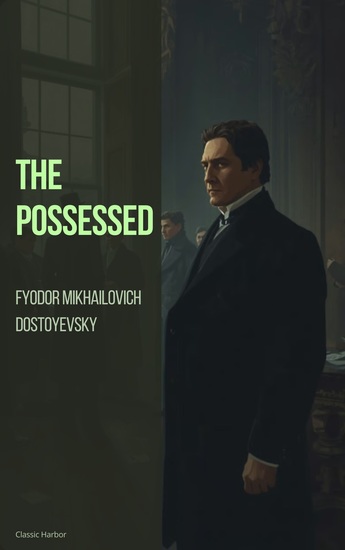
The Possessed - cover

The Possessed

Fyodor Mikhailovich Dostoyevsky

Translator Constance Garnett

Publisher: Classic Harbor

  • 0
  • 0
  • 0

Summary

A community caught in ideological conflict begins to reveal the dangerous consequences of ambition, fanaticism, and political upheaval.

Fyodor Dostoevsky's The Possessed—also known as Demons—explores a society increasingly affected by radical ideas, personal ambition, political conspiracy, and moral uncertainty.

Through a complex cast of characters, Dostoevsky examines ideological conflict, revolution, power, faith, individual responsibility, and the psychological forces that can drive people toward destructive choices.

Combining political drama with psychological and philosophical fiction, the novel offers a penetrating portrait of a society experiencing profound intellectual and social turmoil.

Enter Dostoevsky's intense world of ideology, conspiracy, and psychological conflict.
Available since: 09/22/2026.
Print length: 641 pages.

Other books that might interest you

  • Whose Body - cover

    Whose Body

    Dorothy L. Sayers

    • 0
    • 0
    • 0
    Whose Body? , published in 1923, is the first in a long and very popular series of mystery novels written by Dorothy L. Sayers and featuring her aristocratic detective Lord Peter Wimsey. In this novel we are introduced to Wimsey, his imperturbable and multi-skilled butler Bunter, and his close friend Charles Parker of Scotland Yard as they come together to investigate an extremely mysterious incident: the naked body of a man, wearing a golden pince-nez, has been discovered in the bath of a bewildered tenant of a flat in Battersea. There's a good deal of humor in the book, carefully balanced against the grim reality of murder. Whose Body? was well-received on first publication, and provided a basis for Sayer's successful career as a novelist. In sum, she wrote some eleven Wimsey novels as well as several short stories featuring the characters. Nevertheless, it appears that she herself felt that her translation of Dante's Divine Comedy was her greatest literary work. Dorothy L. Sayers (died 1957) was an influential writer of the modernist period. Their work has endured across generations and continues to be read and studied worldwide. As a work of classic literary fiction, Whose Body exemplifies the narrative craft and social insight that defined great storytelling of its era. Literary fiction of this period was characterized by careful attention to character psychology, social milieu, and the moral questions that animated public discourse.
    Show book
  • The Raven - cover

    The Raven

    Edgar Allan Poe

    • 0
    • 0
    • 0
    "The Raven" is a narrative poem by American writer Edgar Allan Poe. First published in January 1845, the poem is often noted for its musicality, stylized language and supernatural atmosphere. It tells of a distraught lover who is paid a visit by a mysterious raven that repeatedly speaks a single word. The lover, often identified as a student, is lamenting the loss of his love, Lenore. Sitting on a bust of Pallas, the raven seems to further antagonize the protagonist with its repetition of the word "nevermore". The poem makes use of folk, mythological, religious, and classical references.
    Show book
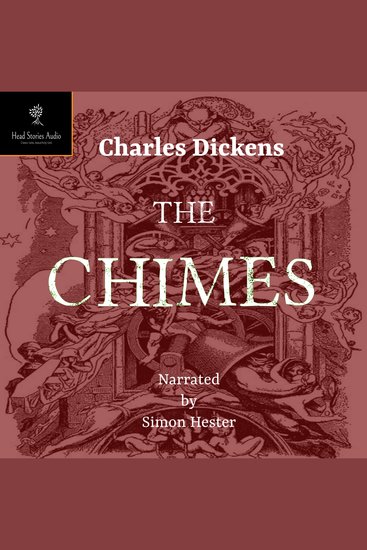
  • The Chimes - cover

    The Chimes

    Charles Dickens

    • 0
    • 0
    • 0
    The Chimes, the second of Charles Dickens' five Christmas books, first appeared in 1844, a year after the tremendous success of A Christmas Carol. Like its predecessor, this novella blends the magical with the moral, crafting a tale that is both an enchanting fable and a searing critique of Victorian society. Set on New Year’s Eve, The Chimes takes readers on a journey through themes of poverty, injustice, and the redeeming power of hope and human kindness. 
    At the heart of The Chimes is Toby "Trotty" Veck, a poor ticket-porter who, like many of Dickens' characters, represents the overlooked and downtrodden in society. Through a series of supernatural visions orchestrated by the spirits of the church bells, Trotty is forced to confront the despair and cynicism that poverty breeds. Yet, Dickens is careful not to let despair overwhelm the narrative. As in A Christmas Carol, he offers a vision of hope—of transformation, repentance, and the possibility of a better world, even for those whom society forgets. 
    Dickens wrote The Chimes at a time when social reform was a pressing issue. It was a period marked by debates over the Poor Laws, the treatment of the working class, and the growing disparity between rich and poor. His personal experiences with poverty as a child, and his deep empathy for the plight of the poor, fueled his desire to use fiction as a means of advocacy. Through The Chimes, Dickens wove his sharpest social commentary into a festive tale, making it both a celebration of the New Year and a somber reflection on society's responsibilities.
    Show book
  • Passing of a God - cover

    Passing of a God

    Henry S. Whitehead

    • 0
    • 0
    • 0
    Passing of a God by Henry S. Whitehead is presented in a clean English digital edition with active navigation. The book belongs to classics and preserves the character of the source text for sustained ebook reading. The opening pages establish the work's atmosphere with this first movement: "You say that when Carswell came into your hospital over in Port au Prince his fingers looked as though they had been wound with string," said I, encouragingly. "It is a very ugly story, that, Canevin," replied Doctor Pelletier, still reluctant, it appeared. "You promised to tell me," I threw in. "I know it, Canevin,". Detected sections include: Chapter 1. This edition is prepared for a fluent reading experience with clear typography and no extraneous promotional material.
    Show book
  • Picciola the prisoner of fenestrella or captivity captive - cover

    Picciola the prisoner of...

    X.-B. Saintine

    • 0
    • 0
    • 0
    In the only visit which you made her at Belleville, where was the tomb of her husband, and now, alas! her own, you more than once seemed surprised with what you saw. You were struck with an old, white-haired man, who sat next her at table, whose appearance and manners were coarse, even for his class. You saw him speak familiarly with the daughter of the countess, who, beautiful as her mother had been, answered him with kindness, and even with deference, giving him the name of godfather, which, indeed, was the relation he bore to her. Perhaps you have not forgotten a flower, dried and colourless, in a rich case; and, also, that when you asked her concerning it, a saddened look stole over the countenance of the widow, and your questions remained unanswered. This answer you now have before you...FROM THE BOOK.
    Show book
  • Loss of Breath - cover

    Loss of Breath

    Edgar Allan Poe

    • 0
    • 0
    • 0
    Loss of Breath is a humorous short story by Edgar Allan Poe that first appeared in a 1832 issue of The Philadelphia Saturday Courier.
    Show book