Join us on a literary world trip!
Add this book to bookshelf
Grey
Write a new comment Default profile 50px
Grey
Subscribe to read the full book or read the first pages for free!
All characters reduced
Poor Folk - cover

Poor Folk

Fyodor Mikhailovich Dostoyevsky

Publisher: Classic Harbor

  • 0
  • 0
  • 0

Summary

Two struggling lives unfold through letters filled with affection, hardship, hope, and human dignity.

Fyodor Dostoevsky's first novel, Poor Folk, tells the story of Makar Devushkin and Varvara Dobroselova through their correspondence.

Their letters reveal the difficulties of poverty, loneliness, social inequality, love, pride, and the desire to preserve dignity despite difficult circumstances. Through this intimate structure, Dostoevsky gives readers a deeply human portrait of people struggling to find comfort and connection in an unforgiving world.

The novel established themes that would become central to Dostoevsky's later work, particularly his interest in poverty, psychology, compassion, and the complexity of human relationships.

Discover the early work of one of Russia's greatest novelists in this moving story of poverty, affection, and human dignity.
Available since: 09/22/2026.
Print length: 182 pages.

Other books that might interest you

  • Monumental Controversies - Mount Rushmore Four Presidents and the Quest for National Unity - cover

    Monumental Controversies - Mount...

    Harriet F. Senie

    • 0
    • 0
    • 0
    In recent years the United States has witnessed major controversies surrounding past American presidents, monuments, and sites. Consider Mount Rushmore, which features the heads of the nation’s most revered presidents—George Washington, Thomas Jefferson, Abraham Lincoln, and Theodore Roosevelt. Is Rushmore a proud national achievement or a symbol of the US theft and desecration of the Lakota Sioux’s sacred land? 
    Is it fair to denigrate George Washington for having owned slaves and Thomas Jefferson for having had a relationship with Sally Hemings, an enslaved woman, to the point of dismissing these men’s accomplishments? 
    Should we retroactively hold Abraham Lincoln accountable for having signed off on the largest single-day mass execution in US history of thirty-eight Dakota men? 
    How do we reckon with Theodore Roosevelt’s legacy? He was criticized for his imperialist policies but praised for his pro-labor antitrust and conservation programs. 
    These charged issues and many others have been plaguing our nation and prompting the removal of Confederate statues and flags amid racial unrest, a national pandemic, and political strife. 
    Noted art historian Harriet F. Senie tackles these pivotal subjects and more in Monumental Controversies. Senie places partisan politics aside as she investigates subjects that have not been adequately covered in classrooms or literature and require substantial reconciliation in order for Americans to come to terms with their history. She shines a spotlight on the complicated facts surrounding these figures, monuments, and sites, enabling us to revisit the flaws of our Founding Fathers and their checkered legacies while still recognizing their enormous importance and influence on the United States of America. 
    Monumental Controversies presents strategies to create an inclusive narrative that honors the varied stakeholders in a democracy—a vital step toward healing the divisiveness that now appears to be a dominant feature of American discourse. 
    As the public and press reconsider the viability of the American experiment in democracy, Senie offers a thoughtful reflection on the complex lives and legacies of the four presidents memorialized on Mount Rushmore. All four presidents faced some of the most contentious times in our history and yet they championed unity, made possible by acknowledging and accepting opposing opinions as a basic premise of democracy. 
    Historians, curators, government officials, academics, and students at all levels will be riveted by this authoritative work.
    Show book
  • Understanding Loss and Grief - A Guide Through Life Changing Events - cover

    Understanding Loss and Grief - A...

    Nanette Burton Mongelluzzo

    • 0
    • 0
    • 0
    A comprehensive self-help book about the different kinds of loss we experience over a lifetime, and the sorrow that accompanies them.   In this guide, psychotherapist Nanette Burton Mongelluzzo considers the different ways we experience loss and grief, in all their variations—whether through the actual death of a loved one, including a beloved pet, or losses experienced through such events as divorce, medical problems, and natural disasters—and examines what these experiences do to us psychologically, biologically, and emotionally.    She also offers understanding and the needed tools for moving through the various experiences, both big and small. Everyone is touched by loss. It begins early in our lives and continues through many ages and stages. Through the use of real-life vignettes, and fascinating facts on loss and grief within the American cultural landscape, this book provides both insight and comfort.
    Show book
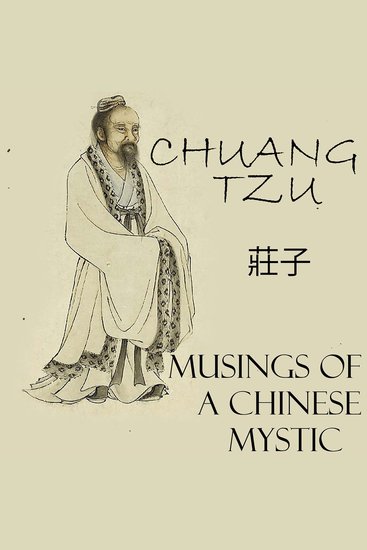
  • Musings of a Chinese Mystic - cover

    Musings of a Chinese Mystic

    Chuang Tzu

    • 0
    • 0
    • 0
    "Musings of a Chinese Mystic" is a classic selection from the philosophical writings of Chuang Tzu, a disciple of the great Taoist philosopher Lao Tzu. An important figure in Chinese philosophy, Chuang Tzu helped to bring prominence to the philosophy of Taoism in ancient China. Drawn from the translations of Professor H. A. Giles with an introduction by Lionel Giles, "Musings of a Chinese Mystic" is an excellent introduction to the important Taoist philosophical writings of Chuang Tzu.
    Show book
  • Binaural Delta Waves: Harness The Power Of Low [28 Hz] Frequencies For The Deepest Sleep Immediate Stress Relief Inner Peace And Total Mind-Body Rejuvenation - cover

    Binaural Delta Waves: Harness...

    Purely Sounds Institute

    • 0
    • 0
    • 0
    Unlock Deep Sleep and Complete Mind-Body Relaxation 
    Experience the calming effects of Binaural DELTA Waves and harness the natural power of low 2.8 Hz frequencies to support restful sleep, mental clarity, and full-body relaxation. This expertly crafted soundscape uses advanced binaural beats to synchronize your brainwaves, gently guiding you into a state of deep calm and tranquility. 
    What Makes This Experience Unique:Drift into deep, uninterrupted sleep and wake up feeling refreshed.Ease mental tension and unwind from daily stress.Enhance focus and mental clarity naturally.Reconnect with a deep sense of calm and emotional balance.Encourage your body to relax and recharge naturally. 
    Supplemental PDF included:2.8 Hz Binaural Session Lab — centers on binaural listening technique and self-comparison: headphone fit, left/right check, session timing, an 8-session crossover log, perceived focus/rest ratings, and a final preference summary. 
    Some believe that binaural beats are just a trend or that sound frequencies can't support better sleep. However, studies show that low-frequency Delta waves naturally slow brain activity, encouraging restful sleep and calmness. Others think only silence leads to relaxation—but in truth, 2.8 Hz frequencies guide your mind into a peaceful state effortlessly. Unlike basic free soundtracks, this professionally engineered audio offers superior depth and clarity for a truly immersive experience. 
    Ready to Transform Your Rest? 
    If you're ready to sleep peacefully, relax deeply, and clear your mind, then scroll up and click the "Add to Cart" button now!
    Show book
  • Generative Artificial Intelligence - What Everyone Needs to Know ® - cover

    Generative Artificial...

    Jerry Kaplan

    • 0
    • 0
    • 0
    Advances in Generative Artificial Intelligence (GAI) have created a new class of computer systems that exhibit astonishing proficiency on a wide variety of tasks with superhuman performance, producing novel text, images, music, and software by analyzing enormous collections of digitized information. Soon, these systems will provide expert medical care; offer legal advice; draft documents; write computer programs; tutor our children; and generate music and art. These advances will accelerate progress in science, art, and human knowledge, but they will also bring new dangers. 


    Have we finally discovered the holy grail of AI—machines that match or exceed human intelligence? Which industries and professions will thrive, and which will wither? What risks and dangers will it pose? How can we ensure that these systems respect our ethical principles? Will the benefits be broadly distributed or accrue to a lucky few? How will GAI alter our political systems and international conflicts? Are we merely a stepping stone to a new form of non-biological life, or are we just getting better at building useful gadgets? 


    Generative Artificial Intelligence: What Everyone Needs to Know® equips listeners with the knowledge to answer these pressing questions.
    Show book
  • The Armed Catholic - The Catholic Case for Guns and Self-Defense - cover

    The Armed Catholic - The...

    Rick Barrett

    • 0
    • 0
    • 0
    St. Augustine wrestled with the conflict between living as a devout Christian and surviving in a world where violence was an all-too-familiar reality. With stirring reasoning, scenarios, and facts, Rick Barrett will help you weigh the challenges and responsibilities regarding the morality of self-defense. From sixteenth-century England to present-day America, you will see what the law states regarding whether one is permitted to stand his ground or obligated to retreat. 
      
    Sure to spark debate, The Armed Catholic answers questions such as: Should only those with legitimate authority bear firearms, or are citizens morally permitted to as well? Did the Church ever endorse pacifism? Does the Catechism of the Catholic Church support the right to self-defense? What does the United States Conference of Catholic Bishops say about gun control? 
      
    In a post-modern Church that seems more concerned with modernity than eternity, Barrett breaks open what the Catholic Church and her popes have believed about self-defense since the 1500s and the continuity of her teaching. He further lays out St. Thomas Aquinas's thoughts on self-defense and the use of force. Moreover, he examines how these principles bear some similarities with the morality of Just War principles, according to St. Augustine, and explains the intention that should never drive an individual to either.
    Show book