¡Acompáñanos a viajar por el mundo de los libros!
Añadir este libro a la estantería
Grey
Escribe un nuevo comentario Default profile 50px
Grey
Suscríbete para leer el libro completo o lee las primeras páginas gratis.
All characters reduced
Crime and Punishment - cover

Crime and Punishment

Fyodor Dostoyevsky

Traductor Constance Garnett

Editorial: DigiCat

  • 0
  • 0
  • 0

Sinopsis

In "Crime and Punishment," Fyodor Dostoyevsky delves into the psychological turmoil of Raskolnikov, a former student plagued by poverty and a misguided theory of exceptionalism. Set against the gritty backdrop of St. Petersburg, the novel showcases Dostoyevsky's mastery of complex characters and moral dilemmas, employing a realist literary style that intricately weaves philosophical expositions with the narrative's suspenseful progression. Themes of guilt, redemption, and the human condition permeate the text, inviting readers to grapple with the nature of crime and the possibility of salvation in a seemingly indifferent universe. Dostoyevsky, influenced by his own experiences with poverty, exile, and psychological struggle, constructed this seminal work in the context of 19th-century Russian society, which was rife with social injustice and intellectual upheaval. His personal confrontations with faith, nihilism, and morality remarkably shaped his narrative choices, making Raskolnikov's journey a reflection of Dostoyevsky's own existential dilemmas and philosophical inquiries. Recommended for those who seek a profound exploration of human nature, "Crime and Punishment" is a timeless meditation on morality that resonates with contemporary discussions on ethics and psychological introspection. Readers will not only engage with Raskolnikov's plight but also find themselves questioning the very fabric of justice and compassion in society.
Disponible desde: 28/05/2022.
Longitud de impresión: 495 páginas.

Otros libros que te pueden interesar

  • Young Man on a Bicycle and The Goldini Bath - cover

    Young Man on a Bicycle and The...

    Victor Canning

    • 0
    • 0
    • 0
    Victor Canning’s light-hearted and cleverly plotted novella set on the beautiful French Riviera 
     
    Young Paul Ashcroft has travelled to the beautiful French Riviera. His goal: to make a lot of money. His methods: more than questionable. Following his motto ‘the world owes me a living’, he steals and swindles – using what he needs for himself and passing on the rest to those less fortunate. 
     
    After coming across the beautiful Villa Triton, he disguises himself as M. Durobat, a middle-aged Frenchman, to inspect the villa and to pawn the owner’s ornaments and paintings. At the local Casino, he becomes acquainted with the rich ladies of the resort. As he steals their jewellery, he blames the robberies on 'Gringo the Greek', a small crook he knew a long time ago.  
     
    But just as Paul's schemes and tricks start to be fruitful and he falls in love with the intriguing Elise Benoit, the real Gringo the Greek appears on the scene, ready to take on the cunning thief who has been blaming him all this time… 
    Praise for Victor Canning: 
     
    ‘Quite delightful … with an atmosphere of quiet contentment and humour that cannot fail to charm’ Daily Telegraph 
     
    ‘What counts for most in the story … is his mounting pleasure in vagabondage and the English scene’ The Times 
     
    ‘A paean to the beauties of the English countryside and the lovable oddities of the English character’ New York Times 
     
    ‘His delight at the beauties of the countryside and his mild astonishment at the strange ways of men are infectious’ Daily Telegraph 
     
    ‘A swift-moving novel, joyous, happy and incurably optimistic’ Evening Standard
    Ver libro
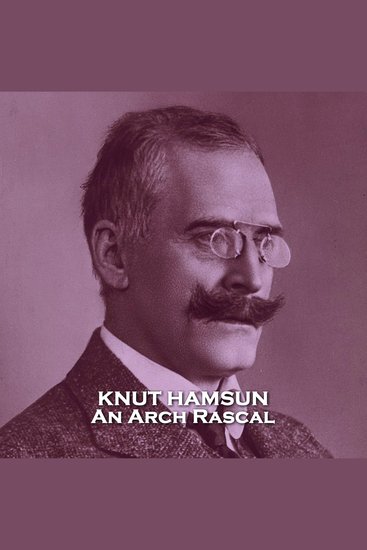
  • Arch Rascal An - From their pens to your ears genius in every story - cover

    Arch Rascal An - From their pens...

    Knut Hamsun

    • 0
    • 0
    • 0
    Knud Pedersen was born in Lom in the Gudbrandsdal valley of Norway on the 4th of August, 1859 in what was then the United Kingdoms of Sweden and Norway.  He was the fourth son of seven children born to poor parents who, when he was three, were invited to an uncle’s farm to work his land. 
    When he was nine he moved away from his family to help another uncle who ran a post office.  Whilst with him he was beaten and starved which manifested in a series of chronic nervous difficulties.  The treatment endured for six years until he managed to escape back to Lom. 
    For some time he now took any job that was available to him, including store clerk, peddler, shoemaker's apprentice, sheriff's assistant, elementary-school teacher and ropemaker's apprentice.  At about the same time, with the wealth of these gained experiences, he began to explore his literary talents. 
    In 1877 he published his first book ‘The Enigmatic Man: A Love Story from Northern Norway’, others soon followed but real success only came in 1890 with ‘Hunger’, an influential work for later novelists with its internal monologue and bizarre logic.  His work is often associated with Pantheism; where nature and mankind are unified in a strong and often mystical bond.   
    His work was so influential that in 1920 he was awarded the Novel Prize for Literature. 
    Shortly after this point his works became fewer and his interests darker.  During World War II he became a fervent admirer of the Nazi’s, even meeting Hitler, even though German armies had overrun Norway.  With the war’s end he was detained on charges of treason.  His old age was apparently the primary reason given for Hamsun receiving only a fine.  Other reasons also sought to excuse his abhorrent behaviour but it was clear that whilst he was loved for his literature he was detested for his politics and morals. 
    His literary canon includes more than 20 novels, a poetry collection, short stories, plays, a travelogue, other works of non-fiction and essays. 
    Knut Hamsun died on the 19th February 1952 in Grimstad. He was 92.
    Ver libro
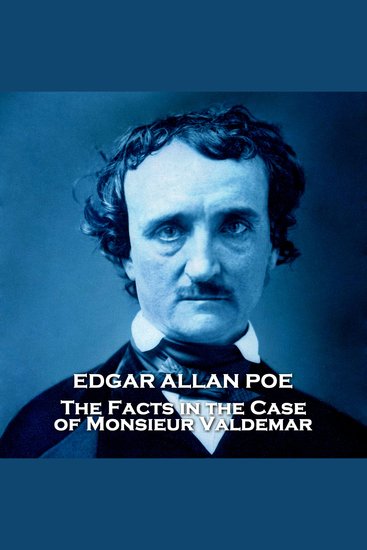
  • The Facts in the Case of Monsieur Valdemar - From their pens to your ears genius in every story - cover

    The Facts in the Case of...

    Edgar Allan Poe

    • 0
    • 0
    • 0
    Edgar Poe was born in Boston Massachusetts on 19th January 1809. His father abandoned his family the following year and within a year his mother had died leaving him an orphan.   
    He was taken in by the Allan family but never formally adopted although he now referred to himself as Edgar Allan Poe.  His father alternatively spoiled or chastised him and tension was frequent over gambling debts and monies for his education.  His university years to study ancient and modern languages was cut short by lack of money and he enlisted as a private in the army claiming he was 22, it is more probable he was 18. After 2 years he obtained a discharge in order to take up an appointment at the military academy, West Point, where he failed to become an officer. 
    Poe had released his 1st poetry volume in 1827 and after his 3rd turned to prose and placing short stories in several magazines and journals.  At age 26 he obtained a licence to marry his cousin.  She was a mere 13 but they stayed together until her death from tuberculosis 11 years after. 
    In January 1845 ‘The Raven’ was published and became an instant classic.  Thereafter followed the prose works for which he is now so rightly famed as a master of the mysterious and the macabre. 
    Edgar Allan Poe died at the tragically early age of 40 on 7th October 1849 in Baltimore, Maryland. Newspapers at the time reported Poe's death as ‘congestion of the brain’ or ‘cerebral inflammation’, common euphemisms for death from disreputable causes such as alcoholism but the actual cause of death remains a mystery.
    Ver libro
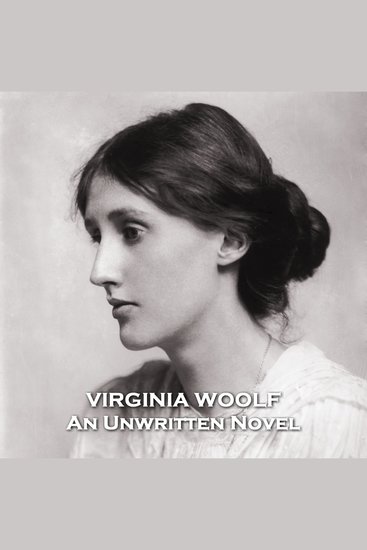
  • Unwritten Novel An - From their pens to your ears genius in every story - cover

    Unwritten Novel An - From their...

    Virginia Woolf

    • 0
    • 0
    • 0
    Adeline Virginia Woolf was born on the 25th January 1882 in South Kensington in London. 
    Although lauded as a founder of modernist writing with such classics as ‘Orlando’, ‘Mrs Dalloway’ and ‘To the Lighthouse’ and, of course, many classic short stories, her background is filled with elements of tragedy that she somehow overcame to become such a revered writer.   Her mother died when she was 13, her half-sister Stella two years later and with it her first of several nervous breakdowns.  Appallingly it was later found that three of her half-brothers had sexually abused her so darkness must have seemed ever present.   
    She began writing professionally at age 20 but her father’s death two years later brought a complete mental collapse and she was briefly institutionalised.  Somehow she found within herself a literary career and with it great innovations in writing; she was a pioneer of “stream of consciousness”.    
    Her tight circle of friends were the founders of the Bloomsbury Group, a movement whose legacy still influences across the arts and society in many way to this day.   
    Whilst the dark periods continued to interrupt her emotional state her rate of work never ceased.  Until, on 28th March 1941, Woolf put on her overcoat, filled up its pockets with stones, and walked into the River Ouse, in Lewes, East Sussex and drowned herself.  Her body was not recovered until the 18th April.  She was 59. 
    She left behind a note which read in part “Dearest, I feel certain that I am going mad again.  I feel we can't go through another of those terrible times.  And I shan't recover this time.  I begin to hear voices, and I can't concentrate.  So I am doing what seems the best thing to do”.
    Ver libro
  • History of Tom Jones a Foundling The - Book 10 (Unabridged) - cover

    History of Tom Jones a Foundling...

    Henry Fielding

    • 0
    • 0
    • 0
    A foundling of mysterious parentage brought up by Mr. Allworthy on his country estate, Tom Jones is deeply in love with the seemingly unattainable Sophia Western, the beautiful daughter of the neighboring squire though he sometimes succumbs to the charms of the local girls. When Tom is banished to make his own fortune and Sophia follows him to London to escape an arranged marriage, the adventure begins. A vivid Hogarthian panorama of eighteenth-century life, spiced with danger and intrigue, bawdy exuberance and good-natured authorial interjections, Tom Jones is one of the greatest and most ambitious comic novels in English literature.
    BOOK 10: Reader, it is impossible we should know what sort of person thou wilt be; for, perhaps, thou may'st be as learned in human nature as Shakespear himself was, and, perhaps, thou may'st be no wiser than some of his editors. Now, lest this latter should be the case, we think proper, before we go any farther together, to give thee a few wholesome admonitions; that thou may'st not as grossly misunderstand and misrepresent us, as some of the said editors have misunderstood and misrepresented their author.
    Ver libro
  • At the Mountains of Madness (Unabridged) - cover

    At the Mountains of Madness...

    H. P. Lovecraft

    • 0
    • 0
    • 0
    At the Mountains of Madness is a science fiction-horror novella by American author H. P. Lovecraft, written in February/March 1931 and rejected that year by Weird Tales editor Farnsworth Wright on the grounds of its length. It was originally serialized in the February, March, and April 1936 issues of Astounding Stories. It has been reproduced in numerous collections. The story details the events of a disastrous expedition to the Antarctic continent in September 1930, and what was found there by a group of explorers led by the narrator, Dr. William Dyer of Miskatonic University. Throughout the story, Dyer details a series of previously untold events in the hope of deterring another group of explorers who wish to return to the continent.
    Ver libro