Junte-se a nós em uma viagem ao mundo dos livros!
Adicionar este livro à prateleira
Grey
Deixe um novo comentário Default profile 50px
Grey
Assine para ler o livro completo ou leia as primeiras páginas de graça!
All characters reduced
Crime and Punishment - cover
LER

Crime and Punishment

Fyodor Dostoyevsky

Tradutor Constance Garnett

Editora: DigiCat

  • 0
  • 0
  • 0

Sinopse

In "Crime and Punishment," Fyodor Dostoyevsky delves into the psychological turmoil of Raskolnikov, a former student plagued by poverty and a misguided theory of exceptionalism. Set against the gritty backdrop of St. Petersburg, the novel showcases Dostoyevsky's mastery of complex characters and moral dilemmas, employing a realist literary style that intricately weaves philosophical expositions with the narrative's suspenseful progression. Themes of guilt, redemption, and the human condition permeate the text, inviting readers to grapple with the nature of crime and the possibility of salvation in a seemingly indifferent universe. Dostoyevsky, influenced by his own experiences with poverty, exile, and psychological struggle, constructed this seminal work in the context of 19th-century Russian society, which was rife with social injustice and intellectual upheaval. His personal confrontations with faith, nihilism, and morality remarkably shaped his narrative choices, making Raskolnikov's journey a reflection of Dostoyevsky's own existential dilemmas and philosophical inquiries. Recommended for those who seek a profound exploration of human nature, "Crime and Punishment" is a timeless meditation on morality that resonates with contemporary discussions on ethics and psychological introspection. Readers will not only engage with Raskolnikov's plight but also find themselves questioning the very fabric of justice and compassion in society.
Disponível desde: 28/05/2022.
Comprimento de impressão: 495 páginas.
Outros livros que poderiam interessá-lo

  • In the Fourth Dimension - From their pens to your ears genius in every story - cover

    In the Fourth Dimension - From...

    Clothilde Graves

    • 0
    • 0
    • 0
    Clotilde Augusta Inez Mary Graves was born on the 3rd June 1863 at Buttevant Castle, Co. Cork, to parents with military backgrounds. 
    At age nine, the family moved to Southsea in England for yet another military posting.  Her father’s postings gave her valuable experiences that would be put to good use in later years in some of her literary works. 
    She was educated at a Catholic convent in Lourdes before returning to London in 1884 to study art in Bloomsbury.  She worked part-time at the British Museum and the Royal Female School of Art and generated further income by drawing little pen-and-ink grotesques for the comic papers.  
    A few years later a chance meeting found her writing extra lyrics for a pantomime version of Puss in Boots.  She followed up with several financially successful plays, both in London and New York, and gained a measure of notoriety in one with the comparison of marriage and prostitution.   
    Despite her dramatic success she published her first novel in 1911 under the pseudonym of Richard Dehan which she continued to use for later works.  As well as novels and plays she published collections of short stories which glow with talent and invention. 
    She was an unusual figure in London society, wearing her hair short, taking on a masculine manner and cut of clothing, and smoking cigarettes in public when such traits were considered eccentric at best.  Add to this her admired collection of Chinese and Japanese trophies, her enthusiasm for fly-fishing and her riding of a tricycle and you have a perfect image of this fascinating writer. 
    Clotilde Graves died at the convent of Our Lady of Lourdes at Hatch End in Middlesex, on the 3rd December 1932.  She was 69.
    Ver livro
  • Pains of Marriage The (Unabridged) - cover

    Pains of Marriage The (Unabridged)

    H. G. Wells

    • 0
    • 0
    • 0
    Herbert George "H. G." Wells (1866 - 1946) was an English writer.
    He was prolific in many genres, including the novel, history, politics, social commentary, and textbooks and rules for war games. Wells is now best remembered for his science fiction novels and is called a "father of science fiction"
    THE PAINS OF MARRIAGE: My uncle came to a stop outside a stationer's shop in Oxford-street. When I saw what had caught his attention I reproached myself for my thoughtlessness.
    Ver livro
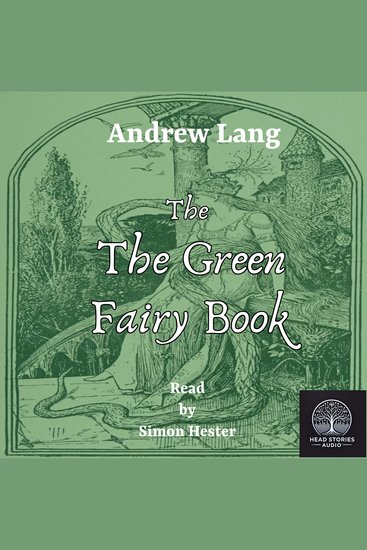
  • The Green Fairy Book - cover

    The Green Fairy Book

    Andrew Lang

    • 0
    • 0
    • 0
    In The Green Fairy Book, Andrew Lang continues his celebrated work of gathering fairy tales from many nations into one collection, preserving stories that have delighted generations and offering them anew to young readers—and to all who value the enduring charm of folklore. This volume, the third in Lang’s famous “Coloured” Fairy Book series, draws its tales from an especially wide array of sources: French, German, Russian, Italian, Scottish, and even oral traditions from tribal cultures such as the Zulus of South Africa. 
    Lang, though a scholar of history and literature, held a deep affection for the fairy tale. In his original introduction, he writes, “The fairy tale is the oldest form of fiction, and it may be the most enduring.” He believed that fairy tales served not only to entertain but to cultivate imagination, to sharpen a child’s sense of wonder, and to subtly shape moral understanding. Though some may dismiss such tales as fanciful or outdated, Lang insisted that they contain “a kind of poetry and fun which children appreciate more than people suppose.” 
    Not all of the stories have the neat, happy endings we have come to expect from the sanitised versions of Fairy Tales in the 20th Century, and quite a few have their macabre and bloodthirsty moments! 
    Head Stories Audio presents "The Green Fairy Book" by Andrew Lang.  Narration and original music by Simon Hester.
    Ver livro
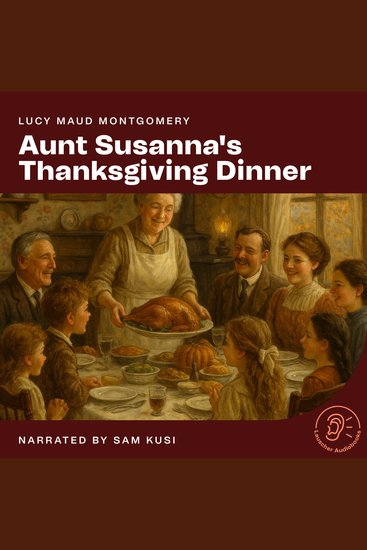
  • Aunt Susanna's Thanksgiving Dinner - cover

    Aunt Susanna's Thanksgiving Dinner

    Lucy Maud Montgomery

    • 0
    • 0
    • 0
    Lucy Maud Montgomery (November 30, 1874 – April 24, 1942), published as L. M. Montgomery, was a Canadian author best known for a series of novels beginning in 1908 with Anne of Green Gables. The book was an immediate success. The title character, orphan Anne Shirley, made Montgomery famous in her lifetime and gave her an international following.
    Aunt Susanna's Thanksgiving Dinner: "Here's Aunt Susanna, girls," said Laura who was sitting by the north window nothing but north light does for Laura who is the artist of our talented family. Each of us has a little pet new-fledged talent which we are faithfully cultivating in the hope that it will amount to something and soar highly some day.
    Ver livro
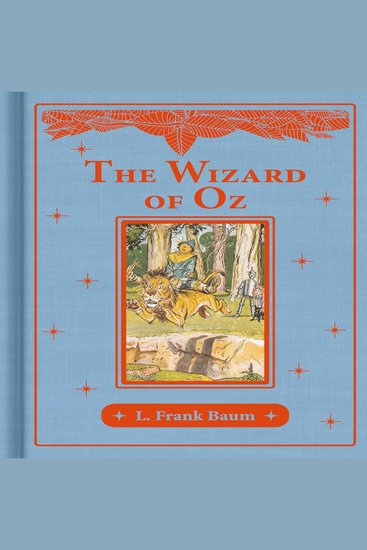
  • The Wizard of Oz - cover

    The Wizard of Oz

    L. Frank Baum

    • 0
    • 0
    • 0
    ‘“Come along, Toto,” she said. “We will go to the Emerald City and ask the Great Oz how to get back to Kansas again.”’ 
    Swept away from her home in Kansas by a tornado, Dorothy and her dog Toto find themselves stranded in the fantastical Land of Oz. As instructed by the Good Witch of the North and the Munchkins, Dorothy sets off on the yellow brick road to try and find her way to the Emerald City and the Wizard of Oz, who can help her get home. 
    With her companions the Scarecrow, the Tin Woodman and the Cowardly Lion, Dorothy experiences an adventure full of friendship, magic and danger. A much-loved children’s classic, The Wizard of Oz continues to delight readers young and old with its enchanting tale of witches, flying monkeys and silver shoes.
    Ver livro
  • The Iron Heel - cover

    The Iron Heel

    Jack London

    • 0
    • 0
    • 0
    The Iron Heel is a science fiction novel novel by American writer Jack London, first published in 1908. 
    It is considered to be "the earliest of the modern dystopian" fiction, it chronicles the rise of an oligarchic tyranny in the United States. In The Iron Heel, Jack London's socialist views are explicitly on display. A forerunner of soft science fiction novels and stories of the 1960s and 70s, the book stresses future changes in society and politics while paying much less attention to technological changes.
    The Iron Heel is cited by George Orwell's biographer Michael Shelden as having influenced Orwell's most famous novel Nineteen Eighty-Four. Orwell himself described London as having made "a very remarkable prophecy of the rise of Fascism", in the book and believed that London's understanding of the primitive had made him a better prophet "than many better-informed and more logical thinkers." Specifically, Orwell's protagonist Winston Smith, like London's Avis Everhard, keeps a diary where he writes down his rebellious thoughts and experiences. However, while Everhard's diary remained hidden during the centuries of tyranny to be discovered and published later, Smith's diary falls into the hands of the book's harsh Thought Police, whose interrogator tells Smith not to expect posterity to vindicate him: "Posterity will never hear of you, we will vaporize you".
    Ver livro