Rejoignez-nous pour un voyage dans le monde des livres!
Ajouter ce livre à l'électronique
Grey
Ecrivez un nouveau commentaire Default profile 50px
Grey
Abonnez-vous pour lire le livre complet ou lisez les premières pages gratuitement!
All characters reduced
Thus Spake Zarathustra: A Book for All and None - cover

Thus Spake Zarathustra: A Book for All and None

Friedrich Wilhelm Nietzsche

Traducteur Thomas Common

Maison d'édition: DigiCat

  • 0
  • 0
  • 0

Synopsis

In "Thus Spake Zarathustra: A Book for All and None," Friedrich Wilhelm Nietzsche presents a philosophical narrative that combines poetic prose with profound existential inquiry. Structured as a series of discourses delivered by the titular prophet Zarathustra, the text explores themes such as the will to power, the eternal recurrence, and the revaluation of morals, all rendered in a style reminiscent of both ancient scripture and romantic poetry. This novel approach situates the work within the context of 19th-century European thought, engaging with existentialist and nihilistic philosophies while simultaneously challenging the dogmas of conventional morality and religion. Nietzsche, a pivotal figure in Western philosophy, was influenced by his deep engagement with an array of intellectual traditions, from classical philosophy to German romanticism. His personal struggles, including health issues and social isolation, permeate the text and enrich his exploration of individuality and the human experience. Nietzsche's own philosophical evolution is reflected in Zarathustra's journey towards understanding the complexities of existence and the necessity for self-overcoming in a world devoid of inherent meaning. Recommended for anyone interested in philosophy, literature, or the intricate relationship between morality and existence, "Thus Spake Zarathustra" invites readers to confront their own beliefs and values. Nietzsche's masterful blend of allegory, lyrical beauty, and philosophical depth makes this work not just a book, but an enduring challenge to the reader's intellect and soul.
Disponible depuis: 28/05/2022.
Longueur d'impression: 338 pages.


D'autres livres qui pourraient vous intéresser

  • Daughters of the North - Jean Gordon and Mary Queen of Scots - cover

    Daughters of the North - Jean...

    Jennifer Morag Henderson

    • 0
    • 0
    • 0
    Longlisted for the 2022 Highland Book PrizeMary, Queen of Scots' marriage to the Earl of Bothwell is notorious. Less known is Bothwell's first wife, Jean Gordon, who extricated herself from their marriage and survived the intrigue of the Queen's court. Daughters of the North reframes this turbulent period in history by focusing on Jean, who became Countess of Sutherland, following her from her birth as the daughter of the 'King of the North' to her disastrous union with the notorious Earl of Bothwell – and her lasting legacy to the Earldom of Sutherland.
    Voir livre
  • Nato's Role - An International Coalition During the War in Afghanistan - cover

    Nato's Role - An International...

    Vince Bywaters

    • 0
    • 0
    • 0
    NATO, or the North Atlantic Treaty Organization, is a military alliance formed in 1949 to provide collective defense against aggression, primarily focused on safeguarding the democratic values and security of its member nations. Over time, its role has expanded from traditional defense to addressing global security challenges, including the fight against terrorism and the stabilization of conflict zones. The War in Afghanistan became a key test for NATO's evolving mission, showcasing its capabilities in out-of-area operations far beyond the traditional borders of its members. 
    The decision to involve NATO in Afghanistan followed the September 11, 2001, terrorist attacks on the United States, which were planned and orchestrated by al-Qaeda, a terrorist group harbored by Afghanistan's Taliban regime. In response, NATO invoked Article 5 of its founding treaty for the first time in its history, declaring an attack on one member as an attack on all. The alliance's commitment to fighting terrorism led to the deployment of NATO forces in Afghanistan, initially through Operation Enduring Freedom, and later through the more expansive International Security Assistance Force (ISAF) mission. 
    NATO’s intervention was multi-faceted, aiming not only to eliminate terrorist threats but also to assist in rebuilding a war-torn nation. The alliance’s involvement extended beyond military operations, focusing on stabilizing Afghanistan by promoting security, governance, and economic development. This commitment was based on the understanding that military force alone would not bring lasting peace. NATO recognized that its mission required close collaboration with local Afghan forces, international organizations, and governments, all working together to achieve a stable and secure Afghanistan.
    Voir livre
  • Demetrius - Sacker of Cities - cover

    Demetrius - Sacker of Cities

    James Romm

    • 0
    • 0
    • 0
    A portrait of one of the ancient world’s first political celebrities, who veered from failure to success and back again 
     
    The life of Demetrius (337–283 BCE) serves as a through-line to the forty years following the death of Alexander (323–282 BCE), a time of unparalleled turbulence and instability in the ancient world. With no monarch able to take Alexander’s place, his empire fragmented into five pieces. 
     
    Capitalizing on good looks, youth, and sexual prowess, Demetrius sought to weld those pieces together and recover the dream of a single world-state, with a new Alexander—himself—at its head. He succeeded temporarily, but in crucial, colossal engagements—a massive invasion of Egypt, a siege of Rhodes that went on a full year, and the Battle of Ipsus—he came up just short. He ended his career in a rash invasion of Asia, and he became the target of a desperate manhunt only to be captured and destroyed by his own son-in-law.
    Voir livre
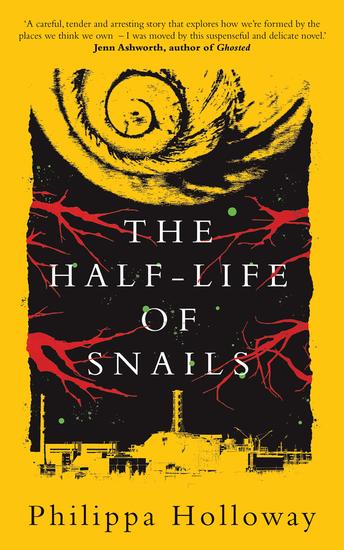
  • The Half-life of Snails - cover

    The Half-life of Snails

    Philippa Holloway

    • 0
    • 0
    • 0
    'a novel that shimmers with compassion... the author has crafted a tale that will linger longer than the half-life of many other books you will read this year.' – Alex Lockwood, author of The Chernobyl Privileges
    'A careful, tender and arresting story that explores how we're formed by the places we think we own – I was moved by this suspenseful and delicate novel.' – Jenn Ashworth, author of Ghosted
    Two sisters, two nuclear power stations, one child caught in the middle...
    When Helen, a self-taught prepper and single mother, leaves her young son Jack with her sister for a few days so she can visit Chernobyl's Exclusion Zone, they both know the situation will be tense. Helen opposes plans for a new power station on the coast of Anglesey that will take over the family's farmland, and Jennifer works for the nuclear industry and welcomes the plans for the good of the economy.
    But blood is thicker than heavy water, and both want to reconnect somehow, with Jack perhaps the key to a new understanding of one another.
    Yet while Helen is forced to face up to childhood traumas, and her worst fears regarding nuclear disaster, during a trip that sees her caught up in political violence and trapped in Chernobyl's Exclusion Zone during the 2014 Euromaidan revolution, Jennifer too must discover that even the smallest decision can have catastrophic and long-lasting effects, both within the nuclear industry, and within the home.
    And Jack isn't like other five-year olds... as they will both discover with devastating consequences.
    Voir livre
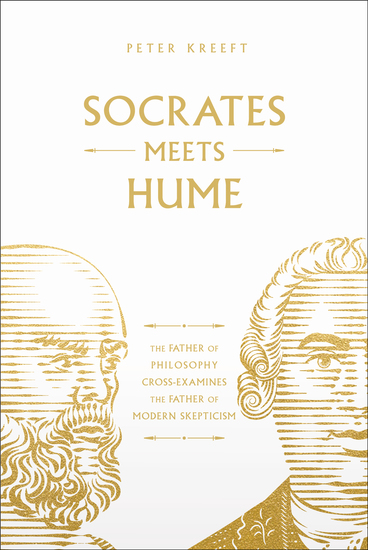
  • Socrates Meets Hume - The Father of Philosophy Cross-Examines the Father of Modern Skepticism - cover

    Socrates Meets Hume - The Father...

    Peter Kreeft

    • 0
    • 0
    • 0
    In the Socrates Meets series, Peter Kreeft revives the classic method of bringing philosophy to life through dialogue. In eight innovative volumes, he uncovers the principles, assumptions, and sometimes dangerous conclusions of some of history’s most influential minds.  Each dialogue imagines a purgatory where we can listen in on conversations between Socrates and the great thinkers who, centuries later, picked up the philosopher’s torch. Each conversation investigates one of the philosopher’s key works, a short, readable classic that raises central questions both for philosophy and for life. In this volume, Socrates cross-examines David Hume, the father of modern skepticism and author of An Enquiry Concerning Human Understanding, exploring human knowledge, causality, miracles, and the idea of the self.
    Voir livre
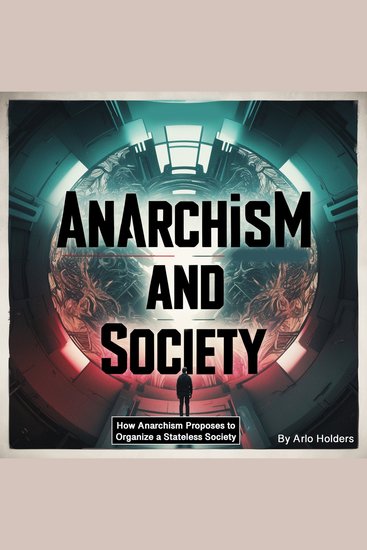
  • Anarchism and Society - How Anarchism Proposes to Organize a Stateless Society - cover

    Anarchism and Society - How...

    Arlo Holders

    • 0
    • 0
    • 0
    Anarchism, as a political philosophy, is fundamentally concerned with the question of authority and its rightful place in society. The central tenet of anarchism is the belief that no individual or institution should have absolute power over others. This idea rejects hierarchical structures and the idea of the state as a necessary or legitimate institution. Anarchism calls for a society where individuals govern themselves through voluntary cooperation and mutual aid, without the need for a coercive state apparatus. 
    Historically, anarchism has evolved from a series of intellectual traditions and movements that have sought to challenge the dominant power structures in society. It draws heavily on the ideas of early political thinkers such as Pierre-Joseph Proudhon, who famously declared, "Property is theft!" and Mikhail Bakunin, who argued for the abolition of the state and the establishment of a society based on collective freedom and self-management. These thinkers were critical of the state, capitalism, and other forms of social hierarchy that limit human freedom. 
    Anarchism is often misunderstood or misrepresented as a chaotic or violent ideology. However, at its core, anarchism advocates for a peaceful and just society where individuals are free to govern themselves without external control. Anarchists argue that true freedom can only be achieved when people are no longer subject to the oppressive structures of the state, capitalism, or other forms of authoritarian control. They advocate for the dismantling of oppressive institutions and the creation of a more equitable and cooperative society.
    Voir livre