Join us on a literary world trip!
Add this book to bookshelf
Grey
Write a new comment Default profile 50px
Grey
Subscribe to read the full book or read the first pages for free!
All characters reduced
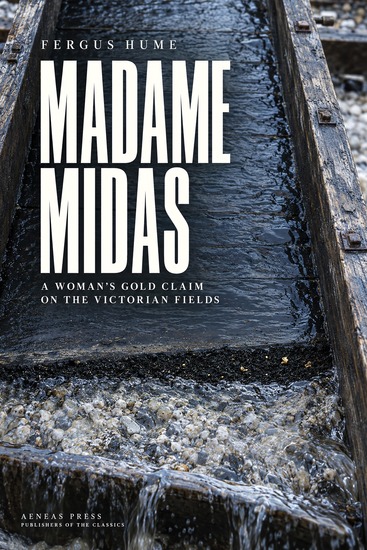
Madame Midas - A Woman's Gold Claim on the Victorian Fields - cover

Madame Midas - A Woman's Gold Claim on the Victorian Fields

Fergus Hume

Publisher: Aeneas Press

  • 0
  • 0
  • 0

Summary

A woman strikes gold in Ballarat, becomes the richest woman on the field, and finds an escaped French convict, the husband who deserted her and her own past all queuing for it. Hume wrote The Mystery of a Hansom Cab in Melbourne, published it himself when nobody would touch it, sold the rights for fifty pounds and then watched it outsell Sherlock Holmes. This is the Australian goldfields novel he wrote next. Sixty plates of docks, quays and mill interiors by painters such as W. J. Stevenson and John Buxton Knight give the goldfields their working harbour and lamplit rooms.
Available since: 09/16/2026.
Print length: 323 pages.

Other books that might interest you

  • 10 Masterpieces of Comedy – Volume 1 - cover

    10 Masterpieces of Comedy –...

    Charles Dickens, Mark Twain,...

    • 0
    • 0
    • 0
    Laughter Through the Ages: The Ultimate Curated Collection of Wit and Satire.
    
    From biting social commentary to high-energy slapstick, 10 Masterpieces of Comedy – Volume 1 brings together essential works that have defined humor throughout literary history. This anthology serves as a grand tour of the comedic mind, featuring masterpieces that perfected the art of the "laugh out loud" moment while skewering the absurdities of human nature.
    
    Inside this volume, you will discover:
    
    Iconic Social Satire: Works that brilliantly lampoon the manners and hypocrisies of their time.
    
    Timeless Romantic Comedies: Stories of mistaken identities, magical mishaps, and the chaotic nature of love.
    
    Masterful Farce: Fast-paced plotting and hilarious situations that have kept audiences laughing for generations.
    
    Sharp Literary Wit: Brilliant dialogue and observational humor from history's most celebrated writers.
    
    Whether you are a student of drama, an aspiring writer, or simply someone who appreciates a well-timed jest, this collection offers a panoramic view of how comedy has evolved—and how little human folly has changed. These ten masterpieces continue to entertain, proving that true wit is timeless.
    
    Don't miss the curtain call. Buy "10 Masterpieces of Comedy" today and own a premier library of wit.
    Show book
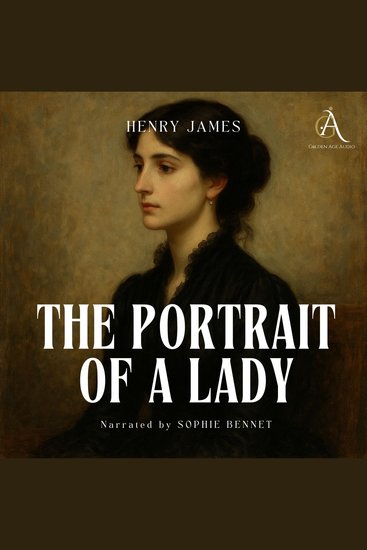
  • Portrait of a Lady The - Audiobook - cover

    Portrait of a Lady The - Audiobook

    Henry James, Classic Audiobooks,...

    • 0
    • 0
    • 0
    The Portrait of a Lady by Henry James is a profound psychological novel that explores freedom, identity, and the constraints of society through the journey of Isabel Archer — a spirited young American woman traveling through Europe. Eager to live life on her own terms, Isabel turns down conventional marriage offers in pursuit of independence and self-discovery. But when she inherits a fortune, her choices grow more complex, and her idealism is put to the test.Set against the rich backdrop of 19th-century Europe, the novel masterfully examines themes of manipulation, betrayal, and personal growth. With his signature depth and subtle irony, James crafts an unforgettable portrait of a woman caught between the desire for autonomy and the expectations of the world around her.
    Show book
  • Put Yourself in His Place - A Story of the Yorkshire Trades - cover

    Put Yourself in His Place - A...

    Charles Reade

    • 0
    • 0
    • 0
    A young engineer in a Yorkshire cutlery town introduces machinery, and the trade unions warn him, then blow up his workshop — while a doctor's daughter, a flooded reservoir and an old crime run alongside. Reade campaigned in fiction against private asylums, brutal prisons and union violence, and researched this in Sheffield from the actual outrages; the dam-burst at the end is taken from the Sheffield flood, which killed two hundred and forty people. Fifty-four plates of working life and industry, from Menzel's bearded labourer and blacksmith's shop to Sisley's Argenteuil square, give the novel's mills and forges their visual counterpart.
    Show book
  • Hunchback of Notre-Dame The (Book 4) - cover

    Hunchback of Notre-Dame The...

    Victor Hugo

    • 0
    • 0
    • 0
    Book 4: The Hunchback of Notre-Dame or Notre-Dame de Paris is a French Gothic novel by Victor Hugo, published in 1831. - The story is set in Paris in 1482 during the reign of Louis XI. The gypsy Esmeralda (born as Agnes) captures the hearts of many men, including those of Captain Phoebus and Pierre Gringoire, but especially Quasimodo and his guardian Archdeacon Claude Frollo. Frollo is torn between his obsessive lust for Esmeralda and the rules of Notre Dame Cathedral. He orders Quasimodo to kidnap her, but Quasimodo is captured by Phoebus and his guards, who save Esmeralda. Gringoire, who attempted to help Esmeralda but was knocked out by Quasimodo, is about to be hanged by beggars when Esmeralda saves him by agreeing to marry him for four years.
    Show book
  • Twilight Alley - From their pens to your ears genius in every story - cover

    Twilight Alley - From their pens...

    Stefan Zweig

    • 0
    • 0
    • 0
    Stefan Zweig was born on the 28th November 1881 in Vienna, then part of the Austro-Hungarian Empire, and into a wealthy Jewish family with interests in banking and textiles. 
    He studied philosophy at the University of Vienna and achieved his degree in 1904. 
    Zweig first published in 1900 and two decades later was a popular and highly regarded author in many parts of the world, although not in England.    
    During the Great War he served in the Archives of the Ministry of War and supported Austria's war effort through his writings in the ‘Neue Freie Presse’.  Whilst his work praised his Country’s progress and, on occasions, its excesses and massacres, he later claimed, in his memoir, that he was a pacifist. 
    In 1912 he began an affair with the married, and mother or two, Friderike Maria von Winternitz, but it was only in 1920 that circumstances allowed them to marry.  She took care of much of his business interests and supported him artistically.  In this decade too many of his most famous works including the short stories; ‘Amok’, and ‘Letter from an Unknown Woman’ (filmed in 1948 by Max Ophüls), novels; ‘Confusion of Feelings’ and biographies including that on Marie Antoinette (filmed by MGM in 1938) were published. 
    He was also the librettist with Richard Strauss of two operas and a keen collector of autographed musical manuscripts.  His collection of over two hundred pieces was later donated to the British Library.  
    In 1934, Zweig, as a Jew, and finding life very difficult under his anti-Semitic government and the neighbouring Nazi’s persuaded him to leave Austria for England.   
    In 1940 Zweig, now divorced and married to his second wife, and former secretary, Lotte Altmann, left London and via New York moved to Petrópolis, a German-colonized town 50 miles north of Rio de Janeiro in Brazil.  Although he continued to write he became, along with his wife, increasingly depressed about the situation in Europe and the future for humanity,  
    His memoir ‘The World of Yesterday’ was completed on the 22nd February 1942. 
    The following day the Zweig’s were found in their house dead of a barbiturate overdose, holding each other’s hand.  He was 60.
    Show book

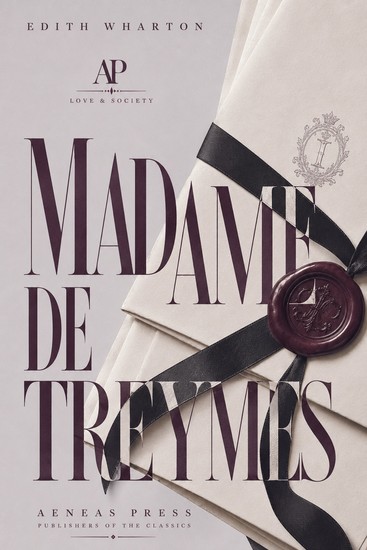
  • Madame de Treymes - A Novella of the Faubourg - cover

    Madame de Treymes - A Novella of...

    Edith Wharton

    • 0
    • 0
    • 0
    An American woman living apart from her French husband in Paris wants to marry a compatriot, and her French husband's family will not release her — and the sister-in-law who explains why is doing something more complicated than refusing. Wharton lived in Paris and knew the faubourg from inside; this 1907 novella is her most compressed study of two societies misreading each other, and Madame de Treymes's motive is the best thing in it. Fifty-nine plates of Parisian women by Mary Cassatt and Giovanni Boldini, from 1825 to 1925, give a face to the society whose rules trap Wharton's heroine.
    Show book