Join us on a literary world trip!
Add this book to bookshelf
Grey
Write a new comment Default profile 50px
Grey
Subscribe to read the full book or read the first pages for free!
All characters reduced
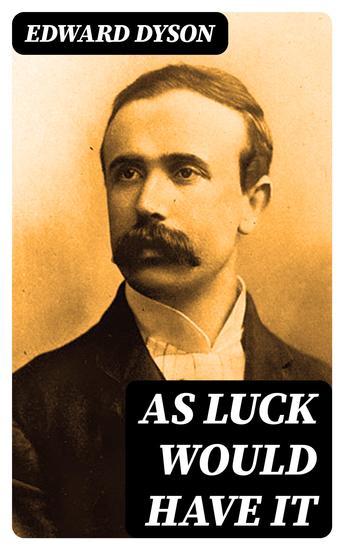
As Luck Would Have It - cover

As Luck Would Have It

Edward Dyson

Publisher: DigiCat

  • 0
  • 0
  • 0

Summary

In "As Luck Would Have It," Edward Dyson weaves a compelling narrative that intricately blends humor with social commentary, exploring themes of chance and fortune in the lives of ordinary Australians. Set against the backdrop of the early 20th century, Dyson employs a colloquial style rich in local vernacular, painting vivid portraits of his characters as they navigate the unpredictable currents of fate. The novel deftly combines anecdotes and satire, giving readers a penetrating glimpse into the cultural and societal norms of the time, while reflecting Dyson's own experiences and observations of Australian life. Edward Dyson, a prominent figure in Australian literature, drew upon his diverse experiences as a journalist, poet, and novelist to craft this engaging tale. His gritty realism and fondness for the common man is evident throughout this work, suggesting that Dyson's own interactions with life's unpredictable turns have significantly shaped the narrative. With a background in both the arts and journalism, he skillfully captures the essence of human resilience and folly in the face of randomness. "As Luck Would Have It" is a must-read for those who appreciate insightful storytelling infused with wit and a deep understanding of human nature. It invites readers to reflect on their own lives and the often whimsical nature of fortune, making it a timeless exploration of chance that remains relevant today.
Available since: 09/15/2022.
Print length: 160 pages.

Other books that might interest you

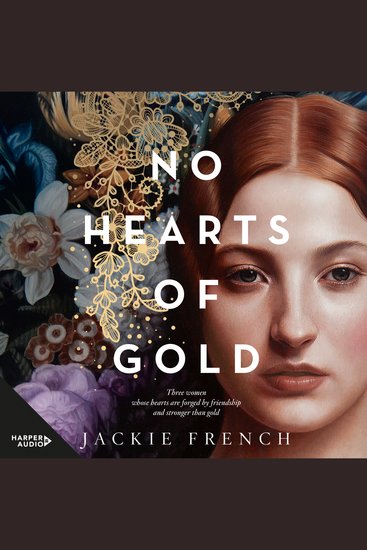
  • No Hearts of Gold - cover

    No Hearts of Gold

    Jackie French

    • 0
    • 0
    • 0
    Three women from very different backgrounds, bound by friendship, separated by destiny 
      
    It was impossible, but in full view of the church, the Governor and wedding guests ... 
    The bride had vanished. 
    Some girls are born to be loved, some are born to be useful. 
    Some girls are born to be bad. 
    Indulged and wealthy Kat Fitzhubert is seemingly 'sold off' in an arranged marriage in a colony across the world. Lady Viola Montefiore is the dark-skinned 'changeling' of a ducal family, kept hidden and then shipped away. Titania Boot is as broad as a carthorse, and as useful. 
    In the turmoil of an Australia in 1853 that reinvents itself from convict colony to a land of gold, one woman forges a business empire. One brews illegal poteen with a bushranger. And the third vanishes on her wedding day in a scandal that will mystify the world. 
    In this magnificent and broad-sweeping saga, Jackie French defies the myth of colonial women as 'merely' wives, servants or whores. Instead portraying them as business women, farmers, bushrangers and brewers of illegal poteen, as well as arbiters of their destiny.
    Show book
  • Young Lions Pride - cover

    Young Lions Pride

    Andrew Mackay

    • 0
    • 0
    • 0
    Alan, Sam, Alice and Aurora operate behind enemy lines on L-Day: the Allied liberation of the Occupied South. The partisans suffer grievous losses linking up with friendly forces. Hitler mercilessly crushes an SS coup. The Brotherhood of the Purifying Flame takes advantage of the chaos to pursue its Holy Mission. 
    "Young Lions Pride" is the seventh book in the Young Lions series and is a fast-paced, gritty novel set in an alternative history of the Second World War. 
    The Young Lions series: 
    Young Lions 
    Young Lions Roar (winner of the NGP Publishing Prize 2012) 
    Young Lions Hunt 
    Young Lions Attack 
    Young Lions Prey 
    Young Lions Feast
    Show book
  • The Masque of the Red Devil - cover

    The Masque of the Red Devil

    L.E. Thomas

    • 0
    • 0
    • 0
    When the kindly old lord dies mysteriously and his nephew Lord Antonio occupies the castle high on the hill, the peasant folk in the village below begin to fear him. There are rumours of strange practices and ceremonies, far removed from their Christian beliefs.
    
    
    Once the soldiers come to collect their young, unmarried women to take part in these secret rites, the villagers are terrified, especially as some of the girls never come home.
    
    
    Catrin is full of dread when it is her turn; however, she has a secret. Rather than being a maid, she and her swain Elis have plighted her troth and she suspects, to her joy, that she may be expecting their child.
    
    
    This makes her all the more determined to survive her ordeal in the fortress, whatever that might bring, even if it means she has to resort to witchcraft and enchantment. Might her pact with the devil lose her everything she holds dear?
    Show book
  • A Trace of Poison - cover

    A Trace of Poison

    Colleen Cambridge

    • 0
    • 0
    • 0
    In England's stately manor houses, murder is not generally a topic for polite conversation. Mallowan Hall, home to Agatha Christie and her husband, Max, is the exception. And housekeeper Phyllida Bright delights in discussing gory plot details with her friend and employer . . . 


    The neighboring village of Listleigh has also become a hub of grisly goings-on, thanks to a Murder Fête organized to benefit a local orphanage. Members of The Detection Club—a group of celebrated authors such as G. K. Chesterton, Dorothy L. Sayers, and Agatha herself—will congregate for charitable events, including a writing contest for aspiring authors. The winner gets an international publishing contract, and entrants have gathered for a cocktail party—managed by the inimitable Phyllida—when murder strikes too close even for her comfort. 


    It seems the victim imbibed a poisoned cocktail intended for Alastair Whittlesby, president of the local writers' club. The insufferable Whittlesby is thought to be a shoo-in for the prize, and ambition is certainly a worthy motive. But narrowing down these suspects could leave even Phyllida's favorite fictional detective, M. Poirot, twirling his mustache in frustration.
    Show book
  • The Cherry Orchard - cover

    The Cherry Orchard

    Anton Chekhov

    • 0
    • 0
    • 0
    A poignant meditation on change, loss, and the passage of time, The Cherry Orchard by Anton Chekhov is a masterful tragicomedy that captures a society standing at the edge of transformation. First performed in 1904, this timeless play explores the fading world of the Russian aristocracy and the quiet but unstoppable rise of a new social order.
    
    At the heart of the story is Madame Lyubov Andreyevna Ranevskaya, a charming yet impractical landowner who returns to her family estate after years abroad. She is greeted by memories of her childhood and by the vast, beautiful cherry orchard that has long symbolized her family's heritage and prestige. But beneath the orchard's blossoms lies an undeniable truth: the estate is drowning in debt and will soon be auctioned unless drastic action is taken.
    
    Surrounding Ranevskaya is a vivid ensemble of characters—her devoted but anxious brother Gayev, her practical adopted daughter Varya, her idealistic daughter Anya, and the former serf turned wealthy merchant Lopakhin. It is Lopakhin who proposes the unthinkable solution: cut down the orchard and build summer cottages to generate income. His plan represents progress, industry, and the future. To Ranevskaya and Gayev, however, it feels like a betrayal of history and beauty.
    
    Through delicate dialogue and subtle humor, Chekhov reveals the inner conflicts of his characters. They speak of hope, love, and ambition, yet often fail to act decisively. Dreams clash with reality, and nostalgia clouds judgment. The orchard itself becomes a powerful symbol—of memory, identity, and a way of life slipping irretrievably into the past.
    
    Blending comedy with quiet tragedy, Chekhov crafts a narrative in which life's most profound changes occur not with dramatic explosions but with the soft sound of an axe striking wood in the distance. The play's emotional depth lies in its restraint; its characters are neither heroes nor villains, but deeply human figures struggling to adapt to forces beyond their control.
    
    The Cherry Orchard is more than a story about financial ruin—it is a reflection on generational change, social upheaval, and the bittersweet nature of progress. As the orchard falls, so too does an era defined by privilege and tradition. Yet within that loss lies the promise of renewal and possibility.
    
    With lyrical prose, gentle irony, and penetrating insight into the human condition, Chekhov's final play remains one of the greatest works of world drama. It continues to resonate with audiences as a moving exploration of memory, resilience, and the inevitability of change.
    Show book
  • Night-Watches - Supernatural story blurring the lines between living and dead - cover

    Night-Watches - Supernatural...

    Elizabeth Stuart Phelps

    • 0
    • 0
    • 0
    Mary Gray Phelps was born on the 31st August 1844 in Boston, Massachusetts. 
    When she was 8 her mother died.  In her later writings she used her mother's name ‘Elizabeth Stuart Phelps’ as a pseudonym.  
    Phelps received an upper-class education, and such
    Show book