Junte-se a nós em uma viagem ao mundo dos livros!
Adicionar este livro à prateleira
Grey
Deixe um novo comentário Default profile 50px
Grey
Assine para ler o livro completo ou leia as primeiras páginas de graça!
All characters reduced
Thoughts on the Present Discontents and Speeches - cover
LER

Thoughts on the Present Discontents and Speeches

Edmund Burke

Editora: DigiCat

  • 0
  • 0
  • 0

Sinopse

In "Thoughts on the Present Discontents, and Speeches," Edmund Burke provides a profound analysis of the political turmoil in 18th-century Britain, particularly in the wake of the American Revolution. His literary style is characterized by eloquent prose and compelling rhetoric, merging philosophical inquiry with pragmatic political commentary. Burke critiques the prevailing political theories of his time, advocating for stability and tradition over radical change, particularly emphasizing the importance of established institutions in maintaining societal order. The work is an essential text within the context of Enlightenment political thought, laying groundwork for later conservative philosophy. Edmund Burke, an Irish statesman and philosopher, was deeply influenced by the complex political landscape of his era, especially the tension between liberty and order. His experiences in Parliament and his reflections on revolutionary movements informed his views; Burke understood the perils of unchecked radicalism, which he believed could lead to chaos and tyranny. His commitment to gradual reform and respect for historical context underscores his belief that society is a delicate balance of rights and responsibilities. This book is highly recommended for readers interested in political philosophy, history, or the evolution of conservative thought. Burke's insights continue to resonate today, offering valuable lessons on governance, civil society, and the inherent tensions within political systems. Engage with his timeless arguments to better understand the complexities of contemporary political discourse.
Disponível desde: 16/09/2022.
Comprimento de impressão: 119 páginas.


Outros livros que poderiam interessá-lo

  • How to Become a Public Speaker - cover

    How to Become a Public Speaker

    William Pittenger

    • 0
    • 0
    • 0
    How to Become a Public Speaker by William Pittenger is a comprehensive guide designed to equip aspiring speakers with the necessary tools to communicate effectively and persuasively. Written in an engaging and instructive style, the book explores the fundamental principles of oratory, from organizing thoughts with clarity to delivering speeches with confidence and passion.
     
    Pittenger debunks the myth that great speakers are simply born with talent, asserting that eloquence is a skill that can be cultivated through proper training and practice. He outlines various methods of speech delivery, discusses the importance of imagination and emotion in oratory, and provides practical exercises to enhance vocal strength and articulation. The book also addresses common obstacles such as stage fright and unstructured discourse, offering strategies to overcome these challenges.
     
    For those engaged in public speaking—whether as lecturers, debaters, politicians, clergy, or business professionals—this book remains a timeless and essential resource in the art of persuasive communication.
    Ver livro
  • On the Cannibals - cover

    On the Cannibals

    Michel de Montagrie

    • 0
    • 0
    • 0
    'I am not sorry we note the barbarous horror of cannibalism, but grieved that, prying so narrowly into their faults, we are so blinded in ours.'
    
    First translated into English in 1603, 'On the Cannibals' is an essay reflecting on a remarkable trip to Brazil which Michel de Montaigne undertook at the end of the sixteenth century.
    
    A study into the customs and practices of indigenous peoples in the Americas, Montaigne delves into the concept of 'civilisation', contrasting the behaviour of so-called 'barbarians' with Western society. He challenges the idea that European values are superior, understanding the practices of the Tupinambá people and arguing that the horrors inflicted by the soldiers of Portugal on their enemies at the time are – in many ways – far worse. It remains a persuasive and compelling argument for cultural relativism. This audiobook edition is expertly narrated by Malk Williams.
    Michael de Montaigne (1533 – 1592) was a French philosopher and writer, and a significant figure in the French Renaissance. He is widely known for popularising the essay, amalgamating anecdotes with memoir and intellect. He has been a huge influence on several Western writers, including William Shakespeare.
    Ver livro
  • Finding Judge Crater - A Life and Phenomenal Disappearance in Jazz Age New York - cover

    Finding Judge Crater - A Life...

    Stephen J. Riegel

    • 0
    • 0
    • 0
    On the night of August 6, 1930, Joseph Force Crater, a newly appointed judge and prominent figure in many circles of Manhattan, hailed a taxi in the heart of Broadway and vanished into thin air. Despite a decades-long international manhunt led by the New York Police Department's esteemed Missing Persons Bureau, the reason for Crater's disappearance remains a confounding mystery. In the early months of the investigation, evidence implicated and imperiled New York's top officials, including then-Governor Franklin D. Roosevelt and Mayor Jimmy Walker, as well as the city's Tammany Hall political machine, lawyers and judges, and a theater mogul. 


    Drawing on new sources, including NYPD case files and court records, and overlooked evidence discovered years later, Riegel pieces together the puzzle of what likely happened to Joseph Crater and why. To uncover the mystery, he delves into Crater's ascension into the scintillating and corrupt world of Manhattan in the Roaring Twenties and Jazz Age. In turn, the story of the judge's vanishing amid the Great Depression unfolds as a harbinger of the disappearance of his lost metropolis and its transformation into modern-day New York City.
    Ver livro
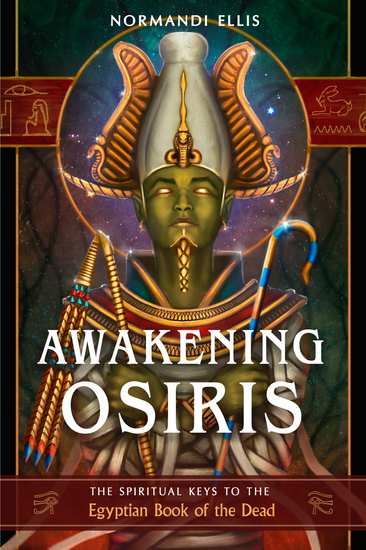
  • Awakening Osiris - The Spiritual Keys to the Egyptian Book of the Dead - cover

    Awakening Osiris - The Spiritual...

    Normandi Ellis

    • 0
    • 0
    • 0
    “Awakening Osiris is a perennial, a classic in the combined realm of Egyptology, spirituality, and pure literary achievement.” —Kathleen McGowan, New York Times bestselling author of The Expected One   “Awakening Osiris is not only a translation and a book of Egyptian religion, but also a spiritual work that will serve many Pagans as a prayer book of sorts, a book of meditations—something not to be read and left on the shelf, but to return to repeatedly.” —Judika Illes, author of Encyclopedia of Spirits   A beautiful and engaging rendering of The Egyptian Book of the Dead that reveals the soul and spirit of Egypt   The Egyptian Book of the Dead is one of the oldest and greatest classics of Western spirituality. With Awakening Osiris, Ellis has transformed the ancient stories told through hieroglyphs for modern readers and approaches the Book of the Dead as a profound spiritual text capable of speaking to us today. These writings suggest that the divine realm and the human realm are not altogether separate; they remind us that the natural world—the substance of our lives—is fashioned from the stuff of the gods.   This edition replaces the previous edition (ISBN 978-0933999749) and contains a new introduction and study guide by the author.
    Ver livro
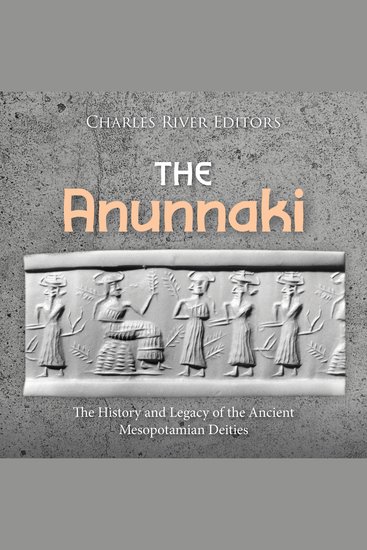
  • Anunnaki The: The History and Legacy of the Ancient Mesopotamian Deities - cover

    Anunnaki The: The History and...

    Editors Charles River

    • 0
    • 0
    • 0
    Today the Mesopotamians and their religion are sources of curiosity, but thousands of years ago, the religions were integral parts of their lives. From their birth to their death, deities surrounded them, and whether their social interactions were on the level of a smaller city or that of a larger nation-state, deities played key roles in the social fabric of their society. Whereas the Israelites were one people who worshipped a single god, Mesopotamian religions hailed from many sources that spanned thousands of years.  
    	Myth content and structure also changed as different dynasties came and went from Babylon. When modern Assyriologists – the term for scholars who study ancient Mesopotamia – began compiling the myths of the region, they realized that many of the most popular myths had several versions and were often copied into multiple languages. Although myths are part of a culture’s religion, Mesopotamian people’s religious rituals were usually independent of any myth: rituals were a way for humans to connect and gain favor with their gods, while the myths explained the way things came to be, as well as elucidating moral elements of society.  
    	In ancient Mesopotamia, families formed the basis of local communities, and from that core, states, kingdoms, and empires often derived their identity and legitimacy. Of course, the family unit also played a crucial role in the development of religious beliefs and myths, and one of the most influential is the Anunnaki. Scores of religious texts from ancient Mesopotamia – written in Sumerian cuneiform and Akkadian cuneiform – relate how the Anunnaki were the second generation of gods and goddesses. However, scholars debate their abilities, roles, and even which deities were considered among the Anunnaki. Many texts describe the Anunnaki collectively as guardians of the Underworld, yet in other texts, they are mentioned as protectors of the heavens.
    Ver livro
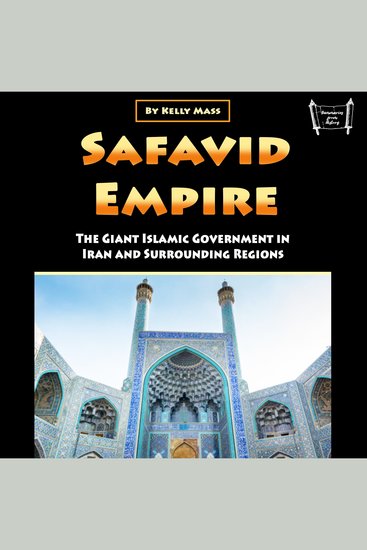
  • Safavid Empire - The Giant Islamic Government in Iran and Surrounding Regions - cover

    Safavid Empire - The Giant...

    Kelly Mass

    • 0
    • 0
    • 0
    The Safavid Empire, often referred to as Safavid Iran or Safavid Persia, stands out as one of the most influential Iranian empires following the Muslim conquest of Persia in the 7th century. Ruling from 1501 to 1736, the Safavid dynasty is regarded as the catalyst for modern Iranian history and is recognized as one of the prominent gunpowder empires of its time. A pivotal moment in Muslim history, the Safavid rulers established the Twelver school of Shia Islam as the empire's official religion, which fundamentally shaped the spiritual and political landscape of Iran. 
    The origins of the Safavid dynasty can be traced back to a Sufi order founded in the Azerbaijani city of Ardabil. Initially a spiritual movement, the Safavid order transformed into a formidable political force. The dynasty, which had Kurdish Iranian roots, became increasingly Turkified through intermarriages with various ethnic groups, including Turkoman, Georgian, Circassian, and Pontic Greek officials. As a result, the Safavid leaders became Turkish-speaking and culturally integrated into the diverse milieu of the region.
    Ver livro