Begleiten Sie uns auf eine literarische Weltreise!
Buch zum Bücherregal hinzufügen
Grey
Einen neuen Kommentar schreiben Default profile 50px
Grey
Jetzt das ganze Buch im Abo oder die ersten Seiten gratis lesen!
All characters reduced
The Relationship Between Obesity & Sports Activities - cover

The Relationship Between Obesity & Sports Activities

Editorial Max

Verlag: Publishdrive

  • 0
  • 0
  • 0

Beschreibung

Obesity has emerged as one of the most significant health concerns of the 21st century, impacting individuals, communities and health systems around the world. The alarming increase in obesity rates has attracted the attention of health professionals, researchers and policy makers, driving the search for effective prevention and treatment strategies. In this context, sports activities have gained prominence as a promising approach to combat obesity and its adverse effects.Presentation of the Theme: The Growing Concern with Obesity and the Importance of Sports ActivitiesObesity, characterized by excessive accumulation of adipose tissue, not only affects aesthetics, but is also shown to be a significant risk factor for a wide range of adverse health conditions. Type 2 diabetes , cardiovascular disease, hypertension, metabolic disorders and even certain types of cancer have been linked to obesity. The global prevalence of obesity has increased markedly in recent decades, transcending geographic, cultural and economic barriers.The growing concern about obesity is not just limited to the aspect of individual health, but also has substantial economic and social implications. The costs associated with treating obesity-related illnesses place a significant strain on health systems, while reduced quality of life and limited productive capacity affect society as a whole.Objectives of the Draft and InvestigationThe purpose of this outline is to explore in depth the complex relationship between obesity and sports activities. The outline sets out to provide a comprehensive analysis of the different aspects involved in this relationship, from the causes of obesity to the specific benefits of sports activities in preventing and treating the condition. Over the next few chapters, a variety of topics will be examined, including the types of sport activities that are most effective, strategies for overcoming obstacles to sport, the role of education and awareness, multidisciplinary approaches, and much more.In addition, the investigation also aims to provide a broad view of health policies, technological innovations and future trends related to obesity prevention through sports activities. Through this exploration, it is hoped to provide valuable insights for healthcare professionals, policy makers, educators and, above all, for those seeking to understand and combat obesity in their own lives and in their communities.In the chapters to come, we'll delve deeper into this journey of discovery, examining every relevant aspect of the relationship between obesity and athletic activity to gain meaningful insights that can contribute to a healthier, more active future.
Verfügbar seit: 19.03.2025.
Drucklänge: 47 Seiten.
Weitere Bücher, die Sie mögen werden

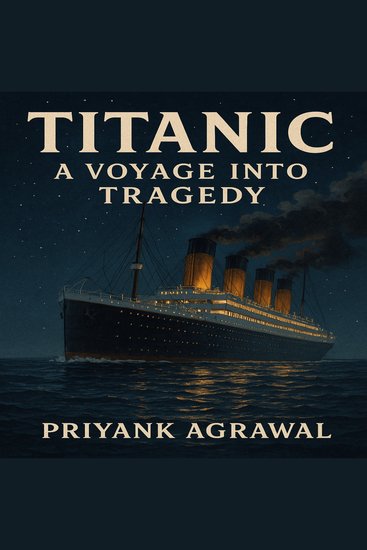
  • Titanic - A Voyage into Tragedy - cover

    Titanic - A Voyage into Tragedy

    Priyank Agrawal

    • 0
    • 0
    • 0
    This audiobook is narrated by an AI Voice.   
    The RMS Titanic was more than just a ship—it was a marvel of human ambition, luxury, and engineering. Yet, on the fateful night of April 14, 1912, this unsinkable giant met its tragic end, plunging into the depths of the North Atlantic and forever altering history. 
    In Titanic: A Voyage into Tragedy, journey through the vision, creation, and demise of the world’s most famous ocean liner. From the grand halls of first-class luxury to the struggles of third-class passengers, from the ignored iceberg warnings to the final desperate moments, this book brings to life the stories of those who built, sailed, and perished aboard the Titanic. 
    Explore the aftermath of the disaster, the investigations that reshaped maritime safety, and the modern-day fascination with Titanic’s wreckage. Delve into the myths, legends, and conspiracy theories that continue to surround the ship and uncover the true legacy left behind. 
    With meticulously researched historical details and powerful storytelling, Titanic: A Voyage into Tragedy is a compelling and immersive account of one of the most enduring and haunting events in history. 
    Perfect for history enthusiasts, maritime lovers, and anyone captivated by the triumphs and tragedies of the human spirit.
    Zum Buch
  • Summer of 1876 The: Book Summary & Analysis - cover

    Summer of 1876 The: Book Summary...

    Alexander Pike

    • 0
    • 0
    • 0
    This content is an independent and unofficial summary created for informational and educational purposes only. It is not affiliated with, authorized, approved, licensed, or endorsed by the original author or publisher. All rights to the original work belong to its respective copyright holders. This summary is not intended to substitute the original book, but to offer a concise overview and interpretation of its main ideas.


    Step into one of the most pivotal seasons in American history—a time of invention, ambition, and reckoning. The Summer of 1876 brings to life a whirlwind of events that reshaped a nation on the edge of transformation. From the smoky battlefields of Little Bighorn to the clinking poker chips of Deadwood, from the rising hum of telegraphs to the thunder of trains racing across the plains, this gripping chronicle captures a summer when destiny galloped forward.
     
    Meet iconic figures like George Armstrong Custer, Wild Bill Hickok, and Wyatt Earp—not as legends, but as men driven by urgency, ego, and fate. Witness how innovation collided with conflict, and how small choices sparked massive consequences. With vivid detail and cinematic pace, this audiobook transforms the past into a blueprint for personal growth, leadership, and decision-making in high-stakes environments.
    Zum Buch
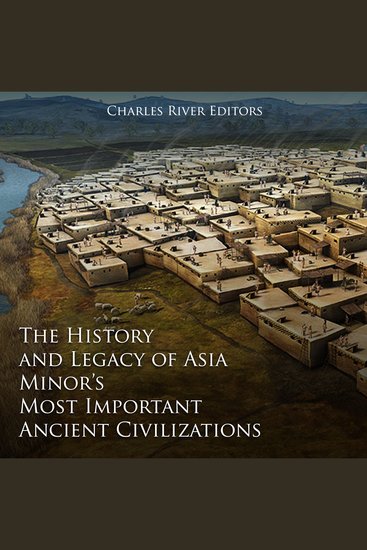
  • The History and Legacy of Asia Minor’s Most Important Ancient Civilizations - cover

    The History and Legacy of Asia...

    Editors Charles River

    • 0
    • 0
    • 0
    The pages of world history textbooks contain a litany of “lost” empires and civilizations, but usually, upon further review, it is revealed that these so called lost empires are often just lesser known cultures that had a less apparent impact on history than other more well-known civilizations. When one scours the pages of history for a civilization that was inexplicably lost, but had a great impact during its time, very few candidates can be found, but the Hittites are a notable example. In fact, the Hittites are an ancient people who remain somewhat enigmatic, and perhaps little known to most people, but their influence on the ancient Near East is undeniable. From high on their capital of Hattusa in central Anatolia, the Hittites were able to conquer and control a kingdom that roughly comprised the area of the modern nation-states of Turkey, Syria, and parts of Iraq and Lebanon. 
    Among the peoples of the ancient Near East, few are more misunderstood than the Scythians. The Scythians swept into Anatolia in the early first millennium BCE and left a large swath of destruction in their wake. They challenged old, strong, and venerable kingdoms such as the Assyrians, Egyptians, and Medes, until they were defeated by the Medes and then gradually disappeared into historical obscurity once more. According to the ancient Greek historian Herodotus, the Scythians ruled a large part of the Near East for nearly 30 years, but before they disappeared from the historical record, the Scythians greatly impacted the history of the Near East. 
    Of all the empires and kingdoms in the ancient world, few could compare with the Lydians in terms of wealth and opulence. From the early 7th century BCE until the middle of the 6th century BCE, the Lydians played an important role in the history of the eastern Mediterranean region as they took on the role of middleman between the empires of the Near East and the emerging Hellenic civilization in Greece.
    Zum Buch
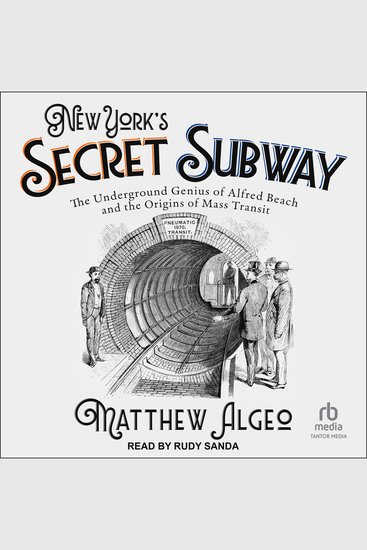
  • New York's Secret Subway - The Underground Genius of Alfred Beach and the Origins of Mass Transit - cover

    New York's Secret Subway - The...

    Matthew Algeo

    • 0
    • 0
    • 0
    In the nineteenth century, Manhattan's streets were so choked with pedestrians, horses, vehicles, and vendors that a trip from City Hall to Central Park could take hours. Alfred Beach had the perfect solution: build a giant pneumatic tube underneath Broadway from the Battery to Harlem. Air pressure would shoot passengers up and down the island in clean, quiet carriages. But Beach was up against the operators of the horse-drawn streetcars and the politicians in their pay, most conspicuously William M. Tweed, the notorious "Boss" of Tammany Hall.New York's Secret Subway: The Underground Genius of Alfred Beach and the Origins of Mass Transit tells a classic story of good versus evil, pitting the mild-mannered Beach, a visionary inventor and entrepreneur, against the oafish tyrant Tweed, the exemplar of corruption in the Gilded Age. It also tells the story of one of the most astonishing feats of engineering in American history, the surreptitious creation of the nation's first operational subway. Unfortunately, political lethargy and greed would conspire to deny the city a subway for another thirty years. Yet Alfred Beach still proved conclusively the feasibility of underground railways in Manhattan, and paved the way for modern mass transportation systems. Although this true story took place more than a century ago, it will at times sound surprisingly familiar.
    Zum Buch
  • Light in the Dark Luz en lo Oscuro - Rewriting Identity Spirituality Reality - cover

    Light in the Dark Luz en lo...

    Gloria E. Anzaldúa

    • 0
    • 0
    • 0
    Written during the last decade of her life, Light in the Dark represents the culmination of Gloria E. Anzaldúa's mature thought and the most comprehensive presentation of her philosophy. Throughout, Anzaldúa weaves personal narratives into deeply engaging theoretical readings to comment on numerous contemporary issues—including the September 11 attacks, neocolonial practices in the art world, and coalitional politics. She valorizes subaltern forms and methods of knowing, being, and creating that have been marginalized by Western thought, and theorizes her writing process as a fully embodied artistic and political practice. Resituating Anzaldúa's work within Continental philosophy and new materialism, Light in the Dark takes Anzaldúan scholarship in new directions.
    Zum Buch
  • Soviet Union The: The History and Legacy of the USSR from World War I to the End of the Cold War - cover

    Soviet Union The: The History...

    Editors Charles River

    • 0
    • 0
    • 0
    For 30 years, much of the West looked on with disdain as the Bolsheviks took power in Russia and created and consolidated the Soviet Union. As bad as Vladimir Lenin seemed in the early 20th century, Joseph Stalin was so much worse that Churchill later remarked of Lenin, “Their worst misfortune was his birth... their next worst his death.” Before World War II, Stalin consolidated his position by frequently purging party leaders (most famously Leon Trotsky) and Red Army leaders, executing hundreds of thousands of people at the least. And in one of history’s greatest textbook examples of the idea that the enemy of my enemy is my friend, Stalin’s Soviet Union allied with Britain and the United States to defeat Hitler in Europe during World War II.  
    	Stalin ruled with an iron fist for nearly 30 years before his death in 1953, which may or may not have been murder, just as Stalin was preparing to conduct another purge. With his death, Soviet strongman and long-time Stalinist Nikita Khrushchev (1894-1971), who had managed to stay a step ahead of Stalin’s purges if only because he participated in them, became the Soviet premier. Meanwhile, little is remembered in the public imagination about Brezhnev in comparison to Mikhail Gorbachev, Vladimir Lenin, or Joseph Stalin, despite the fact Brezhnev ruled the USSR from 1964-1982, longer than any Soviet leader other than Stalin.  
    	After going through three elderly leaders in three years, Mikhail Gorbachev was chosen as the new General Secretary at the relatively youg age of 54 in March 1985. Gorbachev hoped to build the Soviet economy to relieve the persistent shortages of consumer goods it faced, which were caused by enormous military spending of the Soviet Union. Gorbachev tried to introduce some economic reforms, but they were blocked by communist hardliners. Gorbachev then came to the belief that the Soviet economy could not improved without political reform as well.
    Zum Buch