¡Acompáñanos a viajar por el mundo de los libros!
Añadir este libro a la estantería
Grey
Escribe un nuevo comentario Default profile 50px
Grey
Suscríbete para leer el libro completo o lee las primeras páginas gratis.
All characters reduced
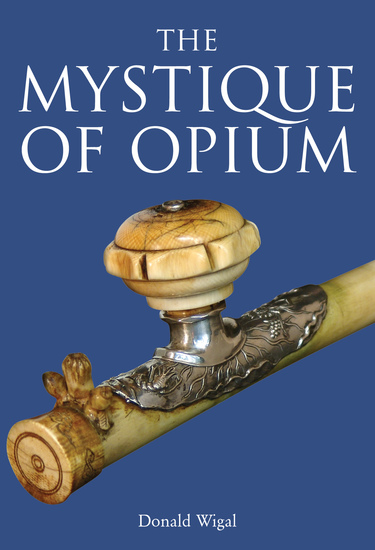
The Mystique of Opium - cover

The Mystique of Opium

Donald Wigal

Editorial: Parkstone International

  • 0
  • 0
  • 0

Sinopsis

Opium used to have the same importance in international economy and state-led strategies as petrol has today. It became the basis for trade with isolationist China as soon as the Opium Wars obtained trading rights for Western Companies. International strategies for personal reveries… 19th-century European writers were to begin praising this “midnight fairy”. This book offers a tastefully illustrated history of this toxic substance, its paraphernalia and era.
Disponible desde: 17/05/2024.
Longitud de impresión: 59 páginas.

Otros libros que te pueden interesar

  • Letters to Gwen John - cover

    Letters to Gwen John

    Celia Paul

    • 0
    • 0
    • 0
    Celia Paul's Letters to Gwen John centers on a series of letters addressed to the Welsh painter Gwen John (1876–1939), who has long been a tutelary spirit for Paul. John spent much of her life in France, making art on her own terms and, like Paul, painting mostly women. John's reputation was overshadowed during her lifetime by her brother, Augustus John, and her lover Auguste Rodin. Through the epistolary form, Paul draws fruitful comparisons between John's life and her own: their shared resolve to protect the sources of their creativity, their fierce commitment to painting, and the ways in which their associations with older male artists affected the public's reception of their work. 


    Letters to Gwen John is at once an intimate correspondence, an illuminating portrait of two painters, and a writer/artist's daybook, describing Paul's first exhibitions in America, her search for new forms, her husband's diagnosis of cancer, and the onset of the global pandemic. Paul, who first revealed her talents as a writer with her memoir, Self-Portrait, enters with courage and resolve into new unguarded territory—the artist at present—and the work required to make art out of the turbulence of life. 


    Contains mature themes.
    Ver libro
  • Ottomans and Christians The: The History and Legacy of the Ottomans’ Conflicts with Catholic and Orthodox Nations - cover

    Ottomans and Christians The: The...

    Editors Charles River

    • 0
    • 0
    • 0
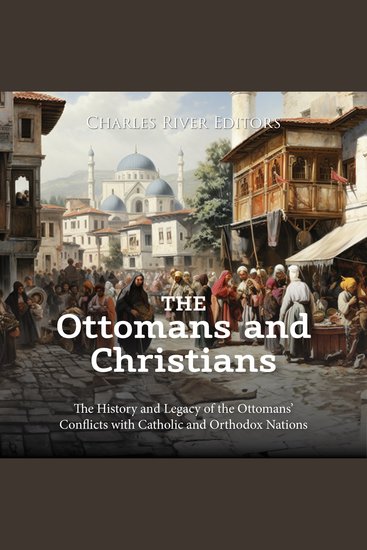
    In terms of geopolitics, perhaps the most seminal event of the Middle Ages was the successful Ottoman siege of Constantinople in 1453. The city had been an imperial capital as far back as the 4th century, when Constantine the Great shifted the power center of the Roman Empire there, effectively establishing two almost equally powerful halves of antiquity’s greatest empire. Constantinople would continue to serve as the capital of the Byzantine Empire even after the Western half of the Roman Empire collapsed in the late 5th century. Naturally, the Ottoman Empire would also use Constantinople as the capital of its empire after their conquest effectively ended the Byzantine Empire, and thanks to its strategic location, it has been a trading center for years and remains one today under the Turkish name of Istanbul.  
    	The end of the Byzantine Empire had a profound effect not only on the Middle East but Europe as well. Constantinople had played a crucial part in the Crusades, and the fall of the Byzantines meant that the Ottomans now shared a border with Europe. In the wake of taking Constantinople, the Ottoman Empire would spend the next few centuries expanding its size, power, and influence, bumping up against Eastern Europe and becoming one of the world’s most important geopolitical players. It was a rise that would not truly start to wane until the 19th century. Naturally, the Islamic empire was viewed as a threat by the predominantly Christian continent to their west, and it took little time for different European nations to start clashing with the powerful Turks. In fact, the Ottomans would clash with Russians, Austrians, Venetians, Polish, and more before collapsing as a result of World War I, when they were part of the Central Powers. 
    Ver libro
  • My Adventures with Your Money - cover

    My Adventures with Your Money

    George Graham Rice

    • 0
    • 0
    • 0
    "My Adventures with Your Money" is a book written by George Graham Rice, an American journalist and writer who was active in the early 20th century. The book is a memoir that recounts Rice's experiences as a "stock tout" or promoter of fraudulent investment schemes during the early years of the stock market. 
    Rice was notorious for his involvement in a number of "get-rich-quick" schemes that promised high returns to investors but were actually fraudulent. He used his skills as a writer and public speaker to promote these schemes and lure investors into investing their money. 
    In "My Adventures with Your Money," Rice describes his various schemes and the methods he used to manipulate investors. He also provides insight into the mindset of the people who invested in these schemes, many of whom were driven by greed and a desire for quick wealth. 
    Overall, "My Adventures with Your Money" provides a fascinating look at the history of the stock market and the culture of fraud and speculation that characterized the early years of American capitalism. It is also a cautionary tale about the dangers of investing in schemes that promise unrealistic returns
    Ver libro
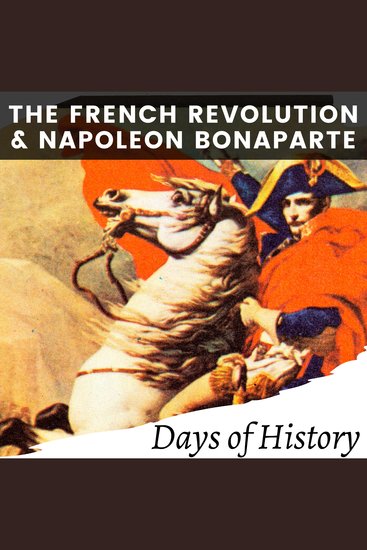
  • The French Revolution and Napoleon Bonaparte - A Comprehensive History - cover

    The French Revolution and...

    Days of History

    • 0
    • 0
    • 0
    Discover the Tumultuous World of the French Revolution and Napoleon. 
    Bonjour, history enthusiasts! Are you ready to embark on an enthralling journey into the heart of one of the most transformative periods in history? 
    We invite you to explore the captivating world of the French Revolution and Napoleon with our remarkable book, which promises to transport you to a time of upheaval, triumph, and change. 
    From the storming of the Bastille to the rise and fall of Napoleon Bonaparte, this book delves deep into the events that shaped modern Europe. Feel as if you're right there in the midst of the action, witnessing the revolutionaries and their guillotine parties firsthand. (Talk about a cutting-edge experience!) 
    As you immerse yourself in this fascinating era, our book offers you:A comprehensive overview of the French Revolution, shedding light on the complex political, social, and economic forces that fuelled the uprising.An in-depth look at the life and reign of Napoleon Bonaparte, one of history's most remarkable and controversial figures.Gripping accounts of the era's key events and battles, such as the Reign of Terror and the Battle of Waterloo, forever altered the course of European history. 
    So why wait? 
    Dive into the extraordinary world of the French Revolution and Napoleon with our captivating book. Liberate your inner history buff, and let the spirit of "Liberté, Égalité, Fraternité" guide you on an unforgettable journey through time. 
    Secure your copy today and add a touch of revolutionary flair to your bookshelf!
    Ver libro
  • Codependency Recovery Workbook The: A Practical Guide to Help You Break Free From Codependent Relationships Stop People Pleasing & Set Healthy Boundaries - cover

    Codependency Recovery Workbook...

    Dorothy Austin

    • 0
    • 0
    • 0
    Break Free from Codependency and Embrace a Life of Strength and Self-Love 
    Are you tired of feeling trapped in unhealthy patterns of behavior and relationships? It's time to break free from the cycle of codependency and embark on a journey towards inner strength and emotional independence. "The Codependency Recovery Workbook" is your comprehensive guide to understanding and overcoming codependency, with a focus on self-compassion and self-love. 
    Inside "The Codependency Recovery Workbook," you'll discover:Understanding Codependency: Learn the characteristics and causes of codependency.Breaking Free: Step-by-step plan to assist you in breaking free from codependency.Tools and Strategies: Practical tools and strategies to help you overcome codependency.Navigating Hidden Abuse: How to navigate hidden abuse and attachment wounds.Enhancing Your Inner Child: Techniques for nurturing your inner child and building self-esteem after trauma.Setting Healthy Boundaries: Learn how to set healthy boundaries and practice effective communication. 
    Exclusive Bonus Content: "10 Ways to Love Yourself" 
    In addition to the comprehensive guide and practical exercises, this workbook includes exclusive downloadable content to further enhance your journey. Access "10 Ways to Love Yourself" through a QR code provided in the book and take your self-compassion and self-love to the next level. 
    Take Control of Your Life 
    With a combination of self-reflection and practical exercises, "The Codependency Recovery Workbook" will teach you how to set boundaries, communicate effectively, and develop a strong sense of self-worth. Start your journey towards self-compassion and self-love today and take the first step towards a more fulfilling life.
    Ver libro
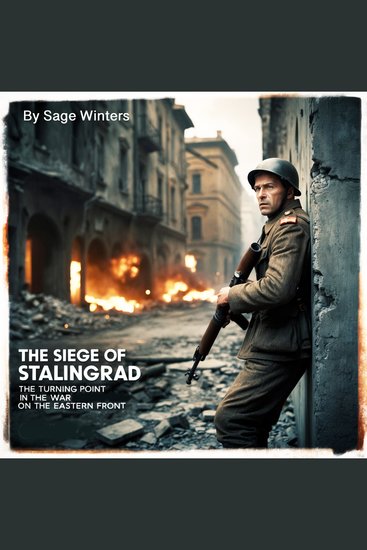
  • The Siege of Stalingrad - The Turning Point in the War on the Eastern Front - cover

    The Siege of Stalingrad - The...

    Sage Winters

    • 0
    • 0
    • 0
    The Battle of Stalingrad stands as one of the most defining events of the 20th century, a turning point that shifted the trajectory of World War II. Situated along the banks of the Volga River, Stalingrad was not only a city of industrial and strategic importance but also a symbolic prize for both Adolf Hitler and Joseph Stalin. The ferocity and scale of the battle transformed it into a microcosm of the broader conflict between Nazi Germany and the Soviet Union.  
      
    When Germany launched Operation Barbarossa in June 1941, the Wehrmacht seemed unstoppable as it swept across the Soviet Union. Hitler’s ambitions of seizing Soviet territories were fueled by his vision of Lebensraum and the destruction of Bolshevism. By the summer of 1942, German forces were pressing deeper into the southern front, aiming to capture the oil fields of the Caucasus and secure Stalingrad as a vital stepping stone. For Hitler, Stalingrad held immense propaganda value, carrying the name of his adversary, Stalin. Its fall would signify not just a military triumph but a psychological blow to the Soviet people.  
      
    For the Soviet Union, the defense of Stalingrad became a matter of national survival and pride. Stalin’s orders to defend the city at all costs rallied both soldiers and civilians. The infamous directive “Not a step back!” underscored the desperation and determination of the Soviet war effort. As the battle unfolded, Stalingrad was transformed into a hellish landscape of rubble, where every building and street became a battlefield. 
    Ver libro