Join us on a literary world trip!
Add this book to bookshelf
Grey
Write a new comment Default profile 50px
Grey
Subscribe to read the full book or read the first pages for free!
All characters reduced
The vision of hell - By Dante Alighieri Translated by Rev Henry Francis Cary MA and illustrated with the seventy-five designs of Gustave Doré - cover

The vision of hell - By Dante Alighieri Translated by Rev Henry Francis Cary MA and illustrated with the seventy-five designs of Gustave Doré

Dante Alighieri

Translator Henry Francis Cary

Publisher: DigiCat

  • 0
  • 0
  • 0

Summary

Dante Alighieri's "The Vision of Hell"—more commonly known as the first part of "The Divine Comedy"—is an unparalleled exploration of the moral landscape of the human soul. Through rich, allegorical verses and vivid imagery, Dante guides readers through the nine circles of Hell, each representing different sins and their consequential everlasting punishments. Written in the early 14th century during a pivotal time of philosophical and theological inquiry, this seminal work employs the terza rima rhyme scheme, a hallmark of Dante's innovative literary style, weaving together personal experience with profound moral and spiritual contemplation. Dante's background as a poet, politician, and philosopher in Florence profoundly influenced his writing. His exile from Florence ignited a deep reflection on justice, redemption, and the human condition, themes that permeate "The Vision of Hell." The text serves as a cautionary tale infused with Dante's unique merging of classical mythology and Christian theology, ultimately seeking to illuminate the path to personal and societal morality amidst the tumult of his era. Readers are wholeheartedly encouraged to delve into "The Vision of Hell" not only as a foundational work of Italian literature but as an enduring examination of ethical dilemmas still relevant today. Dante's masterful narrative invites reflection on the nature of sin, justice, and redemption, making it essential reading for those seeking a deeper understanding of the human experience.
Available since: 09/16/2022.
Print length: 133 pages.

Other books that might interest you

  • Encyclopaedia - cover

    Encyclopaedia

    Chloe Elliott

    • 0
    • 0
    • 0
    Chloe Elliott's Encyclopaedia is playful and visceral, exploring boundaries of identity and the search for meaning in poems that delight with richly tactile language. Formally varied, these poems are unflinching in their physicality.
    Show book
  • Lycidas - Much shorter poem from the famed author of Paradise Lost - cover

    Lycidas - Much shorter poem from...

    John Milton

    • 0
    • 0
    • 0
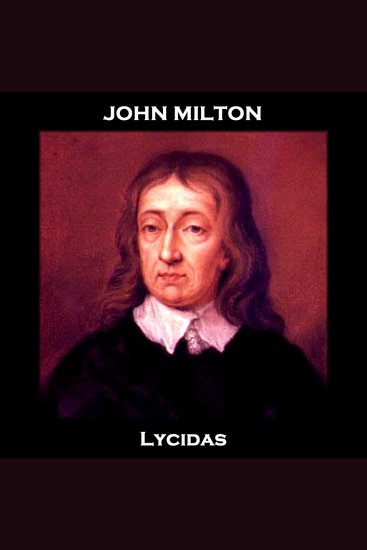
    John Milton was born in Bread Street, London, on December 9th, 1608.  His early years were privately tutored before gaining a place at St Paul’s School and in 1625 he matriculated at Christ's College, Cambridge, earning a BA in 1629 and an MA in 1632. At Cambridge he had developed a reputation for poetic skill but also experienced alienation from his peers and university life as a whole.  
    The next 6 years were spent in private study. He read both ancient and modern works of theology, philosophy, history, politics, literature and science, in preparation for a poetical career.  Milton mastered Latin, Greek, Hebrew, French, Spanish, and Italian. To these he would add Old English (whilst researching his History of Britain) and also acquired more than a passing acquaintance in Dutch.  
    Although he was studying, some of his poetry from this time is remarkable; L’Allegro and Il Penseroso in 1631 and Lycidias in 1638. 
    In May 1638, Milton embarked upon a 15 month tour of France and Italy. These travels added a new and direct experience of artistic and religious traditions, especially Roman Catholicism.  He cut the journey short to return home during the summer of 1639 because of what he claimed were "sad tidings of civil war in England."  
    Once home, Milton wrote prose tracts against episcopacy, in the service of the Puritan and Parliamentary cause.  
    He married 16-year-old Mary Powell in June 1643 but she left him after only a few months during which he wrote and published several writings on divorce. Mary did return after 3 years and their life thereafter seemed harmonious.  Milton received a hostile response to the divorce tracts and drove him to write Areopagitica, his celebrated attack on pre-printing censorship.  
    With the parliamentary victory in the Civil War, Milton wrote The Tenure of Kings and Magistrates (1649) which defended popular government and implicitly sanctioned the regicide which led to his appointment as Secretary for Foreign Tongues by the Council of State.  
    On 24 February 1652 Milton published his Latin defense of the English People, Defensio Pro Populo Anglicano, also known as the First Defense. Milton's Latin prose and intellectual sweep, quickly gained him a European reputation.  
    Tragically his first wife, Mary, died on May 5th, 1652 following the birth of their fourth child.   The following year Milton had become totally blind, probably due to glaucoma.  He then had to dictate his verse and prose to helpers, one of whom was the poet Andrew Marvell.  
    He married again to Katherine Woodcock but she died in February 1658, less than four months after giving birth to a daughter, who also tragically died.  
    Though Cromwell’s death in 1658 caused the English Republic to collapse Milton stubbornly clung to his beliefs and in 1659 he published A Treatise of Civil Power, attacking the concept of a state-dominated church. Upon the Restoration in May 1660, Milton went into hiding for his life. An arrest warrant was issued and his writings burnt. He re-emerged after a general pardon was issued, but was nevertheless arrested and briefly imprisoned before influential friends, such as Marvell, now an MP, intervened 
    His third marriage was to Elizabeth Mynshull. Despite a 31-year age gap, the marriage seemed happy and Milton spent the remaining decade of his life living quietly in London, apart from a short spell in Chalfont St. Giles, during the Great Plague of London.  
    Milton was to now publish his greatest works, which had been gestating for many years.  Paradise Lost, perhaps the classic English Epic poem was originally published in 10 books in 1667.  This was followed by Paradise Regained and Samson Agonistes in 1671.  Because of his anti-monarchy views their reception was muted but over the centuries since Milton has established himself as second only to Shakespeare.  He died of kidney failure on November 8th, 1674 and was buried in the church of St Giles Cripplegate.
    Show book

  • (Not) the End of the World - cover

    (Not) the End of the World

    Chris Bush

    • 0
    • 0
    • 0
    A daringly theatrical investigation of the climate crisis through the perspectives of class, patriarchy and colonialism.
    Chris Bush's play  Not  the End of the World was first staged at the Schaubühne in Berlin in 2021, directed by Katie Mitchell.
    Show book
  • SAUCE and All honey: Two Plays - cover

    SAUCE and All honey: Two Plays

    Ciara Elizabeth Smyth

    • 0
    • 0
    • 0
    Two sweet and saucy comedies from an award-winning Irish playwright.
    In SAUCE, Mella is a compulsive liar, Maura is a kleptomaniac – and neither has any friends. Recently out of controlling relationships, they are thrust into uneasy freedom. Can they overcome their flaws together to avoid dying alone? Or will their compulsions engulf them in the end?
    A play about death and rebirth, Ciara Elizabeth Smyth's SAUCE was first staged at Bewley's Café Theatre, Dublin, in 2019 as part of Dublin Fringe Festival, and revived there in 2022.
    In All honey, Ru and Luke are throwing a house-warming party. But their guests are more interested in whispering in the box room than joining the festivities. Explosive characters and unfolding secrets mean the hosts will have to clean up more than red-wine stains and glitter.
    Ciara Elizabeth Smyth's debut play, All honey is about sex, secrets and suspicion. It premiered at the New Theatre in 2017 as part of Dublin Fringe Festival, winning the 2017 Fishamble New Writing Award. It was revived at Bewley's in 2018 and Project Arts Centre in 2020.
    Show book
  • A Boat to Lesbos - and other poems - cover

    A Boat to Lesbos - and other poems

    Nouri al-Jarrah

    • 0
    • 0
    • 0
    A Boat to Lesbos is a powerful and compelling epic poem, written while thousands of Syrian refugees were enduring frightening journeys across the Mediterranean before arriving on the small island. Set out like a Greek tragedy, it is passionate and dramatic witness to the horrors and ravages suffered by Syrian families forced to flee their destroyed country, seen through the eye of history, the poetry of Sappho and the travels of Odysseus. Plus poems written while the poetry visited Lesbos during the refugee crisis.
    Show book
  • Short Poetry - Over 20 Years of Reflection through the Eyes of a Soldier - cover

    Short Poetry - Over 20 Years of...

    Corri Jermaine Irving

    • 0
    • 0
    • 0
    From the battlefield to everyday life, Corri covers it all in his book filled with poems. The poet, Corri Jermain Irving, allows us to see the world from a perspective that's his. Through powerful words and vivid imagination, Corri delves deep into the daily bits of life in the form of poetry. A unique perspective into different themes of life. With the help of this book, Over 20 Years Of Reflection Through The Eyes Of A Soldier, you will understand God, love, and the beauty of nature in a way that a soldier who has been on the front line. This book is a must-read for anyone looking for a different perspective on the human experience and to explore the timeless themes of love and faith. Allow Corri to help you explore and admire the small things in life, like the behavior of a squirrel and the joys and struggles of everyday living. Don't miss out on the opportunity to embark on a journey of life through the eyes of a soldier.
    Show book