Begleiten Sie uns auf eine literarische Weltreise!
Buch zum Bücherregal hinzufügen
Grey
Einen neuen Kommentar schreiben Default profile 50px
Grey
Jetzt das ganze Buch im Abo oder die ersten Seiten gratis lesen!
All characters reduced
Turin and its region - City trip in Italy - cover

Turin and its region - City trip in Italy

Cristina Rebiere

Verlag: Cristina & Olivier Rebiere

  • 0
  • 0
  • 0

Beschreibung

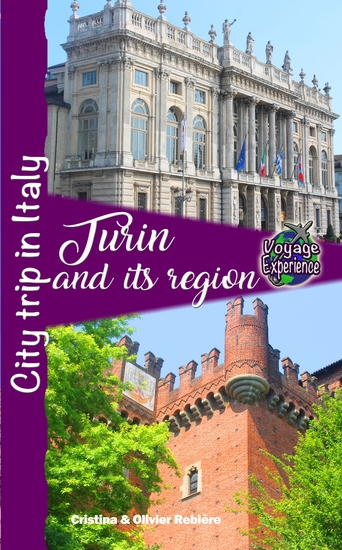
Welcome to your Voyage Experience: “Turin and its region” guide. We hope that it will help you to discover this beautiful city, rich in culture, history, with an exceptional heritage and a tasty and varied gastronomy, but also its surroundings. You will see gorgeous palaces, great churches, large squares and green spaces. A human-size city which you can visit on foot or by bike to make the most of what it has to offer as treasures. Turin and its surroundings are an excellent destination for an extended weekend or even an entire week. The charm of Italy is well known throughout the world and the words are often too weak to describe the beauty of this country. Italians are welcoming, warm and not speaking their language is not really a problem because it is always possible to understand each other.
Verfügbar seit: 21.07.2023.
Drucklänge: 42 Seiten.
Weitere Bücher, die Sie mögen werden

  • Ancient Australia - The World of Aboriginal Culture - cover

    Ancient Australia - The World of...

    Lillian Brooks

    • 0
    • 0
    • 0
    Aboriginal culture is one of the oldest and most complex systems of human existence, stretching back over 60,000 years in Australia. The richness of this culture is woven through the landscape, the traditions, the language, and the deep spiritual connections the people have with the land. Far from a singular or homogeneous entity, Aboriginal culture is an intricate tapestry made up of diverse languages, customs, and belief systems that reflect the uniqueness of the many nations that have inhabited Australia for millennia. 
    At the heart of Aboriginal culture lies an unbreakable connection to Country. The concept of Country extends beyond mere geography; it encompasses the land, the waterways, the plants, the animals, and even the ancestors that reside within it. This intimate relationship shapes all aspects of life, from spiritual beliefs to daily practices. For Aboriginal people, their land is not simply a place to live, but a living entity that provides, sustains, and is cared for in return. This relationship is integral to the way Aboriginal communities structure their lives, making respect for and care of the environment a fundamental principle. 
    The Dreamtime, or the time of creation, forms the bedrock of Aboriginal spirituality and cultural practices. It is in this time that ancestral beings shaped the land, the people, and the laws that govern life. These stories, which are passed down through generations, guide and influence the way Aboriginal people live, ensuring their survival and cultural continuity. The Dreamtime is not a distant past but a present reality, interwoven with the lives of modern Aboriginal peoples.
    Zum Buch
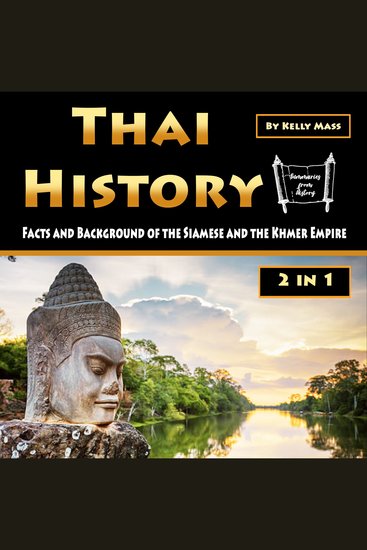
  • Thai History - Facts and Background of the Siamese and the Khmer Empire (2 in 1) - cover

    Thai History - Facts and...

    Kelly Mass

    • 0
    • 0
    • 0
    Learn more about the history of those countries. The topics addressed will be the following: 
    The Khmer Empire--Historians describe Cambodia as the Khmer State or the Angkorian Empire (Khmer:) from the 9th century to the 15th century, when it was a Hindu/Buddhist empire in Southeast Asia. The empire, which developed from the old societies of Funan and Chenla, governed and/or "vassalized" the majority of mainland Southeast Asia and parts of Southern China, covering from the suggestion of the Indochinese Peninsula northward to modern-day Yunnan province in China, and from Vietnam westward to Myanmar. The Khmer Empire was greater at its peak than the Byzantine Empire (Eastern Roman Empire) that existed at the exact same period. 
    The Siamese-- Siam was just a much different name for what's now referred to as Thailand. The Siamese are the people who live there, though they're never ever called as such any longer. 
    Thailand is a fascinating country, with its own culinary arts, culture, history, royalty, infrastructure, and influence on the world. To learn more about these “Thai” people before they were called Thai, when they were Siamese, is to learn about those people’s roots.
    Zum Buch
  • The Way of the Gardener - Lost in the Weeds along the Camino de Santiago - cover

    The Way of the Gardener - Lost...

    Lyndon Penner

    • 0
    • 0
    • 0
    Reverence takes on a new meaning in this original memoir of an avid gardener walking the Camino de Santiago.
    		 
    The Camino de Santiago has been a journey for pilgrims for more than 1,000 years, testing—to varying degrees—their spirit, faith, and physical endurance. Lyndon Penner’s attention lies elsewhere. A renowned gardener and lover of literature, he revels in the plants, trees, and flowers that tell the history of the people and ecology of northern Spain.
    		 
    Brimming with wry observations—of nature, himself, and other pilgrims on the road—The Way of the Gardener reveals the beauty and the darkness of the human condition while underscoring the deeply fascinating nature of nature itself. This textured work makes for perfect armchair—or garden—reading.
    Zum Buch
  • Parque Natural Cadí-Moixeró y macizo del Pedraforca - Las mejores excursiones - cover

    Parque Natural Cadí-Moixeró y...

    César Barba

    • 0
    • 0
    • 0
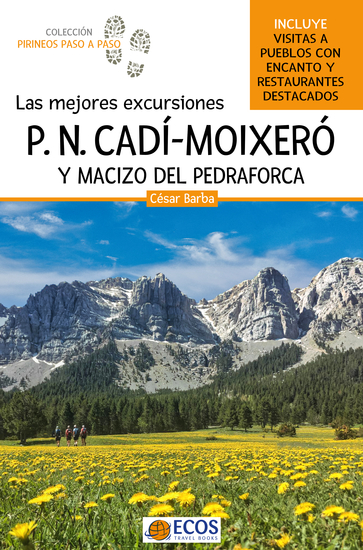
    El Parque Natural del Cadí-Moixeró es un espacio protegido que se extiende por tres comarcas, el Berguedà, la Cerdanya y el Alt Urgell. Es una reserva de montaña, con una orografía que oscila entre los 800 m en el fondo de los valles hasta los 2.648 m de su punto culminante, el Vulturó o Puig de la Canal Baridana. Las montañas que forman la reserva natural son la sierra del Cadí, la sierra del Moixeró, el macizo del Pedraforca y parte de la Tosa y del Puigllançada.
    Las excursiones escogidas para este libro, pensadas para todos los públicos, se adentran por los senderos de los magníficos bosques del parque, recorren la ribera de sus ríos, se asoman a miradores privilegiados, callejean por pueblos plenos de encanto y ascienden a algunos de sus picos, como el Pedraforca, una montaña emblemática del excursionismo catalán, a la que también rodearemos por caminos bien trazados que nos enseñan todas las caras de la mítica montaña.
    Zum Buch
  • The Shocking Truth about Travel Agencies - cover

    The Shocking Truth about Travel...

    Zoey Fraisers

    • 0
    • 0
    • 0
    Travel agencies have long been the go-to resource for travelers looking to plan vacations, book flights, and secure accommodations. For decades, they were considered indispensable, offering expertise, exclusive deals, and the convenience of handling complex itineraries. However, the travel industry has changed dramatically in recent years, raising important questions about the true role and value of travel agencies in today's digital world. Are they still as necessary as they once were, or have they become an outdated service in an era where online booking platforms dominate?  
      
    The evolution of travel agencies has been shaped by technological advancements and shifting consumer behaviors. In the past, travel agents had access to deals and insider information that the average traveler couldn’t easily obtain. They built relationships with airlines, hotels, and tour operators, often securing discounts and exclusive packages. But with the rise of online booking sites, budget-conscious travelers can now compare prices, read customer reviews, and make their own reservations without relying on a middleman.  
      
    Despite these changes, travel agencies still claim to offer value in various ways. Many agencies promote themselves as experts who can save travelers time and money by curating customized experiences, navigating travel restrictions, and resolving unexpected issues. Some travelers, especially those booking luxury vacations, business trips, or complex international itineraries, still prefer the convenience of working with an agent rather than handling everything themselves. However, beneath this polished image lies an industry that often thrives on hidden fees, inflated prices, and partnerships that may not always prioritize the best interests of the traveler. 
    Zum Buch
  • Acropolis and the Agora The: The History of Ancient Athens’ Most Important Sites - cover

    Acropolis and the Agora The: The...

    Editors Charles River

    • 0
    • 0
    • 0
    The Acropolis, which literally means “a city on the heights,” is a citadel whose currently surviving structures were mostly built during the 5th century B.C. in honor of Athena, the patron goddess of Athens. It functioned as a sacred precinct that contained the city’s most important religious and municipal structures, many of which have remained relatively intact for over 2,000 years. The Propylaea (the gateway to the Acropolis), the Parthenon (the principal shrine to the goddess), the Erechtheion (a shrine that supposedly houses the burial grounds of mythical Athenian kings), and the Temple of Athena Nike all survive to this day, and for these reasons, the Acropolis is perhaps the definitive and most eloquent expression of classical architecture, if not of the classical form itself. The Acropolis, which literally means “a city on the heights,” is a citadel whose currently surviving structures were mostly built during the 5th century B.C. in honor of Athena, the patron goddess of Athens.  
    	The center of political and commercial interaction in the Ancient Greek polis was the agora. The word essentially means a gathering place or an open space, and in all Greek city states, the agora was central to all aspects of daily life and commerce. As the agora developed as a civic space, particularly from the 6th century B.C. onward in Athens, the architectural splendor of the buildings associated with it became an ever more obvious demonstration of the power and glory of Athenian democracy. 	In its earliest forms, an agora in maritime cities was invariably situated near the sea, while in inland urban centers, it was usually located at the foot of the hill that normally provided the city’s ultimate defense. The agora was always the oldest part of any city and, as such, and as well as being the commercial hub of the area, also became the center of the religious and political life of the polis.
    Zum Buch