Join us on a literary world trip!
Add this book to bookshelf
Grey
Write a new comment Default profile 50px
Grey
Subscribe to read the full book or read the first pages for free!
All characters reduced
The Professor - cover

The Professor

Charlotte Brontë

Publisher: Classic Echo

  • 0
  • 0
  • 0

Summary

Every great journey begins with the courage to forge your own path.

In The Professor, Charlotte Brontë presents a compelling story of ambition, perseverance, and personal growth as one determined individual seeks independence and purpose in an unfamiliar world. Through moments of challenge, discovery, and meaningful relationships, the novel explores the pursuit of fulfillment with emotional depth and quiet strength.

Blending romance, coming-of-age themes, and vivid social observation, The Professor showcases Brontë's remarkable talent for creating authentic characters and richly textured settings. Her elegant prose and thoughtful storytelling examine identity, education, resilience, and the search for belonging, offering readers a timeless literary experience.

Although published after Charlotte Brontë's death, The Professor provides fascinating insight into the early development of one of the Victorian era's greatest novelists. Readers will recognize the narrative skill, psychological depth, and enduring themes that would later define her most celebrated works.

Praised for its sincerity, memorable characters, and insightful exploration of personal ambition, The Professor remains an essential read for admirers of Charlotte Brontë and lovers of classic literature. Its timeless themes continue to resonate with readers seeking stories of determination, love, and self-discovery.

Discover the novel that marked the beginning of Charlotte Brontë's remarkable literary journey. Download The Professor today and enjoy a timeless Victorian classic filled with ambition, resilience, and heart.
Available since: 08/05/2026.
Print length: 280 pages.

Other books that might interest you

  • Short Fiction - cover

    Short Fiction

    Akutagawa Ryūnosuke

    • 0
    • 0
    • 0
    Akutagawa Ryūnosuke was a respected author in pre-WWII Japan. He was well-read, and having received a Westernized education, his work blends traditional themes of Japanese culture with Western concepts. This edition collects the handful of English translations in the U.S. public domain of his nearly 200 short stories. The stories deal with a variety of themes and concepts: "The Nose" is a tale about vanity and perception of one's image, "Rashōmon" deals with morality in the face of necessity, and "The Story of a Fallen Head" is an anti-war story. Akutagawa often ends his stories with a reflection related to the plot, spoken either by a character or by the narrator to the reader. Akutagawa Ryūnosuke (died 1927) was a major literary figure of the early 20th century. Their work has endured across generations and continues to be read and studied worldwide. As a work of classic literary fiction, Various Translators exemplifies the narrative craft and social insight that defined great storytelling of its era. Literary fiction of this period was characterized by careful attention to character psychology, social milieu, and the moral questions that animated public discourse.
    Show book
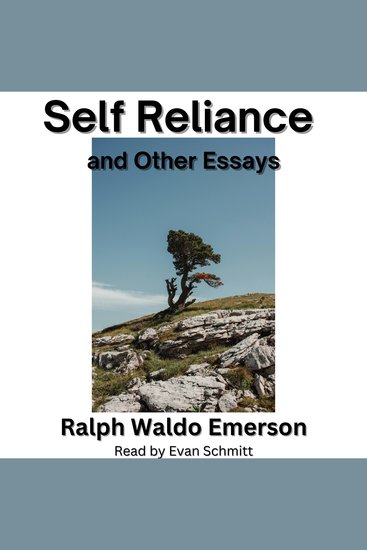
  • Self Reliance and Other Essays - cover

    Self Reliance and Other Essays

    Ralph Waldo Emerson

    • 0
    • 0
    • 0
    Self Reliance by Ralph Waldo Emerson is a powerful call to individuality, self-trust, and nonconformity. In this timeless essay, Emerson urges readers to embrace their own instincts and inner wisdom rather than bowing to societal expectations. He argues that true fulfillment comes from self-expression and authenticity, not from seeking approval or following tradition. With vivid imagery and bold declarations, Emerson champions the idea that greatness lies in independence, courage, and the willingness to chart one’s own path—no matter how unconventional. Inspiring and thought-provoking, Self-Reliance remains a foundational text in American transcendentalism, encouraging readers to break free from external influences and trust in the power of their own minds. 
    Essays included in this collection are:GiftsUses of Great MenSelf Reliance
    Show book
  • Whereyouwantogoto - cover

    Whereyouwantogoto

    E. Nesbit

    • 0
    • 0
    • 0
    Selim and Thomasina are very put out that they must stay in London during the summer holidays, instead of going to the seaside, just because their aunt and uncle are coming to stay.  (They're not even the nice kind of aunt and uncle!) The hot summer becomes more bearable when an India-rubber ball takes them to Whereyouwantogoto, a magical seaside place where there are no grown-ups around to tell children what to do.  The only condition for staying in this dreamland is that the children must continue to be good, but being good is easy when you're happy… or is it?    Whereyouwantogoto was first published in Nine Unlikely Tales, 1901.
    Show book
  • 40+ Ernest Hemingway Collection Signature Classics Novels Stories and Poems - A Farewell to Arms The Sun Also Rises The Torrents of Spring Men Without Women and others - cover

    40+ Ernest Hemingway Collection...

    Ernest Hemingway

    • 0
    • 0
    • 0
    The Ernest Hemingway Collection: Illustrated Signature Classics, Novels, Stories, and Poems features over 40 of Hemingway's works, encompassing his most renowned novels, short stories, and poems. This volume includes celebrated titles like A Farewell to Arms, The Sun Also Rises, The Torrents of Spring, and Men Without Women, alongside other literary treasures that showcase his unique style and insight into human experience. Known for his powerful prose and realistic, often adventurous themes, Hemingway's collection spans stories of love, war, and resilience. Through atmospheric illustrations, this edition enriches Hemingway's classic works, immersing readers in the settings and sentiments of each story. This comprehensive anthology serves both newcomers and devoted Hemingway enthusiasts, offering an unparalleled exploration of his influential contribution to American literature.
     
    Novels
    • A Farewell to Arms
    • The Sun Also Rises
    • The Torrents of Spring
     
    Stories 
    Men Without Women 
    • The Undefeated
    • In Another Country
    • Hills Like White Elephants
    • The Killers
    • Che Ti Dice La Patria?
    • Fifty Grand
    • A Simple Enquiry
    • Ten Indians
    • A Canary for One
    • An Alpine Idyll
    • A Pursuit Race
    • Today is Friday
    • Banal Story
    • Now I Lay Me
     
    Three Stories and Ten Poems 
    • Up in Michigan
    • Out of Season
    • My Old Man
    • The ten poems are:
    • Mitraigliatrice
    • Oklahoma
    • Oily Weather
    • Roosevelt
    • Captives
    • Champs d'Honneur
    • Riparto d'Assalto
    • Montparnasse
    • Along With Youth
    • Chapter Heading
     
    In Our Time 
    • On the Quai at Smyrna
    • Chapter I
    • Indian Camp
    • Chapter II
    • The Doctor and the Doctor's Wife
    • Chapter III
    • The End of Something
    • Chapter IV
    • The Three-Day Blow
    • Chapter V
    • The Battler
    • Chapter VI
    • A Very Short Story
    • Chapter VII
    • Soldier's Home
    • Chapter VIII
    • The Revolutionist
    • Chapter IX
    • Mr. and Mrs. Elliot
    • Chapter X
    • Cat in the Rain
    • Chapter XI
    • Out of Season
    • Chapter XII
    • Cross-Country Snow
    • Chapter XIII
    • My Old Man
    • Chapter XIV
    • Big Two-Hearted River: Part I
    • Chapter XV
    • Big Two-Hearted River: Part II
    • L'Envoi
    Show book
  • The Man in the Iron Mask - The Close of the Musketeer Cycle - cover

    The Man in the Iron Mask - The...

    Alexandre Dumas

    • 0
    • 0
    • 0
    Thirty-five years after the musketeers first drew together, Aramis is a bishop with a plan, Porthos does not understand it, Athos is grieving, and d'Artagnan serves a king who has a secret in the Bastille. Dumas ran a fiction factory and outsold all of France; this is the end of the cycle, and he wrote the fall of his own heroes without flinching. Fifty-seven plates, from Doré's Don Quixote to Ingres's portraits of French royalty, give the century of Dumas's musketeers its own disorderly gallery of ambition and loss.
    Show book
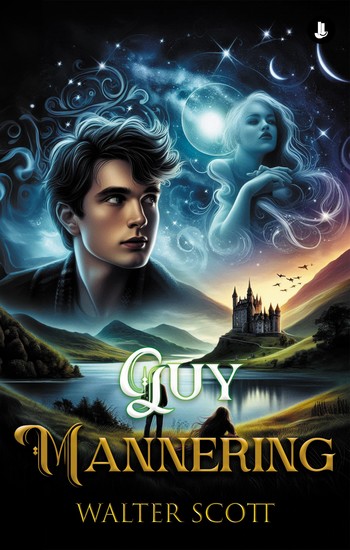
  • Guy Mannering - cover

    Guy Mannering

    Walter Scott

    • 0
    • 0
    • 0
    Guy Mannering is an astrologer who only half believes in his art. Instead he places his faith in patriarchal power, wealth and social position.But the Scotland of this novel is a nation in which the old hierarchies are breaking down and Guy must learn the limits of the nabob's authority in a society in which each social group from gypsies and smugglers, to Edinburgh lawyers, landowners and Border store farmers lives by its own laws.
    Show book