Junte-se a nós em uma viagem ao mundo dos livros!
Adicionar este livro à prateleira
Grey
Deixe um novo comentário Default profile 50px
Grey
Assine para ler o livro completo ou leia as primeiras páginas de graça!
All characters reduced
The Book of the Damned - cover
LER

The Book of the Damned

Charles Fort

Editora: DigiCat

  • 0
  • 0
  • 0

Sinopse

In "The Book of the Damned," Charles Fort delves into the realm of the unexplained and the rejected anomalies of scientific discourse. This groundbreaking work, first published in 1919, presents a collection of phenomena that mainstream science dismissed, including reports of unusual weather events, unexplained aerial phenomena, and strange biological occurrences. Fort's literary style is characterized by a blend of sharp wit and meticulous research, presenting a cavalcade of examples that challenge the conventional boundaries of epistemology and challenge the rationalist paradigm of his time. The context of the early 20th century, with its burgeoning interest in the supernatural and the unknown, further amplifies the significance of Fort's inquiries. Fort, a self-taught researcher and a pioneer in critical thinking, developed a fascination for the bizarre and inexplicable events while working as a newspaper reporter. His background in journalism allowed him to approach the subject with a skeptical yet open-minded lens, reflecting his belief that scientific inquiry should embrace the oddities that defy categorization. By compiling various accounts from newspapers and scientific literature, Fort sought to validate the existence of these phenomena that had been relegated to the margins of scientific credibility. This book is essential reading for anyone intrigued by the boundaries of science and the unexplained mysteries of the world. Fort's unique perspective not only invites readers to reconsider the nature of evidence and belief but also encourages a broader understanding of the universe's enigmas. Thus, "The Book of the Damned" stands as a seminal text that inspires curiosity and critical thought in a landscape often restricted by rigid scientific orthodoxy.
Disponível desde: 28/05/2022.
Comprimento de impressão: 283 páginas.

Outros livros que poderiam interessá-lo

  • The Chinese Fairy Book - cover

    The Chinese Fairy Book

    Frederick Martens

    • 0
    • 0
    • 0
    Step into a magical world with The Chinese Fairy Book, a timeless collection of enchanting tales gathered by Frederick Martens. This compilation brings to life the rich folklore and vibrant traditions of ancient China, filled with mythological creatures, legendary heroes, and wise sages. Each story weaves a tapestry of cultural wisdom, mystical adventures, and moral lessons that have been passed down through generations. 
    What to Expect:📚 Classic Folktales: Explore a treasure trove of stories, from heartwarming fables to epic legends, capturing the essence of Chinese heritage.🌏 Cultural Insights: Gain a deeper understanding of Chinese mythology, history, and the values embedded within these timeless tales.🎙️ Engaging Narration: Each story is brought to life with captivating storytelling, perfect for listeners of all ages who enjoy myths and folklore. 
    Why You’ll Love This Audiobook:Immersive Storytelling: Dive into narratives that take you to distant lands filled with dragons, fairies, and ancient deities.A Journey Through Time: Discover stories that reflect the wisdom, humor, and creativity of one of the world’s oldest civilizations. 
    Perfect for Fans of:Fairy tales and fables from around the worldMythology enthusiastsThose interested in Chinese culture and storytelling traditions 
    Rediscover the magic of fairy tales with The Chinese Fairy Book. It’s a literary journey you won’t want to miss!
    Ver livro
  • (Dis)Obedience in Digital Societies - Perspectives on the Power of Algorithms and Data - cover

    (Dis)Obedience in Digital...

    Sven Quadflieg, Klaus Neuburg,...

    • 0
    • 0
    • 0
    Algorithms are not to be regarded as a technical structure but as a social phenomenon - they embed themselves, currently still very subtle, into our political and social system. Algorithms shape human behavior on various levels: they influence not only the aesthetic reception of the world but also the well-being and social interaction of their users. They act and intervene in a political and social context. As algorithms influence individual behavior in these social and political situations, their power should be the subject of critical discourse - or even lead to active disobedience and to the need for appropriate tools and methods which can be used to break the algorithmic power.
    Ver livro
  • France and England’s Most Famous Palaces: The History of the Most Famous Royal Residences in Western Europe - cover

    France and England’s Most Famous...

    Editors Charles River

    • 0
    • 0
    • 0
    When people think of the British Royal family, and more specifically where they live, the first image that often pops into mind is that of stately Buckingham Palace, with its changing of the guard and the occasional royal coach leaving or entering. Others may think of the royal country estate of Windsor Castle, a favorite of both Britain’s longest-reigning and second longest-reigning monarchs. And there was a time when both royal residences played second fiddle to a much better known home, the elegant Kensington Palace. Buckingham Palace is not different, for though it was originally built as a home of a private citizen, once a king bought it, its future was sealed.  
    	For the French, and those who study their history, Versailles is a symbol of, as Charles Dickens once put it, “the best of times…the worst of times.” It was here that the Sun King, Louis XIV, built a palace worthy of a great nation during a time when peace was, at best, short-lived. It was at Versailles that Russian Tsar Peter the Great studied the palace’s architecture and gardens so that he could recreate them in his home country. Indeed, the greatest minds and artistic geniuses of the later stages of the Renaissance came to Versailles to build and paint, and it was here that Madame de Pompadour and her successor, Madame du Barry, used their wit and beauty to charm a king into doing their bidding. However, as history constantly demonstrates, nothing good lasts forever, and so it was with Versailles.  
    	France, like all European countries, has had its fair share of palaces over time, but none suffered the rise and fall of fortune like the Tuileries. Built by a widow with a flair for architecture, it grew for more than a decade, along with the royal family that it housed. Then, during the French Revolution, it fell from grace with that family and even became a sight of execution, its famous gardens providing the background for the infamous guillotine. 
    Ver livro
  • Golden Age Awakens The: The Lost Truth of Humanity - cover

    Golden Age Awakens The: The Lost...

    Ciprian Julei

    • 0
    • 0
    • 0
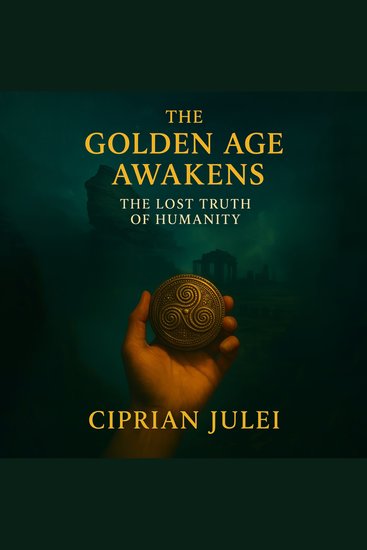
    The Golden Age Awakens: The Lost Truth of Humanity 
    UNVEIL THE TRUTH THEY DON'T WANT YOU TO KNOW 
    Beneath the thin veneer of recorded history lies a forgotten reality—one so profound it would shatter our understanding of human civilization. 
    • The spectacular truth about the Dacian civilization—guardians of cosmic knowledge that predates recorded history • Secret underground chambers discovered in Romania's Bucegi Mountains containing technology beyond our current scientific understanding • Ancient sound technology that could manipulate consciousness, matter, and even time itself • Evidence of deliberate historical falsification by powers determined to keep humanity disconnected from its true heritage • The hidden matriarchal wisdom tradition that preserved crucial knowledge through millennia of persecution 
    For decades, academic institutions and powerful interests have systematically buried these revelations. Now, as we stand at the threshold of a new era, this knowledge re-emerges—offering not just a revolutionary view of our past, but a transformative vision for humanity's future. 
    "The most explosive revelation of hidden history since 'Fingerprints of the Gods.' Julei connects dots that rewire your understanding of human potential." – Readers are saying 
    Are you ready to discover what was lost? What if everything you thought you knew about human history was built on carefully constructed lies? 
    THE GOLDEN AGE AWAKENS is not just a book—it's the key to unlocking your connection to humanity's extraordinary forgotten legacy. 
    [WARNING: Once you've seen the truth, you cannot unsee it.]
    Ver livro
  • Executive Functioning and Psychotherapy - The New Neuroscience of Adaptive Intelligence - cover

    Executive Functioning and...

    Louis Cozolino, Carly Trissler,...

    • 0
    • 0
    • 0
    A new model of executive functioning which illuminates the somatic, social, and emotional influences on how we make decisions. 
     
    Executive functioning (EF) can be defined as a person's ability to successfully navigate their physical, intellectual, and social worlds. Interest in EF is expanding within psychotherapy, but like many scientific concepts which are adapted to the consulting room, there is a great deal of confusion and misinformation surrounding EF within clinical and lay communities. 
     
    In this book, Louis Cozolino—a master of translating complex neuroscientific concepts into digestible, applicable literature for therapists and laypeople alike—is joined by experts Chloe Drulis and Carly Trissler to illuminate how our brains and minds successfully navigate the challenges of day—to—day life. The book offers a new, neurodynamic model of EF that explains the three main executive systems in the brain and the specific ways that they influence how we think, focus, and solve problems. This neurobiological framework highlights the interconnectedness of cognition, emotion, and relationships, providing readers with a deeper understanding of how humans function and strategies to improve outcomes in therapy, parenting, executive coaching, and personal development.
    Ver livro
  • Ottoman Empire’s Most Important Battles The: The History and Legacy of the Ottomans’ Biggest Victories and Defeats - cover

    Ottoman Empire’s Most Important...

    Editors Charles River

    • 0
    • 0
    • 0
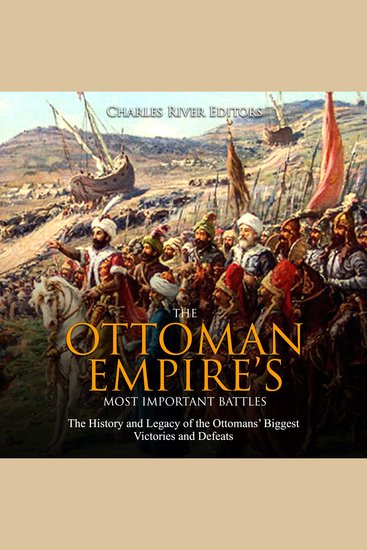
    In terms of geopolitics, perhaps the most seminal event of the Middle Ages was the successful Ottoman siege of Constantinople in 1453. The city had been an imperial capital as far back as the 4th century, when Constantine the Great shifted the power center of the Roman Empire there, effectively establishing two almost equally powerful halves of antiquity’s greatest empire. Constantinople would continue to serve as the capital of the Byzantine Empire even after the Western half of the Roman Empire collapsed in the late 5th century. Naturally, the Ottoman Empire would also use Constantinople as the capital of its empire after their conquest effectively ended the Byzantine Empire, and thanks to its strategic location, it has been a trading center for years and remains one today under the Turkish name of Istanbul.  
    The end of the Byzantine Empire had a profound effect not only on the Middle East but Europe as well. Constantinople had played a crucial part in the Crusades, and the fall of the Byzantines meant that the Ottomans now shared a border with Europe. Indeed, the Ottomans would clash with Russians, Austrians, Venetians, Polish, and more before collapsing as a result of World War I, when they were part of the Central powers.  
    In the wake of taking Constantinople, the Ottoman Empire would spend the next few centuries expanding its size, power, and influence, bumping up against Eastern Europe and becoming one of the world’s most important geopolitical players. It was a rise that would not truly start to wane until the 19th century. Preserving its mixed heritage, coming from both its geographic position rising above the ashes of the Byzantine Empire and the tradition inherited from the Muslim Conquests, the Ottoman Empire lasted more than six centuries.
    Ver livro