Begleiten Sie uns auf eine literarische Weltreise!
Buch zum Bücherregal hinzufügen
Grey
Einen neuen Kommentar schreiben Default profile 50px
Grey
Jetzt das ganze Buch im Abo oder die ersten Seiten gratis lesen!
All characters reduced
The Pirates Own Book - Authentic Narratives of the Most Celebrated Sea Robbers - cover

The Pirates Own Book - Authentic Narratives of the Most Celebrated Sea Robbers

Charles Ellms

Verlag: DigiCat

  • 0
  • 0
  • 0

Beschreibung

In "The Pirates Own Book," Charles Ellms presents a captivating anthology that delves into the adventurous and often treacherous world of piracy during the Golden Age. Written in a richly descriptive prose style that blends a sense of thrilling immediacy with historical narrative, the book compiles firsthand accounts, tales of daring escapades, and the notorious lives of pirates such as Blackbeard and Captain Kidd. Ellms' work mirrors the era's fascination with maritime lawlessness, providing a glimpse into the societal and economic forces that drove men to take to the seas in pursuit of fortune and freedom. Charles Ellms, an author deeply fascinated by maritime history and the romanticized persona of pirates, draws from various sources, including old seafaring legends and pirate trials, to construct an engaging portrayal that resonates with both historical accuracy and sensationalism. His keen interest in the subject stems from a time when piracy captured the popular imagination, and he sought to shed light on the complexities of these figures rather than reduce them to mere caricatures. This book is a must-read for anyone intrigued by the enigmatic lives of pirates and their enduring legacy in popular culture. Ellms's thorough research and gripping storytelling make "The Pirates Own Book" an essential addition to the library of history buffs and adventure seekers alike, inviting readers to immerse themselves in the high seas and the harsh realities of pirate life.
Verfügbar seit: 17.05.2022.
Drucklänge: 333 Seiten.
Weitere Bücher, die Sie mögen werden

  • Battle of Jaffa The: The History and Legacy of the Last Battle of the Third Crusade - cover

    Battle of Jaffa The: The History...

    Editors Charles River

    • 0
    • 0
    • 0
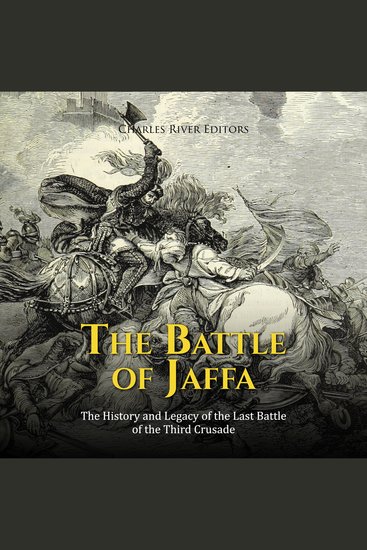
    By 1180, Saladin had consolidated his power in both Egypt and Syria, but he still could not join his two realms because of the obstacle that had once protected his Egyptian realm as a buffer zone: the Crusader States. He now decided to root out the Christian principalities from the Levant, even the Byzantines, though this was not a new goal. He had begun harrying the Crusaders and pushing them back out of Egypt even before he had finished establishing his power there. However, he had also allied with them against other Muslim rivals from time to time. With his triumph over his Muslim rivals complete, he now turned on his erstwhile Christian foes. Attacks on Muslim caravans and other violations of truces by notorious Crusader, Raynald of Chatillon (c.1125-1187), beginning in 1181, gave Saladin the pretext for this change in tack.  
    	How much of this new call to jihad in the 12th century was genuine religious fervor for Saladin and his predecessors, and how much was cynical political aggrandizement, remains subject to debate. Either way, the Crusaders had an advantage in this kind of war, despite being decentralized in secular power and relatively weak militarily compared to their Muslim neighbors. Christian religious authority was strongly centralized by the papacy in Rome and the patriarchate in Constantinople. Christian religious authority, older and better organized, also had longevity that Muslim religious authority lacked. Perhaps most importantly, the Christians weren’t warring with each other, whereas the division between the two main Muslim sects, majority Sunnism and minority Shi'ism, played a huge factor in the conquest of Egypt and left the two sides downright hostile towards each other. In comparison, the division between Latin and Greek Christianity was only a century old at the time of the Third Crusade.
    Zum Buch
  • Engage to Captivate Minds - "Transform your study routine! Experience captivating audio lessons for maximum engagement and test success!" - cover

    Engage to Captivate Minds -...

    Kellan Winslow

    • 0
    • 0
    • 0
    Engage to Captivate Minds 
    ⭐⭐ A Simplified Guide to Succeed by Mastering Storytelling in Crowded Digital Landscapes ⭐⭐ 
    Are you ready to elevate your career and deepen your understanding by excelling in the digital storytelling realm?  
    Searching for an all-encompassing resource that equips you with everything you need to succeed in mastering storytelling in crowded digital landscapes?  
    Your quest ends here! 
    This guide is your ultimate partner, designed to enhance your knowledge, sharpen your skills, and engage you in practical exercises. With this guide, you’re on the path to success. 
    Updated to reflect the latest trends in digital storytelling. 
    Key Features of This Enhanced Guide: 
    - In-depth insights into storytelling techniques in digital environments 
    - Comprehensive explanations of essential storytelling concepts 
    - Effective strategies for preparation and skill application 
    Our guide stands out with its thorough exploration of key topics, crucial for your success. Concepts are not merely glanced over; instead, they are examined in detail. 
    Please note that this guide operates independently and is not associated with any official storytelling entities. 
    Crafted with a clear structure and straightforward language, our guide ensures seamless navigation between topics. Say farewell to convoluted jargon and embrace clear, concise, and technically accurate content. 
    So, why wait? Click the BUY NOW button, secure your guide, and start your journey toward mastery in storytelling in crowded digital landscapes!
    Zum Buch
  • Taming Your Amygdala - Brain-Based Strategies to Quiet the Anxious Mind - cover

    Taming Your Amygdala -...

    PhD Catherine M. Pittman

    • 0
    • 0
    • 0
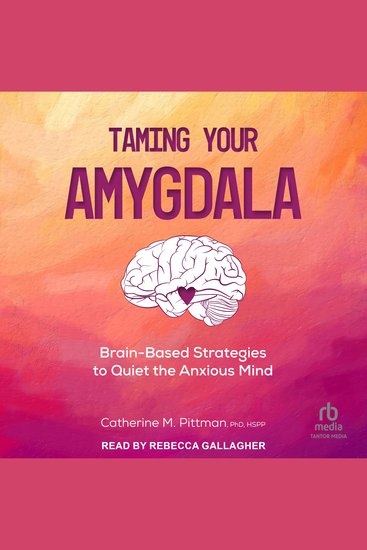
    A chronic sense of unease. Nagging what-ifs. Worry about what other people think. Paralyzing phobias. Full-blown panic attacks. 


    Anxiety shows up in a lot of different ways and can permeate every aspect of your life. The good news is that although it can feel confusing and overwhelming—as if things will never get better—it is possible to retrain your brain and put yourself back in the driver's seat. 


    In Taming Your Amygdala, clinical psychologist Dr. Catherine Pittman offers scientific insight, clear explanations, and simple brain-based strategies to help you overcome excessive worry, anxiety, and fear. Based on the principles of neuroscience and cognitive behavioral therapy, the tools in this workbook will teach you the "language of the amygdala" so you can: 


    ● Understand how and why your brain gets "hijacked" by anxiety and fear 


    ● Identify and cope with anxiety triggers and stuck points 


    ● Develop new, adaptive coping skills to prevent and reduce anxious thoughts and feelings 


    ● Live your life to the fullest, breaking free of the limits of chronic anxiety, paralyzing worry, or debilitating panic
    Zum Buch
  • Mughal Empire - The Early Modern Islamic Empire in South Asia - cover

    Mughal Empire - The Early Modern...

    Kelly Mass

    • 0
    • 0
    • 0
    The Mughal Empire, also referred to as the Mogul or Moghul Empire, was one of the most powerful and influential early modern Islamic empires in South Asia. Established in the 16th century, it controlled vast regions for over two centuries, encompassing territories from the peripheries of the Indus basin in the west, extending to northern Afghanistan, Kashmir in the north, present-day Bangladesh in the east, and stretching as far south as the Deccan Plateau's uplands.The origins of the Mughal Empire trace back to 1526 when Babur, a warrior chieftain from what is now Uzbekistan, founded the empire. Babur's military strategy combined traditional cavalry tactics with the latest artillery techniques, using matchlock guns and cast cannons acquired with Ottoman assistance. These advancements, alongside his strategic acumen, led him to a decisive victory against the Sultan of Delhi, Ibrahim Lodhi, at the First Battle of Panipat. This battle marked a turning point, allowing Babur to establish his dominance over northern India and subdue rival Rajput and Afghan forces.While Babur laid the foundation of the empire, the true structure of the Mughal state is often attributed to his grandson, Akbar the Great. By the late 16th century, under Akbar's rule, the empire expanded its reach and established a well-organized imperial administration that laid the groundwork for political stability, cultural integration, and economic prosperity. Akbar's reign is particularly noted for promoting a policy of religious tolerance, encouraging a synthesis of Hindu and Muslim cultures, and setting up an efficient centralized bureaucracy.
    Zum Buch
  • A Rare Recording of Titanic Survivor Frank Prentice - cover

    A Rare Recording of Titanic...

    Frank Prentice

    • 0
    • 0
    • 0
    RMS Titanic was a British passenger liner, operated by the White Star Line, that sank in the North Atlantic Ocean on April 15, 1912, after striking an iceberg during her maiden voyage from Southampton, England, to New York City. Of the estimated 2,224 passengers and crew aboard, more than 1,500 died, making it the deadliest sinking of a single ship up to that time. It remains the deadliest peacetime sinking of an ocean liner or cruise ship. Frank Prentice, an assistant purser on the Titanic, offers his account of how he survived the sinking of the ship.
    Zum Buch
  • Image Control - Art Fascism and the Right to Resist - cover

    Image Control - Art Fascism and...

    Patrick Nathan

    • 0
    • 0
    • 0
    Susan Sontag meets Hanif Abdurraqib in this fascinating exploration of the unexpected connections between how we consume images and the insidious nature of Fascism. 


    Images come at us quickly, often without context. A photograph of Syrian children suffering in the wake of a chemical attack segues into a stranger's pristine Instagram selfie. Before we can react to either, a new meme induces a laugh and a share. While such constant give and take might seem innocent, even entertaining, this barrage of content numbs our ability to examine critically how the world, broken down into images, affects us. Images without context isolate us, turning everything we experience into mere transactions. It is exactly this alienation that leaves us vulnerable to fascism—a reactionary politics that is destroying not only our lives and our nations, but also the planet's very ability to sustain human civilization. 


    Who gets to control the media we consume? Can we intervene, or at least mitigate the influence of constant content? Mixing personal anecdotes with historical and political criticism, Image Control explores art, social media, photography, and other visual mediums to understand how our culture and our actions are manipulated, all the while building toward the idea that if fascism emerges as aesthetics, then so too can anti-fascism.
    Zum Buch