Join us on a literary world trip!
Add this book to bookshelf
Grey
Write a new comment Default profile 50px
Grey
Subscribe to read the full book or read the first pages for free!
All characters reduced
Master Humphrey's Clock - Tales Told Around a Clock-Case - cover

Master Humphrey's Clock - Tales Told Around a Clock-Case

Charles Dickens

Publisher: Aeneas Press

  • 0
  • 0
  • 0

Summary

The frame Dickens built for a weekly magazine of his own - a club of old men reading manuscripts to each other by the fire, out of which The Old Curiosity Shop and Barnaby Rudge grew before it collapsed under them. The Pickwick characters come back for one last appearance. This edition is bound with a gallery of 60 plates of painting, among them works by Adolph Tidemand, Thomas Creswick and Samuel Bough, dating from 1842 to 1910.
Available since: 09/16/2026.
Print length: 147 pages.

Other books that might interest you

  • The Confession of a Child of the Century - A Young Romantic Poisoned by Doubt - cover

    The Confession of a Child of the...

    Alfred de Musset

    • 0
    • 0
    • 0
    A young Parisian finds his mistress at supper with another man, spends two years proving to himself that nobody is worth anything, and then retires to the country and falls in love with a woman ten years older, whom he proceeds to torment. Musset wrote it at twenty-five, directly out of his affair with George Sand and the winter in Venice that ended it. The diagnosis of his own generation in the opening chapters is the part that has lasted. Sixty plates by painters including Paul Gavarni and Edvard Munch trace the century's tables, from coffee house to roulette wheel, matching the novel's anatomy of a generation.
    Show book
  • Behind A Mask or a Woman's Power - cover

    Behind A Mask or a Woman's Power

    Louisa May Alcott

    • 0
    • 0
    • 0
    Behind a Mask, or A Womans Power is a novella written by American author Louisa May Alcott. The novella was originally published in 1866 under the pseudonym of A. M. Barnard in The Flag of Our Union. Set in Victorian era Britain, the story follows Jean Muir, the deceitful governess of the wealthy Coventry family.
    Show book
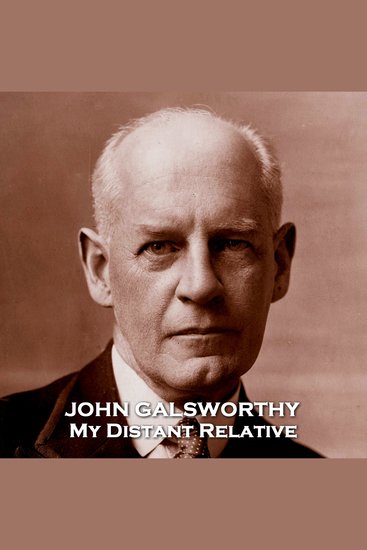
  • My Distant Relative - Short story from a Nobel Prize winning author - cover

    My Distant Relative - Short...

    John Galsworthy

    • 0
    • 0
    • 0
    John Galsworthy was born on the 14th August 1867 on the family estate, Parkfield, in Kingston-upon-Thames.  His family’s wealth came from the shipping industry 
    At age nine he began his education at Saugeen, a Bournemouth preparatory school, before moving to Harrow school in 1881, distinguishing himself as an athlete.  
    Galsworthy attended New College, Oxford to read law and left with a second-class degree with honours in 1889. The bar called him in 1890 but Galsworthy decided he would rather run the family’s shipping business. This also meant travelling to destinations such as Vancouver, South Africa and Australia. 
    In 1895 Galsworthy began a decade long affair with Ada Nemesis Pearson Cooper, the wife of his first cousin. It was only when, in 1905, she divorced and married Galsworthy that their affair became known. 
    His literary career began in 1897 with a short story volume, ‘From the Four Winds’, with the pseudonym John Sinjohn as were three further works. Under his own name, in 1904, came ‘The Island Pharisees’, a novel of social observation, seasoned with flashes of satire and propaganda. He also switched from small, independent publishers to the larger Heinemann and to whom he remained for the duration of his career. 
    1906 saw first major play, ‘The Silver Box’, and the novel ‘The Man of Property’. Each to considerable acclaim. The latter was the first in ‘The Forsyte Saga’ trilogy written between 1906 and 1921. It dealt with the questions of status, class and materialism through Soames Forsyte, who is acutely aware of his ‘new money’ status. Jealous of his wife, his machinations drive her into the arms of another. Soames engages in a terrible revenge with terrible consequences.  
    His social agenda was enlightened particularly in his condemnation over the use of solitary confinement in prisons, his attacks on theatrical censorship and campaigning for animal rights. 
    Galsworthy, having been passed over for active service, spent much of the First World War working as an orderly in a field hospital in France. 
    Despite his it was only in 1920 that he had his first blockbuster play ‘The Skin Game’, a melodrama dealing with ethics, property and class.  
    In 1920 ‘In Chancery’ also arrived with further discourse on the marital disharmony between Soames Forsyte and his wife.  
    The appreciation of his work gradually shifted from plays to novels, particularly through his detailing English social difference, tension and pretension with the Forsytes.  A second trilogy, ‘A Modern Comedy’, followed, examining his love for his daughter Fleur and the English commercial upper-middle class, its ideologies and Soames’ poisonous materialism.  
    Having rejected a knighthood in 1918 he was appointed, in 1929, to the Order of Merit. Galsworthy spent his last years writing a third Forsythe trilogy, ‘End of the Chapter’.   
    In 1932 he was awarded the Nobel Prize, but by now failing health meant he was too ill to attend the ceremony. 
    John Galsworthy died at his Hampstead home of a brain tumour on 31st January, 1933. He was cremated and his ashes scattered from an aeroplane over the South Downs.
    Show book

  • Ann Veronica a modern love story - cover

    Ann Veronica a modern love story

    H. G. Wells

    • 0
    • 0
    • 0
    Ann Veronica: A Modern Love Story is a bold and progressive novel that explores a young woman's struggle for independence, self-expression, and emotional freedom in early 20th-century England. Centered on the spirited and intelligent Ann Veronica Stanley, the story challenges traditional expectations surrounding love, marriage, and a woman's place in society.
    
    As Ann Veronica seeks education, autonomy, and meaningful relationships, she comes into conflict with her conservative upbringing and the rigid social norms of her time. Her journey takes her through personal rebellion, romantic awakening, and moral questioning, as she navigates the complexities of desire, ambition, and social responsibility. Through these experiences, she grows into a woman determined to define her own identity.
    
    With realism, emotional depth, and social critique, H. G. Wells presents a powerful examination of gender roles, modern relationships, and the changing world of Edwardian England. Ann Veronica remains a thought-provoking and influential novel that speaks to themes of feminism, love, and personal liberation that continue to resonate with readers today.
    Show book
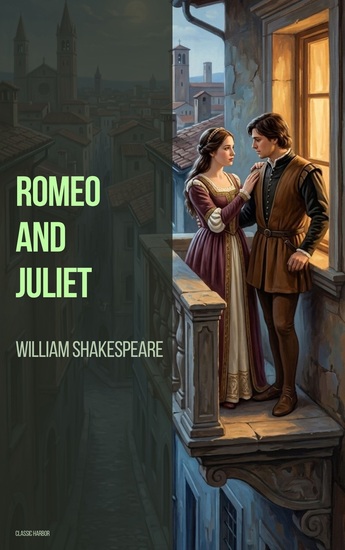
  • Romeo and Juliet - cover

    Romeo and Juliet

    William Shakespeare

    • 0
    • 0
    • 0
    Two young hearts fall in love in a world divided by hatred, risking everything for a chance to be together.
    
    William Shakespeare's Romeo and Juliet is one of the most enduring love stories in world literature.
    
    Set in Verona, the play follows Romeo and Juliet, whose powerful attraction brings them together despite the bitter rivalry between their families. As their relationship develops, they must confront hostility, secrecy, impulsive decisions, and circumstances beyond their control.
    
    Combining passionate romance with dramatic conflict, Shakespeare explores love, loyalty, family, fate, and the devastating consequences of inherited hatred.
    
    Experience the beauty and heartbreak of Romeo and Juliet, a timeless masterpiece about love, sacrifice, and the forces that can divide us.
    Show book
  • Olalla - cover

    Olalla

    Robert Louis Stevenson

    • 0
    • 0
    • 0
    "Olalla" is a short story by the Scottish novelist, poet, essayist, and travel writer Robert Louis Stevenson. It was first published in the Christmas 1885 issue of The Court and Society Review, then re-published in 1887 as part of the collection The Merry Men and Other Tales and Fables. It is set in Spain during the Peninsular War. 
     
    The story is based on a dream that Stevenson had and in his 1888 essay "A Chapter on Dreams" he describes the difficulties he had in fitting his vision into a narrative framework. Stevenson wrote the story at the same time as he was proofing "Strange Case of Dr. Jekyll and Mr. Hyde" (published 1886).
    Show book