Join us on a literary world trip!
Add this book to bookshelf
Grey
Write a new comment Default profile 50px
Grey
Subscribe to read the full book or read the first pages for free!
All characters reduced
The Russian Expedition of 1812 - cover

The Russian Expedition of 1812

Carl von Clausewitz

Translator Francis Egerton

Publisher: Musaicum Books

  • 0
  • 0
  • 0

Summary

Carl Von Clausewitz's 'The Russian Expedition of 1812' is a seminal work that delves into the intricate military strategies and political complexities surrounding Napoleon's failed invasion of Russia. Written in a concise and analytical style, the book dissects the tactics employed by both sides and offers valuable insights into the nature of warfare during the early 19th century. With detailed accounts of key battles and strategic decisions, Clausewitz provides readers with a thorough understanding of the events that transpired during this pivotal campaign. The book serves as a valuable resource for military historians and scholars interested in the Napoleonic Wars. Filled with strategic analysis and firsthand narratives, 'The Russian Expedition of 1812' showcases Clausewitz's expertise in military theory and his deep understanding of the art of war. Clausewitz's own military background and extensive research on the topic imbue the book with a sense of authority and credibility. Readers interested in military history and strategic studies will find 'The Russian Expedition of 1812' to be a compelling and enlightening read.
Available since: 01/04/2022.
Print length: 138 pages.

Other books that might interest you

  • Cajuns and Creoles The: The History and Legacy of the Unique Ethnic Groups in the American South and Caribbean - cover

    Cajuns and Creoles The: The...

    Editors Charles River

    • 0
    • 0
    • 0
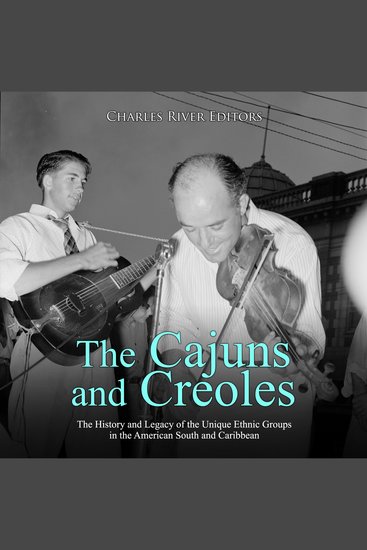
    Deep within the bayous and swamps of Louisiana resides a population descended from an exodus. These people, called Cajuns or Acadians, were expelled from their homelands. Persecuted and homeless, they traveled hundreds of miles south in search of a new home and ultimately settled in the Pelican State, where they made new lives for themselves free from their British conquerors. Though not always warmly welcomed, they were accepted, allowing them to practice their different culture amidst their new neighbors. 
    	Though their home has changed flags over the centuries, the people themselves have remained, retaining a culture that goes back several centuries. While people continue to assimilate, some have continued to live same lifestyles their ancestors did for generations, and they continue to fascinate outsiders, so much so that they occasionally end up being featured on the History Channel. 
    	Contrary to popular belief, the term “Creole” is not restricted to the Louisiana Creole, nor the Creoles of color, which collectively refers to the overall ethnic group and different local Creole cultures that blossomed across the Spanish and French colonies in Louisiana, Mississippi, and northwestern Florida. Today, the term is much more complex and may be applied to any of the various Creole cultures around the globe. The word may also be used to describe any language that has spawned from a mixture of languages, or specifically the associated, but distinct tongues developed within Creole communities, as well as the speakers of these languages themselves.  
    Generally speaking, however, the word “Creole” refers to the cultures birthed from the colonial-era racial and cultural mixing between Europeans (mostly of French, Spanish, or Portuguese descent) and Africans, as well as Native Americans, and other local or indigenous peoples in French, Spanish, and Portuguese territories.
    Show book
  • How to Analyze People - Learn the Advanced Methods and Techniques of Speed Reading and Analyzing People - cover

    How to Analyze People - Learn...

    Kevin Hallstone

    • 0
    • 0
    • 0
    In this volume, our focus shifts slightly to the actual personality types; everyone should be aware of and susceptible to when they cross our paths. These are the people you probably don't want to know. 
    Why? They're people who really don't like other people. Well, they do, but what they like about people is exploiting, damaging, and controlling them. They like people for what they can do for them financially, in their careers, and in terms of their status in society. 
    We've covered some of the general personality types in Book One of our series. That information will have given you some insight into the people you meet and how to read them. But what I've saved for this volume is an examination of those who walk among us who are corrosive and psychologically compromised. Also, in this book, you'll be reading about the role of intuition in detecting the truth about situations and people and how to foster and use it to protect yourself and others from the excesses of the disorders described in this book. 
    We'll be focusing on personality disorders, the behaviors of those who are burdened with them, and how to see them coming. There are tell-tale signs early on in interactions with these people that can save you a lot of drama and chaos.  
    As you move along, you'll note an overlap between symptoms and behaviors. In the Cluster B personality disorders, we'll be looking at, the symptomatic overlap is not only common but expected. Further, those who fall under the headings in the cluster often have what is referred to as "co-morbidities." These are the double whammy types, who live with more than one personality challenge or disorder.
    Show book
  • Contentment - The Peaceful Mind - Finding Satisfaction in the Present - cover

    Contentment - The Peaceful Mind...

    Esther Jameson

    • 0
    • 0
    • 0
    Contentment is the quiet acceptance of life as it unfolds, embracing both the moments of joy and the challenges that shape our experience. It is not a fleeting emotion or a temporary state of mind, but a deeper sense of peace and fulfillment that comes from within. In a world driven by the pursuit of more—more success, more wealth, more recognition—contentment offers a counterbalance, inviting us to find satisfaction in the present rather than constantly striving for an elusive future. 
    This chapter explores the concept of contentment as a way of life, emphasizing that true satisfaction is rooted in our ability to appreciate the here and now. Instead of measuring our worth by external achievements or comparing ourselves to others, contentment encourages us to turn inward and acknowledge our inherent value. It is a state of mind that nurtures self-acceptance and a profound sense of inner calm, even when circumstances around us may be less than ideal. 
    The journey towards contentment begins with understanding the nature of our desires and the societal pressures that often drive us to chase after more. By questioning the idea that constant accumulation or the relentless pursuit of goals equates to happiness, we open the door to a more balanced and meaningful existence. In this light, contentment is not about complacency or settling for mediocrity; rather, it is about recognizing and celebrating the small moments that enrich our lives and contribute to our overall well-being.
    Show book
  • Breathmaker: The History and Legacy of the Seminole’s Creator God - cover

    Breathmaker: The History and...

    Editors Charles River

    • 0
    • 0
    • 0
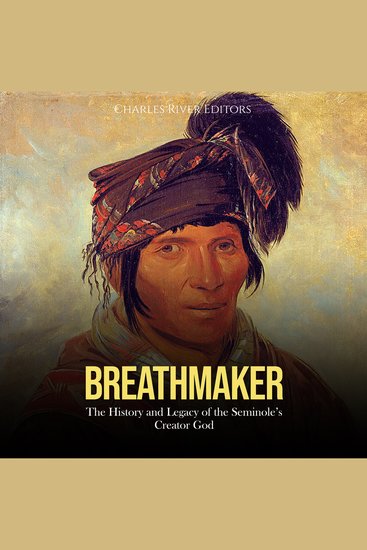
    The Seminole tribe is one of the best known Native American tribes, and one of the most feared among 19th century Americans and Spaniards. In fact, the origin of the term Seminole comes from a Spanish description of them as “wild”, which belies the fact that the Seminole had friendly relations with the British and Spanish during the colonial era.  
    	To appreciate Seminole Native American mythology, their history and origins must be understood. Their forebears, the Muscogee, first migrated into what is now the Southeastern United States from various points in the north and west, which they accomplished by overpowering the indigenous inhabitants. The region was already occupied by several groups, including the Yuchi and Hitchiti, tribes that were likely descendants of the Moundbuilders. These tribes were subdued and then integrated into the Muscogee system. Thus, the traditions, beliefs, rituals, and mythologies of these various groups became the communal belief system of the Muscogee collective.  	 
    	According to the Muscogee, humans emerged “somewhere in the west,” a location described as the “foundation of all things” or the “backbone” of the Earth. Most scholars associate this location with the Rocky Mountains, and they credit the Four Corners area of the United States as being the location for the creation myths of Native American groups like the Pueblo. Though still not commonly understood, Breathmaker became the creator god of the Seminole peoples (the name is also written as Breath Maker and Maker of Breath), and he became the center of a cycle of creation stories. 
    Show book
  • New Moons For Sam - Becoming Kiwi - Life of a New Zealand Diplomat - cover

    New Moons For Sam - Becoming...

    Peter Hamilton

    • 0
    • 0
    • 0
    A personal, intimate, memoir spanning 70 years, in three parts, describing my childhood in the UK and New Zealand, my 35 years as a New Zealand diplomat, and the hundreds of amazing individuals I met on the way, from farming folk to Kings, Queens and Presidents. Part One is the story of an English boy growing up on a farm in rural Devon and Somerset in an extended family, and then, aged 9, moving to rural New Zealand. It covers my school years, my year as a volunteer teacher, aged 17, at an all boys school, in the South Pacific Kingdom of Tonga and my year as a university student in a still divided Germany. Part Two describes my career as a junior, then senior, New Zealand diplomat, and my postings in Fiji, Canada, Geneva, Samoa, Germany and Singapore, the last three as Ambassador. Part Three argues that New Zealand should become a republic in the Commonwealth, with its own Head of State. It describes, too, my liberating journey from Anglicanism to freedom from any religion. I have aimed to tell the memoir with a sense of humour, humility and (for the most part) optimism!
    Show book
  • Rus’ The: The History and Legacy of the Group that Established a Russian State in the Middle Ages - cover

    Rus’ The: The History and Legacy...

    Editors Charles River

    • 0
    • 0
    • 0
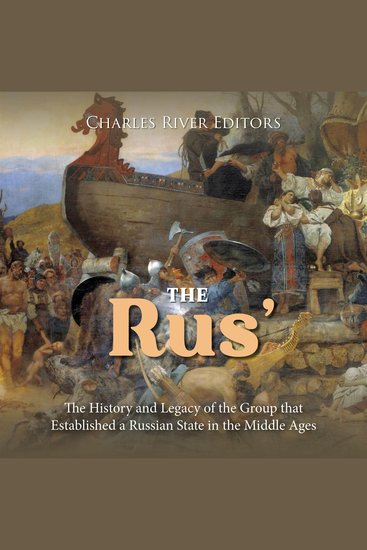
    For many, the Rus might be synonyms for Russia or Russians, perhaps an early form of the civilization that later became Russia. This is partly true. Modern-day Russia lays claim as a successor to the Rus, particularly the Kievan Rus empire that dominated, with oscillating borders, the area around today’s Kiev and Ukraine between the 8th and 11th centuries. Crucially, the Rus had roots in the Nordic region. Initially, they would travel into modern-day Russia, Ukraine, and beyond to trade. Only later would they start to settle in the region and then become known as the Rus. 
    As with many other groups, the origins of the Rus are tied to the dominance of the Vikings over Western Europe in the early part of the Dark Ages or Medieval Era. Their Scandinavian brethren also traveled eastwards, behaving in similar ways but ultimately settling and assimilating in the region in an idiosyncratic manner. The Rus focused on several trade routes. The most important of these was the “eastern” route towards the Caspian Sea and stretching as far as Baghdad in the Middle East. This then gave way to the “western” route leading through Kiev to the Black Sea and Byzantine capital city Constantinople. The Rus also developed other trade routes, including to Western Europe. 
    Eventually, the Rus began to establish permanent settlements, firstly in Novgorod and then south to Kiev. This will be accompanied by the exploration of growing Rus dominance of this region, particularly through historical figures in the Rurikid dynasty such as Rurik, Oleg, Igor, Olga, Svyatoslav, Vladimir, and Yaroslav. During this time, the Kievan Rus empire was established and rose steadily to become a major regional power, even challenging the dominant Byzantines.
    Show book