Join us on a literary world trip!
Add this book to bookshelf
Grey
Write a new comment Default profile 50px
Grey
Subscribe to read the full book or read the first pages for free!
All characters reduced
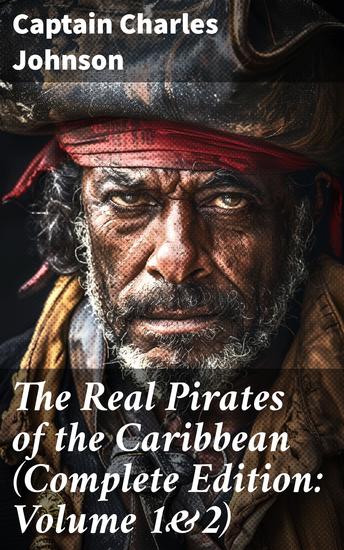
The Real Pirates of the Caribbean (Complete Edition: Volume 1&2) - Enriched edition Unraveling the Swashbuckling Stories of Caribbean Pirates - cover

The Real Pirates of the Caribbean (Complete Edition: Volume 1&2) - Enriched edition Unraveling the Swashbuckling Stories of Caribbean Pirates

Captain Charles Johnson

Publisher: Good Press

  • 0
  • 0
  • 0

Summary

In "The Real Pirates of the Caribbean (Complete Edition: Volume 1&2)," Captain Charles Johnson embarks on a captivating exploration of the infamous pirates who roamed the Caribbean seas during the Golden Age of Piracy. Through a rich narrative that intertwines historical accounts with vivid storytelling, Johnson provides readers with an authentic portrayal of these rogue adventurers. His use of detailed character sketches, arresting anecdotes, and well-researched maritime history situates the reader in a world where treachery and treasure coalesced amid the tumult of the 17th and 18th centuries. This literary work not only entertains but also serves as an invaluable resource for understanding the societal dynamics and cultural implications of piracy in colonial times. Captain Charles Johnson, an enigmatic figure whose true identity remains subject to speculation, is often regarded as one of the foremost chroniclers of maritime lore. His extensive knowledge of nautical life, combined with his access to firsthand accounts from sailors and outlaws, enriched his narrative, lending a gritty authenticity to his depiction of pirates such as Blackbeard and Bartholomew Roberts. Johnson's background as a sailor himself likely informed his unique insights into the pirate code and the allure of the high seas, evoking both fascination and fear. "The Real Pirates of the Caribbean" is an essential read for those captivated by the allure of the sea and the complexities of human nature. Scholars, history enthusiasts, and casual readers alike will find Johnson's vivid portrayals and meticulous research to be a treasure trove of knowledge and entertainment. Delve into these volumes to uncover the real stories behind the legendary figures who shaped the mythos of piracy, and experience the thrill of adventure through the eyes of one who dared to chronicle it.

In this enriched edition, we have carefully created added value for your reading experience:
- A comprehensive Introduction outlines these selected works' unifying features, themes, or stylistic evolutions.
- A Historical Context section situates the works in their broader era—social currents, cultural trends, and key events that underpin their creation.
- A concise Synopsis (Selection) offers an accessible overview of the included texts, helping readers navigate plotlines and main ideas without revealing critical twists.
- A unified Analysis examines recurring motifs and stylistic hallmarks across the collection, tying the stories together while spotlighting the different work's strengths.
- Reflection questions inspire deeper contemplation of the author's overarching message, inviting readers to draw connections among different texts and relate them to modern contexts.
- Lastly, our hand‐picked Memorable Quotes distill pivotal lines and turning points, serving as touchstones for the collection's central themes.
Available since: 01/16/2024.
Print length: 555 pages.

Other books that might interest you

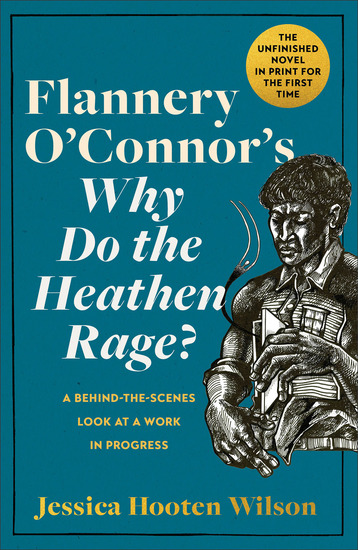
  • Flannery O'Connor's Why Do the Heathen Rage? - A Behind-the-Scenes Look at a Work in Progress - cover

    Flannery O'Connor's Why Do the...

    Jessica Hooten Wilson

    • 0
    • 0
    • 0
    Christianity Today 2025 Award of Merit (Culture, Poetry, and the Arts) 
     
    "Wilson does a great service in resurrecting one of O'Connor's lesser-known works."--Publishers Weekly 
     
    When celebrated American novelist and short story writer Flannery O'Connor died at the age of thirty-nine in 1964, she left behind an unfinished third novel titled Why Do the Heathen Rage? Scholarly experts uncovered and studied the material, deeming it unpublishable. It stayed that way for more than fifty years. 
     
    Until now. 
     
    For the past ten-plus years, award-winning author Jessica Hooten Wilson has explored the 378 pages of typed and handwritten material of the novel--transcribing pages, organizing them into scenes, and compiling everything to provide a glimpse into what O'Connor might have planned to publish. 
     
    This book is the result of Hooten Wilson's work. In it, she introduces O'Connor's novel to the public for the first time and imagines themes and directions O'Connor's work might have taken. Including illustrations and an afterword from noted artist Steve Prince (One Fish Studio), the book unveils scenes that are both funny and thought-provoking, ultimately revealing that we have much to learn from what O'Connor left behind.
    Show book
  • So Many Colors - cover

    So Many Colors

    Kim Mitzo Thompson, Karen Mitzo...

    • 0
    • 0
    • 0
    Kids will love this playful story as they learn about colors and color words. Simple sentence structures and repetitive words will encourage young children to fall in love with learning to read.  Kids will enjoy following along word-for-word with the recorded story that features sound effects and professional voices to help children develop vocabulary and improve listening skills.  This reader features adorable art to engage young learners.
    Show book
  • How Did Life End Up With Us? - The Secrets of Life: From Big Bang to Trump - cover

    How Did Life End Up With Us? -...

    Ss O'Connor

    • 0
    • 0
    • 0
    Why does the gene behave like a hedge fund manager? Why are mutations like a gambling scam? Why does nothing ever become top dog in life and win forever? Humans only arrived after 99.99% of the time there’s been life on earth. So what was here before us? And how did these species, and the evolutionary process that created them, end up with the unpromising creatures that were our ancestors?In this, the first book of The Secrets of Life quartet, SS O’Connor brings his outsider’s, questioning eye to reveal the great forces that lie behind life: from the laws that arose with Big Bang, through to the ‘decisions’ that organisms make to determine their chances.But how did everything come about? And what made some life forms succeed - while others would join the 99.9% of species that appeared, yet went on to become extinct? The story goes right back to our single-celled forebears - the only things that were on the planet for 80% of its existence, and then continues as it lays out the ways that successive transmissions built increasing complexity, and how the resulting species found their synergistic ways of coexisting.  In an easy-going, conversational style, O'Connor explains in lay-man's language how the gene is the great conductor of life’s orchestra, how it helped millions of life forms to refine themselves - yet why it also sees failure, death and extinctions as opportunities rather than disasters.  Last, the book tells the story of the men who unpicked the mysteries, what they meant by fitness and ‘the fittest’, but why they continued to be baffled by organisms that broke the rules by helping each other. Why would some even choose to be sterile when producing the next generation was the overriding compulsion in life? And why would the answer to this question explain why altruism is the proof for the ‘gene-based theory of evolution’ - and why cooperation was to become the strongest force in life?
    Show book
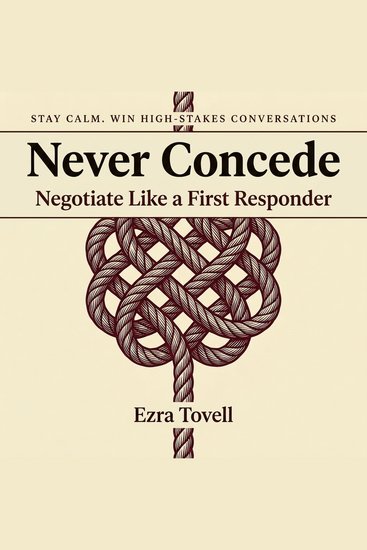
  • Never Concede - Negotiate Like a First Responder - cover

    Never Concede - Negotiate Like a...

    Ezra Tovell

    • 0
    • 0
    • 0
    What do hostage negotiators know that the rest of us don't? They know that logic alone never saves a life—and that the same is true at the bargaining table, in the boardroom, and at the kitchen table.
    In Never Concede: Negotiate Like a First Responder, behavioral scientist and decision theorist Ezra Tovell reveals the counterintuitive principles that elite crisis negotiators use to resolve the highest-stakes standoffs on earth—and shows exactly how those principles translate into the salary conversations, business deals, family disputes, and personal conflicts that shape everyday life.
    Drawing on neuroscience, behavioral economics, clinical psychology, and decades of real crisis negotiation cases, Tovell dismantles the myth that better facts and stronger arguments win negotiations. In reality, people resist not what is said but how it makes them feel. Proposals fail not because they are illogical but because they trigger loss, threaten identity, or signal disrespect. Understanding why is the first step. Knowing what to do about it is what this book delivers.
    Chapter by chapter, Never Concede builds a complete, practitioner-tested skill set:
    - Why emotion is not a distraction from rational decision-making but the engine that drives it—and what that means for every offer you make - How every conversation operates on four simultaneous channels, and why skilled negotiators listen on all of them - The difference between performative listening and tactical listening—and why only one of them changes outcomes - How tone, pace, and vocal presence often matter more than the words themselves - Why "that's right" is the most valuable phrase in any negotiation, and how to earn it without forcing it - The hidden power of "no"—and why inviting refusal is often the fastest route to genuine agreement - How to name what the other side won't say, using emotional labels that reduce threat and open communication - The mirroring technique that makes people reveal far more than they intended - Calibrated questions that hand over the feeling of control while keeping the negotiation on track - How to detect deception, identify hidden players, and read the forces shaping a negotiation from outside the room - The psychology of anchoring—and how the first number sets a gravitational field that most negotiators never escape - Why personal negotiations—salary, family, friendship—are the hardest of all, and how to approach them without losing the relationship - What culture and digital communication do to the signals we send and receive—and how to compensate - A complete daily practice system for building real negotiation skill through deliberate, low-stakes repetition
    Never Concede is not a collection of clever tricks. It is a rigorous, research-grounded manual for becoming the kind of negotiator people trust, engage with, and ultimately move toward. Whether you are navigating a business acquisition, a difficult employee, a family inheritance, or a moment of genuine crisis, the tools in this book will change what you are able to hear—and what becomes possible as a result.
    Show book
  • The Magic of Subliminal Psychology - How to Realize When Somebody's Subliminally Manipulating You - cover

    The Magic of Subliminal...

    Stephen Mullins

    • 0
    • 0
    • 0
    How do you catch subliminal manipulation in the act — before it quietly steers a decision you thought was your own?
     
    Sometimes you wonder whether your thoughts are entirely yours. You suspect people nudge you in ways you cannot quite name, and you scroll past dozens of ads a day without knowing what they leave behind.
     
    That unease is not paranoia. Subliminal messages really are woven through the marketing you see and the conversations you have — and most people never learn to spot them.
     
    This audiobook trains your eye, so the same principles of persuasion that can be used on you become something you recognize and understand.
     
    In this audiobook, you'll discover:
    
    The conscious versus the subconscious mind — where hidden messages slip in and take hold
    How subliminal messages actually work — priming, conditioning, and their pull on long-term decisions
    Body language as silent speech — reading microexpressions, mirroring, posture, and the power of touch
    Subliminal tactics in business — the "as if" principle and how brands quietly win clients
    How crowds get moved — the way trends spread and the sticky effect takes over
    Appearance as influence — how height, color, and voice pitch shape the way you are read
    The famous Vicary hoax — the truth behind the story that launched the subliminal advertising scare
    
     
    You will also see the evidence sorted from the myths — including why the old claim that we use only ten percent of our brains simply does not hold up.
     
    You do not need a psychology degree to see through this — only the right lens. Learn how influence really works, and make your next decision knowing it is truly yours.
    Show book
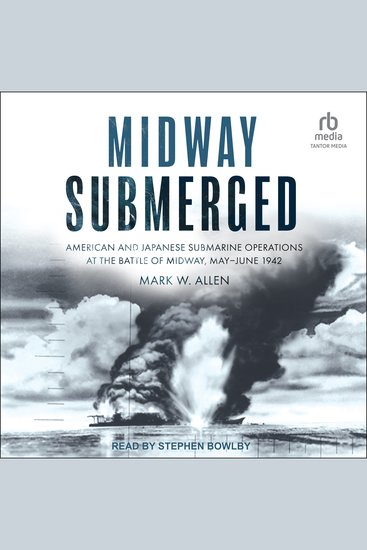
  • Midway Submerged - American and Japanese Submarine Operations at the Battle of Midway May–June 1942 - cover

    Midway Submerged - American and...

    Mark W. Allen

    • 0
    • 0
    • 0
    Most books gloss over submarines at Midway and, if they are mentioned at all, conclude they failed miserably and had little impact on the outcome of the battle. It is undeniable that carrier aviation and intelligence saved the day, but the role of the submarine was an important one in defense of an anticipated amphibious assault. 


    Midway Submerged is a comprehensive examination of a little-known aspect of this pivotal naval battle, explaining how Nimitz used his submarines at Midway and the Japanese misused theirs based on a flawed tactical plan. Based on in-depth archival research not only into the battle itself, but also submarine design and construction, and tactical and operational doctrine for both the United States and Japan, it brings a whole new dimension to the discussion of the battle of Midway. It examines the intended role of the submarine in the plans and doctrine of both navies, and what the submarines were expected to accomplish for both fleets during the battle, before assessing the actual accomplishments, successes, and failures of the submarine forces on both sides. Of particular importance, the book offers an analysis of how well these vessels fulfilled the expectations placed on them by their naval planners, concluding that submarines played a more important role in the outcome than has been previously understood.
    Show book