
Join us on a literary world trip!
Add this book to bookshelf
Grey
Write a new comment Default profile 50px
Grey
Subscribe to read the full book or read the first pages for free!
All characters reduced
Views A-foot; Or Europe Seen with Knapsack and Staff - cover

Views A-foot; Or Europe Seen with Knapsack and Staff

Bayard Taylor

Publisher: DigiCat

  • 0
  • 0
  • 0

Summary

"Views A-foot; Or, Europe Seen with Knapsack and Staff" by Bayard Taylor is a seminal work of travel literature that captures the essence of a youthful pilgrimage across Europe in the mid-19th century. Taylor employs a vivid, descriptive literary style, blending poetic observations with keen social commentary as he traverses landscapes and cultures on foot. The book serves not only as an account of his adventures but also as a reflection on the transformative power of travel against the backdrop of the burgeoning Romantic movement, which celebrated personal experience and the sublime in nature. Taylor's keen eye for detail and lyrical prose illuminate the sights and sounds of the European countryside while revealing the philosophical undercurrents of the era. Bayard Taylor, born in 1825 in Pennsylvania, was deeply influenced by his upbringing in a Quaker community that valued simplicity and nature. With a passion for both writing and exploration, Taylor embarked on numerous journeys in his youth, culminating in this work. His experiences as a journalist and poet enhanced his ability to articulate the wonders and challenges of traveling light, embodying the spirit of adventure that characterized his life. For readers who seek an authentic and immersive experience of 19th-century Europe, "Views A-foot" is an indispensable guide. Taylor's insightful reflections make it a compelling read for modern adventurers and literary enthusiasts alike, offering a heartfelt exploration of the joys and perils of self-discovery through travel.
Available since: 09/04/2022.
Print length: 363 pages.

Other books that might interest you

  • This Autistic Girl Went to Japan - And you won't believe what happened next - cover

    This Autistic Girl Went to Japan...

    Bianca Toeps

    • 0
    • 0
    • 0
    This Autistic Girl Went to Japan is the inspiring story of a young woman who moved halfway around the world in pursuit of happiness. With humor and remarkable candor, Bianca describes the challenges of applying for a visa during a time of terrifying uncertainty, slogging through endless red tape, and the loneliness that comes with being a stranger in a strange land. Oh, and how she wound up evicting a bat from her new apartment, attending a Pokémon GO event with a bunch of middle-aged women, and discovering the best thrift store in all of Tokyo. Along the way, she explains why she feels so at home in Japan, where things are often a bit easier for autistic folks. Well, except for revenue stamps. And opening a bank account. And faxes.
    Show book
  • Chavín Civilization - The Religious Center That Unified the Andes - cover

    Chavín Civilization - The...

    Rolf Hedger

    • 0
    • 0
    • 0
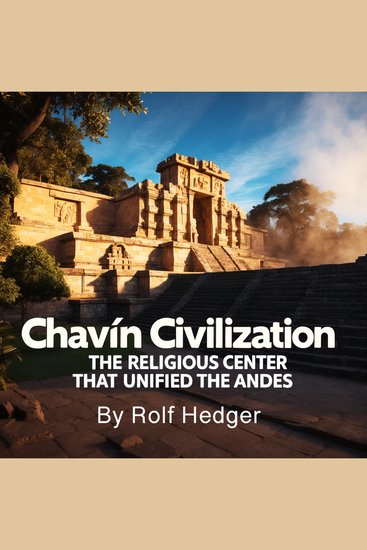
    The Chavín civilization, one of the earliest and most influential cultures of ancient Peru, emerged in the Andean highlands around 900 BCE. It was a formative force in pre-Columbian history, laying the groundwork for later civilizations that dominated the region. The rise of Chavín was deeply connected to its strategic location, the innovations of its people, and the unique blend of religious and cultural influences that shaped its identity. 
    The Andean region, with its diverse geography of mountains, valleys, and coastal plains, played a crucial role in the development of early societies. The people who would come to form the Chavín civilization first settled in highland areas, where they mastered agricultural techniques suited to the challenging environment. The cultivation of staple crops such as maize, potatoes, and quinoa allowed for population growth and the establishment of permanent settlements. Llamas and alpacas provided transportation, wool, and meat, further supporting the stability of these early communities. Over time, these settlements evolved into more complex societies, characterized by social hierarchies and specialized labor. 
    One of the key factors that contributed to the emergence of the Chavín civilization was its strategic position at the crossroads of major trade routes. Chavín de Huántar, the civilization’s most important ceremonial center, was located in a valley that connected the coast, highlands, and jungle regions. This prime location allowed Chavín culture to serve as a unifying force in the Andes, facilitating the exchange of goods, ideas, and religious beliefs among different groups. As traders and pilgrims traveled to Chavín de Huántar, they encountered a sophisticated society with an advanced knowledge of art, architecture, and religion, all of which helped spread Chavín influence throughout the region.
    Show book
  • Bucket to Greece - Volume 1 - cover

    Bucket to Greece - Volume 1

    V.D. Bucket

    • 0
    • 0
    • 0
    When our hero, Victor, needs a pseudonym to avoid embarrassing his wife after deciding to pen a book about up-sticking to Greece, he dusts off his original name of V. D. Bucket, the name he was stuck with after being abandoned in a bucket as a baby. As Victor adapts to his adopted homeland, he battles an obsession with the exacting hygiene standards he demanded during his illustrious career as a public health inspector, against the rather less exacting standards of rural Greece. His attempts to master the complexities of the language lead to a number of embarrassing misunderstandings. 


    Crossing paths with the local undertaker, Spiros, was a stroke of good luck for Victor and Marigold, since Spiros just happened to have a house to sell in the charming Greek mountain village of Meli. Of course Spiros didn't explain the strange arrangement of an Albanian living in the stone shed at the bottom of the garden, or mention the old lady's next door filthy habit of burning plastic every morning. He also failed to mention his late uncle had plunged to his death from the roof terrace, but did a wonderful job of selling them on the spectacular views.
    Show book
  • New is Winter - cover

    New is Winter

    Mike Blake

    • 0
    • 0
    • 0
    NEW IS WINTER - *****Its a poem about the first few months of a childs life,when it encounters the Winter snows for the first time in its new life.The initial joy of Winter which we all share as Adults - snowballs, snowmen,the sheer beauty of a Winters day across a landscape.But as the young child starts to experience a little more....*To see more Poems by the same Author please click theLink HERE: https://www.amazon.com/-/e/B00SG40RM8***** leave your Review/feedback, many thanks. *****To contact the Author: Please add me Mike Miko on Facebook & then message me, thanks. https://www.facebook.com/mike.cco1 I will then contact the Author your behalf. or onTwitter: miko_1_dollar ~ Tumblr : ccobes ~Instagram: wild_poetrys // wild.poetry.websTikTok: wild_poetrysFacebook: https://www.facebook.com/New.Poets.CornerWoW :: https://www.facebook.com/wow.fact/www.wild-poetry.com
    Show book
  • Nothing Like a Dane - A real-life search for hygge in Denmark - cover

    Nothing Like a Dane - A...

    Keri Bloomfield

    • 0
    • 0
    • 0
    The Danish concept of hygge is a wonderful thing. Even if most fail miserably when they try to pronounce or explain its true essence. Unless you’re a Viking of course. 
    As Keri stood in the departure lounge of Auckland International Airport with her four-month-old baby, searching for her flight on the board, hygge wasn’t on her radar. In hindsight she agrees it probably should have been. 
    But she’d never imagined a chance encounter with a Dane in a crowded bar in her home city of Wellington would lead her here, a mother, about to circle the globe, with no knowledge of when she'd return home. 
    Eighteen thousand kilometres away a new life awaited her in Denmark. A country where babies sleep outside, the word for bread is seemingly impossible to pronounce and a country in which immigration challenges abound. 
    A witty observer of cultural nuances, Keri reveals the day-to-day realities of a New Zealander living her best life in Denmark. From integration interrogations to rye bread misdemeanors, Nothing Like a Dane provides a humorous and heartfelt insight into creating a new life in a faraway land. 
    And what did she learn? That it’s not all hygge and pastries. Even in Denmark.
    Show book
  • The Temples of Egypt - Sacred Spaces and Religious Practices - cover

    The Temples of Egypt - Sacred...

    Omar Khalil

    • 0
    • 0
    • 0
    Temples in ancient Egypt were far more than mere places of worship. They stood at the very heart of Egyptian civilization, functioning as both spiritual centers and instruments of political and social order. Each temple was seen as a dwelling place for a god or goddess, and the rituals performed within their walls were believed to maintain the cosmic balance known as ma’at. The presence of a temple in a city or region signaled divine favor and legitimacy, reinforcing the bond between the gods and the ruling pharaoh. 
    Pharaohs were considered divine intermediaries between the gods and the people, and their authority was deeply rooted in religious belief. Temples were a direct reflection of this divine connection. Often constructed by pharaohs to honor specific deities, temples helped assert royal power and ensure harmony across the land. Through grand architecture and lavish offerings, rulers demonstrated their piety and reaffirmed their right to govern. This link between kingship and temple worship made temples central to the ideological framework of the state. 
    Beyond their religious significance, temples also played a pivotal role in the social life of ancient Egyptians. They were the sites of numerous festivals and ceremonial events that brought entire communities together. These occasions were marked by processions, music, dancing, and the display of sacred statues, all of which reinforced communal identity and devotion. The most prominent of these was the Opet Festival in Thebes, during which statues of Amun, Mut, and Khonsu were transported from Karnak to Luxor Temple in a public procession along the Nile. Such festivals reminded people of the gods’ presence and the pharaoh’s divine role in upholding order.
    Show book