Rejoignez-nous pour un voyage dans le monde des livres!
Ajouter ce livre à l'électronique
Grey
Ecrivez un nouveau commentaire Default profile 50px
Grey
Abonnez-vous pour lire le livre complet ou lisez les premières pages gratuitement!
All characters reduced
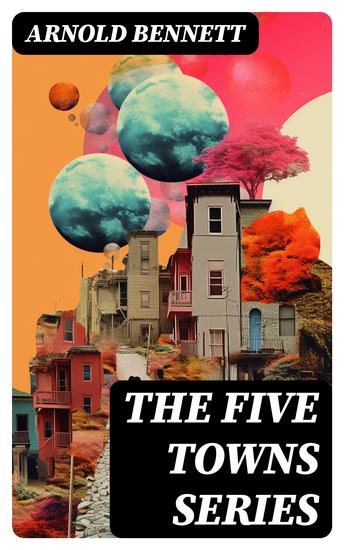
The Five Towns Series - cover

The Five Towns Series

Arnold Bennett

Maison d'édition: DigiCat

  • 0
  • 0
  • 0

Synopsis

Arnold Bennett's "The Five Towns Series" immerses readers in the distinctive socio-economic landscape of the Potteries, capturing the intricate lives of its inhabitants throughout the late 19th and early 20th centuries. The series, which includes landmark novels such as "Anna of the Five Towns," employs a realist literary style, blending sharp characterizations with elaborate descriptions of industrial life. Through the lens of the Five Towns, Bennett skillfully explores themes of class struggle, ambition, and the human condition, ultimately creating a multifaceted portrait of a community in transformation and the inherent complexities of individual desire amid industrial progress. Arnold Bennett, a prominent English novelist and playwright, was deeply influenced by his upbringing in the Potteries, an experience that shaped his vivid portrayals of working-class life. His keen observations of local customs, industrial challenges, and social dynamics provided him with a wellspring of material, allowing him to craft narratives that resonate with both authenticity and emotional depth. Bennett's literary career was marked by a commitment to realism, often drawing from his own childhood experiences in the Five Towns he depicted. Readers seeking to delve into the intricacies of early 20th-century England will find "The Five Towns Series" a profound exploration of human relationships within a rapidly evolving landscape. Bennett's rich narrative style not only entertains but also prompts reflection on broader societal issues, making this series a crucial study for anyone interested in the intersection of literature and the Industrial Revolution.
Disponible depuis: 10/11/2023.
Longueur d'impression: 3113 pages.

D'autres livres qui pourraient vous intéresser

  • Christmas Eve - cover

    Christmas Eve

    Nikolai Gogol

    • 0
    • 0
    • 0
    "Christmas Eve"  is the first story in the second volume of the collection Evenings on a Farm Near Dikanka by Nikolai Gogol.
    The story opens with a description of the winter scenery of Dikanka, Ukraine, a witch flying across the night sky and the devil stealing the moon and hiding it in his pocket, first playing with it in the sky, which no one in the village notices. Since it is the night before Christmas, the devil is free to roam around and torment people as he pleases, so he decides to find a way to get back at the village blacksmith, Vakula, because he paints religious art in the church...
    The story is set in on Christmas Eve in the small Ukranian town of Dikanka. Since it's the night before Christmas, the devil is allowed to roam free in town. He steals the moon, which at first no one notices. Then he sets out to ruin the love interest of Vakula, the town blacksmith, who is hopelessly in love with the beautiful Oksana. The devil has a vendetta against Vakula because he also moonlights as an icon painter who had created mocking pictures of the devil. The devil finds an ally in Vakula's mother (a witch) who wants to marry Oksana's father. She fears that if her son marries Oksana, her love chances will be ruined.
    Voir livre
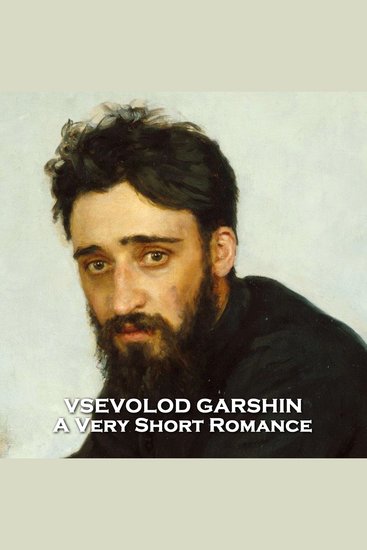
  • A Very Short Romance - From their pens to your ears genius in every story - cover

    A Very Short Romance - From...

    Vsevolod Garshin

    • 0
    • 0
    • 0
    Vsevolod Mikhailovich Garshin was born on 14th February 1855 in what is now Dnipro in the Ukraine, but then part of the Russian Empire. 
    After attending secondary school he studied at the Saint Petersburg Mining Institute.  
    Wars between and on behalf of Empires were a regular feature of the decades then.  Garshin volunteered to serve in the Russian army at the beginning of the Russo-Turkish War in 1877.  
    He began as a private in the Balkans campaign and was wounded in action.  By the end of the war, in 1878, he had been promoted to officer rank.  
    By now Garshin, having previously published some articles and reviews in newspapers, wished to devote himself to a literary career.  The decision made he resigned his army commission. 
    His time as a soldier provided rich experiences for his early stories. His first ‘Four Days’ was related as the interior monologue of a wounded soldier left for dead on the battlefield for four days, face to face with the corpse of a Turkish soldier he had killed, gained him early admiration as an author of note.  
    He wrote perhaps only 20 stories, but their influence was immense, although in these more modern times he is barely remembered and lives in the more prolific shadows of others.  His characters are superbly worked into stories that come alive in the intensity and reality of his prose.   
    Garshin’s most well-known story is ‘The Red Flower’, also known as ‘Scarlet Blossom’ and is easily amongst the first rank of stories dealing with mental health issues.  
    Despite early literary success, he himself experienced periodical bouts of mental illness.   
    In one such bout Garshin attempted to commit suicide by throwing himself down the stone stairs leading into his apartment building.  Although not immediately fatal, Vsevolod Garshin died as a result of his injuries in a St Petersburg hospital on 5th April 1888.  He was 33.
    Voir livre
  • Stories To Make You Cry - Sometimes you need a good cry - cover

    Stories To Make You Cry -...

    Anton Chekhov, Stephen Crane,...

    • 0
    • 0
    • 0
    When we read or listen, words can have a transforming effect.  Our mood can alter in the space of a few sentences from joy to sadness.  And not just our mood.  These words can affect us physically, they can engage our emotions and even in their sadness bring a lump to our throat and tears to our eyes.  Sometimes the relief can be palpable. 
     
    Our authors, from Anton Chekhov, Stephen Crane, Willa Cather, Katherine Mansfield and a wealth of others are well aware of what their talents will evoke.   Genius has many names.   
     
    1 - Short Stories To Make You Cry  - An Introduction 
    2 - Vanka by Anton Chekhov 
    3 - A Dark Brown Dog by Stephen Crane 
    4 - Suicides by Guy de Maupassant 
    5 - The Life of Ma Parker by Katherine Mansfield 
    6 - The District Doctor by Ivan Turgenev 
    7 - Paul's Case by Willa Cather 
    8 - Hands by Sherwood Anderson 
    9 - Silence by Leonid Andreyev 
    10 - The Stones of the Village by Alice Dunbar Nelson 
    11 - Hide And Seek or Pliatki by Fyodor Sologub
    Voir livre
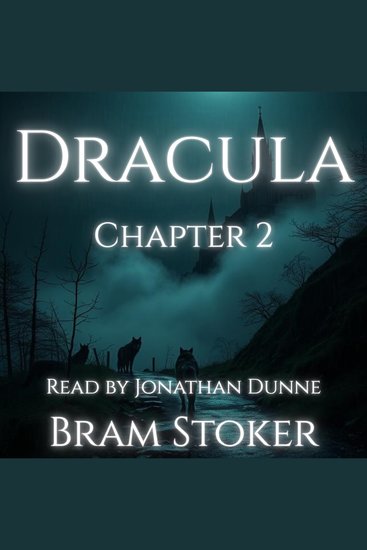
  • Dracula – Chapter 2: Jonathan Harker’s Journal (continued) - A Chapter-by-Chapter Reading of Bram Stoker’s Classic - cover

    Dracula – Chapter 2: Jonathan...

    Bram Stoker

    • 0
    • 0
    • 0
    Still trapped in the remote wilderness of Transylvania, Jonathan Harker continues his journey into the heart of darkness. Welcomed by Count Dracula at his ancient castle, Harker begins to sense that his host’s politeness hides something deeply unnatural. As night falls, the young solicitor’s curiosity turns to unease — and unease to fear. 
    This is Chapter 2 of Bram Stoker’s Dracula, narrated by Amazon bestselling horror author Jonathan Dunne — part of a full chapter-by-chapter audiobook series that brings the classic Gothic nightmare to life with chilling clarity. 
    Experience the dread, mystery, and slow-building terror that made Dracula one of the most enduring horror stories ever told. 
    📖 Public domain text. Original publication: 1897.
    Voir livre
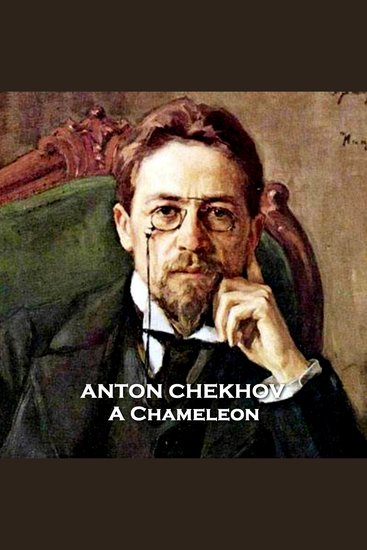
  • A Chameleon - From their pens to your ears genius in every story - cover

    A Chameleon - From their pens to...

    Anton Chekhov

    • 0
    • 0
    • 0
    Anton Pavlovich Chekhov was born on 29th January 1860 in Taganrog, on the south coast of Russia.  
    His family life was difficult; his father was strict and over-bearing but his mother was a passionate story-teller, a subject Chekhov warmed to. As he later said; ‘our talents we got from our father, but our soul from our mother’.  
    At school Chekhov was distinctly average. At 16 his father mis-managed his finances and was declared bankrupt. His family fled to Moscow. Chekhov remained and eked out a living by various means, including writing and selling short sketches to newspapers, to finish his schooling. That completed and with a scholarship to Moscow University obtained he rejoined his family. 
    He was able to help support them by selling satirical sketches and vignettes of Russian lifestyles and gradually obtained further commissions. In 1884, he qualified as a physician and, although it earned him little, he often treated the poor for free, he was fond of saying ‘Medicine is my lawful wife, and literature is my mistress.’ 
    His own health was now an issue as he began to cough up blood, a symptom of tuberculosis.  Despite this his writing success enabled him to move the family into more comfortable accommodation.  
    Chekhov wrote over 500 short stories which included many, many classics including ‘The Kiss’ and ‘The Lady with a Dog’.  His collection ‘At Dusk’ won him the coveted Pushkin Prize when was only 26.  
    He was also a major playwright beginning with the huge success of ‘Ivanov’ in 1887.   
    In 1892 Chekhov bought a country estate north of Moscow. Here his medical skills and money helped the peasants tackle outbreaks of cholera and bouts of famine. He also built three schools, a fire station and a clinic.  It left him with less time for writing but the interactions with real people gained him detailed knowledge about the peasantry and their living conditions for his stories.  
    His most famous work, ‘The Seagull’ was received disastrously at its premiere in St Petersburg. It was later restaged in Moscow to highlight its psychological aspects and was a huge success. It led to ‘Uncle Vanya’, ‘The Three Sisters’ and ‘The Cherry Orchard’.  
    Chekhov suffered a major lung hemorrhage in 1897 while visiting Moscow. A formal diagnosis confirmed tuberculosis and the doctors ordered changes to his lifestyle.  
    Despite a dread of weddings the elusive literary bachelor quietly married the actress Olga Knipper, whom he had met at rehearsals for ‘The Seagull’, on 25th May 1901. 
    By May 1904 with his tuberculosis worsening and death imminent he set off for the German town of Badenweiler writing cheerful, witty letters to his family and assuring them his health was improving.  
    On 15th July 1904 Anton Chekhov died at Badenweiler.  He was 44.
    Voir livre
  • Life as it Happens - cover

    Life as it Happens

    Anton Chekhov

    • 0
    • 0
    • 0
    Anton Pavlovich Chekhov (1860 – 1904) was a Russian playwright, writer, and doctor. Known best for his plays, he had also written a great multitude of short stories for and about people of all ages and all walks of life. Life as it happens is a selection of just such stories and novellas. From sad to ridiculous, to dramatic, to funny, by way of tragic or bitter-sweet - there is something here for everyone. 
      
    This collection includes the following works:The Order of AnnaFeminine HappinessThe Lady with the Little DogChameleonBirthdayTwo ScandalsSweetheartThe DuelLiving MerchandizePrincessBeautiesMaria IvanovnaThe BetThe KissThe StudentForgot!The MaskProposalA JokeA Man in a CaseBoys
    Voir livre