Join us on a literary world trip!
Add this book to bookshelf
Grey
Write a new comment Default profile 50px
Grey
Subscribe to read the full book or read the first pages for free!
All characters reduced
The Complete Novels of Anthony Trollope - cover

The Complete Novels of Anthony Trollope

Anthony Trollope

Publisher: DigiCat

  • 0
  • 0
  • 0

Summary

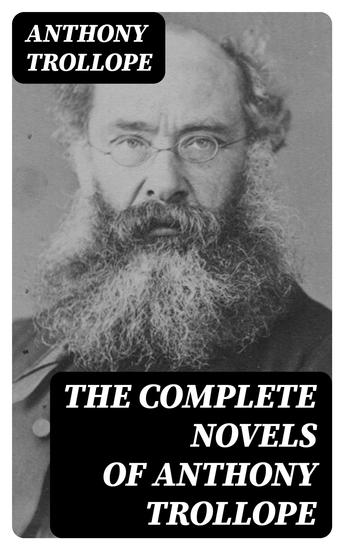
In "The Complete Novels of Anthony Trollope," readers are ushered into a rich tapestry of Victorian life, where intricately woven plots explore the complexities of human relationships and societal norms. Trollope's masterful use of irony and keen social commentary lends a unique literary style, blending realism with a dash of humor. This comprehensive collection showcases his deft characterizations and intricate plots, capturing the nuances of ambition, morality, and the status quo across diverse landscapes—from the political intrigue of the Barsetshire chronicles to explorations of commercial life in London. Anthony Trollope (1815-1882), a prolific English author, found inspiration in his own tumultuous experiences, including a career in the Post Office that granted him a keen insight into the daily lives of ordinary people. This understanding of social structures and human frailties is evident throughout his works, which frequently examine the tension between individual desires and societal expectations. His commitment to the written word, even amidst personal hardships, solidified his status as one of the greatest novelists of his time. This complete collection is an essential read for anyone interested in Victorian literature or the evolution of the novel as a form. Trollope's ability to depict the humor and tragedy of life ensures that his stories remain relevant, making this anthology a treasure trove for students and casual readers alike.
Available since: 11/13/2022.
Print length: 20811 pages.
Other books that might interest you

  • The Invisible Man by HG Wells - Read by Dennis Edward Delaney - cover

    The Invisible Man by HG Wells -...

    H G Wells

    • 0
    • 0
    • 0
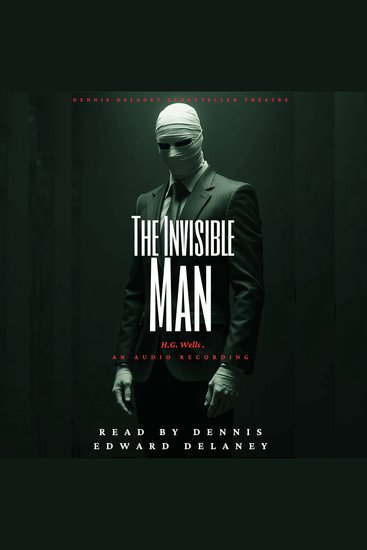
    The Invisible Man – by HG Wells  
    Read by Dennis Edward Delaney 
    In H.G. Wells’ “The Invisible Man,” scientist Griffin discovers a method to become invisible, but he struggles with the social and psychological consequences of his newfound power. Unable to reverse the process and rejected by society, he descends into madness and uses his invisibility for terror and violence. 
    Cover Design | ZacaPublishing.com © 2025 David Earl DeWitt 
    Source Material is in the Public Domain. 
    Run Time: 05:30:34
    Show book
  • Schoolboy's Story The (Unabridged) - cover

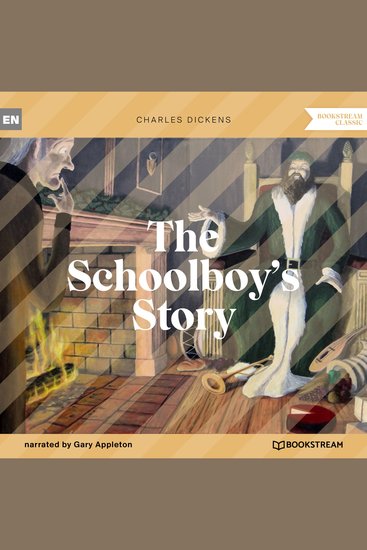
    Schoolboy's Story The (Unabridged)

    Charles Dickens

    • 0
    • 0
    • 0
    The Schoolboy's Story is a short stories by Charles Dickens. Charles John Huffam Dickens (7 February 1812 - 9 June 1870) was an English writer and social critic. He created some of the world's most memorable fictional characters and is generally regarded as the greatest novelist of the Victorian period. During his life, his works enjoyed unprecedented fame, and by the twentieth century his literary genius was broadly acknowledged by critics and scholars. His novels and short stories continue to be widely popular. Born in Portsmouth, England, Dickens was forced to leave school to work in a factory when his father was thrown into debtors' prison.
    Being rather young at present--I am getting on in years, but still I am rather young--I have no particular adventures of my own to fall back upon. It wouldn't much interest anybody here, I suppose, to know what a screw the Reverend is, or what a griffin SHE is, or how they do stick it into parents--particularly hair-cutting, and medical attendance. One of our fellows was charged in his half's account twelve and sixpence for two pills--tolerably profitable at six and threepence a-piece, I should think--and he never took them either, but put them up the sleeve of his jacket.
    Show book
  • Dark Dignum - From their pens to your ears genius in every story - cover

    Dark Dignum - From their pens to...

    Bernard Capes

    • 0
    • 0
    • 0
    Bernard Edward Joseph Capes was born on the 30th August 1854 in London.  He was one of 11 children. 
    His early work was as a journalist and this developed into writing many short stories for the periodicals of the time including Blackwood's, Cassell's, Cornhill Magazine, Illustrated London News, Macmillan's Magazine, Mall Magazine, Pearson's Magazine, The Idler, and The Queen. 
    It took him many years to decide that writing full-time could be a sustainable career path.  His initial success came with ‘The Mill of Silence’.  As well as being published it garnered second prize at a competition sponsored by the Chicago Record.  He exceeded that by winning it the following year with ‘The Lake of Wine’.   
    Capes quickly became both prolific and popular.  As well as his stories and articles for the periodicals he wrote around 40 volumes across novels, poetry, history as well as romance and mystery novels. 
    Bernard Capes died on 2nd November 1918 in the flu epidemic.
    Show book
  • Diary of a Lunatic - From their pens to your ears genius in every story - cover

    Diary of a Lunatic - From their...

    Leo Tolstoy

    • 0
    • 0
    • 0
    Leo Tolstoy was born in 1828 in the Russian province of Tula to a wealthy noble family. As a child, he had private tutors but he showed little interest in any formal education. When he went to the University of Kazan in 1843 to study oriental languages and law, he left without completing his courses.  Life now was relaxed and idle but with some writing also taking place.  Gambling debts forced an abrupt change of path and he joined the army to fight in the Crimean War.  He was commended for his bravery and promoted but was appalled at the brutality and loss of life.  He recorded these and other earlier experiences in his diaries which formed the basis of several of his works. 
    In 1852 ‘Childhood’ was published to immediate success and was followed by ‘Boyhood’ and ‘Youth’. 
    His experience in the army and the horrors he witnessed resulted in ‘The Cossacks’ in 1862 and the trilogy ‘Sevastopol Tales’. After the war he travelled around Europe, visiting London and Paris and meeting such luminaries as Victor Hugo and Charles Darwin.  
    It was now that Tolstoy began his masterpiece, ‘War and Peace’. Published in 1869 it was an epic work that changed literature. He quickly followed this with ‘Anna Karenina’.  
    These successes made Tolstoy rich and helped him accomplish many of his dreams but also brought problems as he grappled with his faith and the lot of the oppressed poor. These revolutionary views became so popular that the authorities now kept him under surveillance.  
    He led a life of asceticism and vegetarianism and put his socialist ideals into practice by establishing numerous schools for the poor and food programmes. He also believed in giving away his wealth, which caused much discord with his wife.  
    His writing continued to bring forth classics such as ‘The Death of Ivan Ilyich’ and many brilliant and incisive short stories such as ‘How Much Land Does A Man Need’.  
    In 1901 Tolstoy was excommunicated from the Church and controversially deselected for the Nobel Prize for Literature. 
    Whilst undertaking a pilgrimage by train in October 1910 with his daughter Aleksandra he caught pneumonia in the nearby town of Astapovo.  Leo Tolstoy died on November 9th, 1910, he was 82.
    Show book
  • Les Misérables: Volume 5: Jean Valjean - Book 3: Mud But the Soul (Unabridged) - cover

    Les Misérables: Volume 5: Jean...

    Victor Hugo

    • 0
    • 0
    • 0
    Victor-Marie Hugo (26 February 1802 - 22 May 1885) was a French poet, novelist, essayist, playwright, and dramatist of the Romantic movement. During a literary career that spanned more than sixty years, he wrote abundantly in an exceptional variety of genres: lyrics, satires, epics, philosophical poems, epigrams, novels, history, critical essays, political speeches, funeral orations, diaries, and letters public and private, as well as dramas in verse and prose.
    BOOK 3: MUD BUT THE SOUL: The transition was an unheard-of one. In the very heart of the city, Jean Valjean had escaped from the city, and, in the twinkling of an eye, in the time required to lift the cover and to replace it, he had passed from broad daylight to complete obscurity, from midday to midnight, from tumult to silence, from the whirlwind of thunders to the stagnation of the tomb, and, by a vicissitude far more tremendous even than that of the Rue Polonceau, from the most extreme peril to the most absolute obscurity.
    Show book
  • Les Misérables: Volume 4: The Idyll in the Rue Plumet and the Epic in the Rue St Denis - Book 10 The 5th of June 1832 (Unabridged) - cover

    Les Misérables: Volume 4: The...

    Victor Hugo

    • 0
    • 0
    • 0
    Victor-Marie Hugo (26 February 1802 - 22 May 1885) was a French poet, novelist, essayist, playwright, and dramatist of the Romantic movement. During a literary career that spanned more than sixty years, he wrote abundantly in an exceptional variety of genres: lyrics, satires, epics, philosophical poems, epigrams, novels, history, critical essays, political speeches, funeral orations, diaries, and letters public and private, as well as dramas in verse and prose.
    BOOK 10. THE 5TH OF JUNE, 1832: Of what is revolt composed? Of nothing and of everything. Of an electricity disengaged, little by little, of a flame suddenly darting forth, of a wandering force, of a passing breath. This breath encounters heads which speak, brains which dream, souls which suffer, passions which burn, wretchedness which howls, and bears them away.
    Show book