Rejoignez-nous pour un voyage dans le monde des livres!
Ajouter ce livre à l'électronique
Grey
Ecrivez un nouveau commentaire Default profile 50px
Grey
Abonnez-vous pour lire le livre complet ou lisez les premières pages gratuitement!
All characters reduced
The American Senator - cover

The American Senator

Anthony Trollope

Maison d'édition: DigiCat

  • 0
  • 0
  • 0

Synopsis

In "The American Senator," Anthony Trollope masterfully weaves a narrative that delves into the complexities of political life and social mores in both England and America. Written in Trollope's characteristic comic style, the novel juxtaposes British aristocracy with the brashness of American ideals, particularly through the interactions between its central characters. The plot follows the eponymous senator, a representation of American democracy, as he navigates the British social landscape, prompting a critical examination of cultural attitudes and the contrast of democratic principles against traditional hierarchies. This work serves as both a satirical commentary and a serious exploration of the period's political atmosphere, providing a nuanced understanding of Victorian society's perceptions of America. Trollope, a prolific Victorian novelist with a keen eye for social dynamics, was deeply engaged with the political landscape of his time. His own experiences in the Church of England and the Post Office, combined with his travels throughout America, informed his understanding of the differing societal structures. Such insights fueled his desire to explore the intersections of love, politics, and class distinctions, making "The American Senator" a reflective critique of the ideals and realities of both nations. Readers are encouraged to dive into "The American Senator" for its rich character development and intricate societal commentary. Its timeless themes of ambition, morality, and cultural disparity remain relevant, ensuring that Trollope's exploration fosters both introspection and intellectual engagement. This novel not only entertains but challenges readers to consider the broader implications of governance and human interaction.
Disponible depuis: 28/05/2022.
Longueur d'impression: 488 pages.


D'autres livres qui pourraient vous intéresser

  • The Taming of the Shrew - cover

    The Taming of the Shrew

    William Shakespeare

    • 0
    • 1
    • 0
    Shakespeare’s controversial comedy about a man’s quest to break the will of his headstrong wife.Whether this tale is motivated by misogyny, or is simply a satirical critique of men’s treatment of women is a matter up for much debate. Regardless of its potentially polarizing intentions, The Taming of the Shrew is one of William Shakespeare’s most intriguing comedies. Framed as a play within a play, it tells the story of the assertive Katherina’s marriage to Petruchio, who resorts to all sorts of psychological abuse in order to force her to be a traditional obedient wife. The inspiration for the Broadway play Kiss Me, Kate, The Taming of the Shrew is a fascinating glimpse into the sexual politics of the Elizabethan era.
    Voir livre
  • Top 10 Short Stories The - European 19th - The top ten short stories written in the 19th Century by European authors - cover

    Top 10 Short Stories The -...

    Victor Hugo, Robert Louis...

    • 0
    • 0
    • 0
    The Top 10 – The European 19th Century – an Introduction 
     
    A century of change.  Some catastrophic, some fantastical.  Europe reaches out its national tentacles in a global grab for Empire.  At home, revolutions erupt and decay.  Literature gains a widespread audience through advancing technology.  Here, in this volume, authors absorb and then reveal their wondrous stories. 
     
    Short stories have always been a sort of instant access into an author’s brain, their soul and heart.  A few pages can lift our lives into locations, people and experiences with a sweep of landscape, narration, feelings and emotions that is difficult to achieve elsewhere. 
     
    In this series we try to offer up tried and trusted ‘Top Tens’ across many different themes and authors. But any anthology will immediately throw up the questions – Why that story? Why that author?  
     
    The theme itself will form the boundaries for our stories which range from well-known classics, newly told, to stories that modern times have overlooked but perfectly exemplify the theme.  Throughout the volume our authors whether of instant recognition or new to you are all leviathans of literature. 
     
    1 - Top 10 - The European 19th Century 
    2 - The Body Snatcher by Robert Louis Stevenson 
    3 - The Lady with the Dog by Anton Chekhov 
    4 - The Cloak by Nikolai Gogol also known as 'The Overcoat' 
    5 - The Necklace by Guy de Maupassant 
    6 - The Story of B24 by Arthur Conan Doyle 
    7 - The District Doctor by Ivan Turgenev 
    8 - A Fight with a Cannon by Victor Hugo 
    9 - A Legend of Old Egypt by Boleslaw Prus 
    10 - A Passion in the Desert by Honoré de Balzac 
    11 - The Bundle of Letters by Moritz Jokai 
     
    1 - Top 10 - The European 19th Century 
    2 - The Body Snatcher by Robert Louis Stevenson 
    3 - The Lady with the Dog by Anton Chekhov 
    4 - The Cloak by Nikolai Gogol also known as 'The Overcoat' 
    5 - The Necklace by Guy de Maupassant 
    6 - The Story of B24 by Arthur Conan Doyle 
    7 - The District Doctor by Ivan Turgenev 
    8 - A Fight with a Cannon by Victor Hugo 
    9 - A Legend of Old Egypt by Boleslaw Prus 
    10 - A Passion in the Desert by Honoré de Balzac 
    11 - The Bundle of Letters by Moritz Jokai
    Voir livre
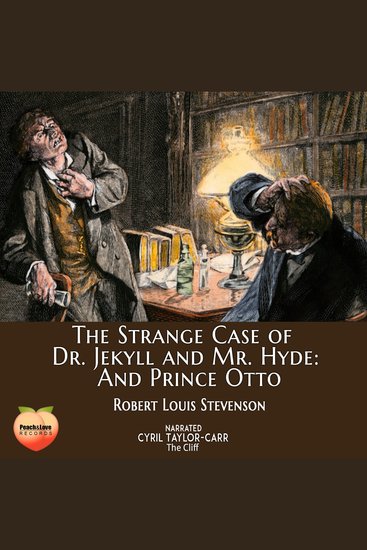
  • The Strange Case of Dr Jekyll and Mr Hyde and Prince Otto - cover

    The Strange Case of Dr Jekyll...

    Robert Louis Stevenson

    • 0
    • 0
    • 0
    On their weekly walk, an eminently sensible, trustworthy lawyer named Mr. Utterson listens as his friend Enfield tells a gruesome tale of assault. The tale describes a sinister figure named Mr. Hyde who tramples a young girl, disappears into a door on the street, and reemerges to pay off her relatives with a check signed by a respectable gentleman. Since both Utterson and Enfield disapprove of gossip, they agree to speak no further of the matter. It happens, however, that one of Utterson’s clients and close friends, Dr. Jekyll, has written a will transferring all of his property to this same Mr. Hyde. Soon, Utterson begins having dreams in which a faceless figure stalks through a nightmarish version of London.Puzzled, the lawyer visits Jekyll and their mutual friend Dr. Lanyon to try to learn more. Lanyon reports that he no longer sees much of Jekyll since they had a dispute over the course of Jekyll’s research, which Lanyon calls “unscientific balderdash.” Curious, Utterson stakes out a building that Hyde visits—which, it turns out, is a laboratory attached to the back of Jekyll’s home. Encountering Hyde, Utterson is amazed by how undefinably ugly the man seems as if deformed, though Utterson cannot say exactly how. Much to Utterson’s surprise, Hyde willingly offers Utterson his address. Jekyll tells Utterson not to concern himself with the matter of Hyde.A year passes uneventfully. Then, one night, a servant girl witnesses Hyde brutally beat to death an old man named Sir Danvers Carew, a member of Parliament and a client of Utterson. The police contact Utterson, and Utterson suspects Hyde as the murderer. He leads the officers to Hyde’s apartment, feeling a sense of foreboding amid the eerie weather—the morning is dark and wreathed in fog. When they arrive at the apartment, the murderer has vanished, and police searches prove futile.
    Voir livre
  • Astral Projection - The Forbidden Art - cover

    Astral Projection - The...

    Madam H. P. Blavatsky

    • 0
    • 0
    • 0
    "You can be woke without waking to the news." Madam Blavatsky 
     
    Astral projection is a term used in esotericism to describe an intentional out-of-body experience that assumes the existence of a soul called an "astral body" that is separate from the physical body and capable of traveling outside it throughout the universe. Here is the definitive classical Theosophical audiobook on a subject which has enthralled humankind since near the beginning of time. The author, Madam Helena Blavatsky was a Russian philosopher and author who co-founded the Theosophical Society in 1875. She gained an international following as the leading theoretician of this stirring faith. Here is everything you need to know about the ability of a person's spirit to travel to distant places - including a step-by-step guide of how to do it. Geoffrey Giuliano is the author of some thirty-two international best-selling biographies on the Beatles and other iconic rock groups of the 1960s. He is also a well know Hollywood screenwriter, the voice on over five hundred popular audiobooks as well as an in-demand character actor in some twenty-five classic films.
    Voir livre
  • The Battle of Life - The Lost Christmas Tale - cover

    The Battle of Life - The Lost...

    Charles Dickens

    • 0
    • 0
    • 0
    The Battle of Life is an 1846 novel by Charles Dickens. It is the fourth of his five "Christmas Books", coming after The Cricket on the Hearth and followed by The Haunted Man and the Ghost's Bargain. 
     
    The setting is an English village that stands on the site of an historic battle. Some characters refer to the battle as a metaphor for the struggles of life, hence the title. 
     
    Battle is the only one of the five Christmas Books that has no supernatural or explicitly religious elements. The story bears some resemblance to The Cricket on the Hearth in two respects: it has a non-urban setting, and it is resolved with a romantic twist. It is even less of a social novel than is Cricket. As is typical with Dickens, the ending is a happy one. 
     
    It is one of Dickens's lesser-known works and has never attained any high level of popularity – a trait it shares with The Haunted Man, in contrast to the other of his Christmas Books
    Voir livre
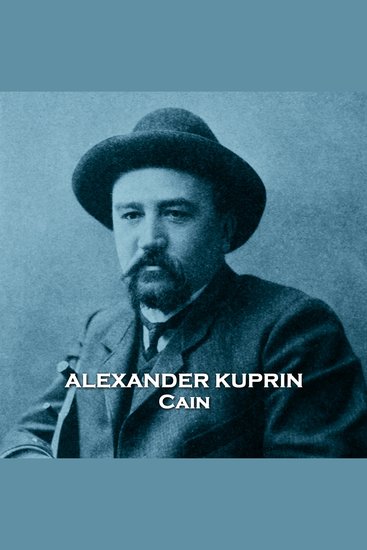
  • Cain - From their pens to your ears genius in every story - cover

    Cain - From their pens to your...

    Alexander Kuprin

    • 0
    • 0
    • 0
    Alexander Kuprin was born in Narovchat, Penza in Russia on 7th September 1870. 
    At 3 his Father died and he and mother moved to Moscow. By 10 he was enrolled at the Second Moscow Military High School and there his interest in literature began. The Alexander Military Academy followed and two years later he was a sub-lieutenant and posted to an Infantry Regiment for a further four years. 
    Despite his duties he was a now a keen writer and published his first short story at this time. His military duties also garnered him experiences for his breakthrough work ‘The Duel’.  Leaving the military he left for Kiev to work for local newspapers.  He continued to publish both stories and novels and by 1901 he was in St Petersburg becoming part of a group that included Chekhov, Ivan Bunin, Maxim Gorky and Leonid Andreyev.  
    In the years that followed further controversial works and acclaim followed.  His comments on the regime meant he was also put under secret police surveillance.   
    As World War I erupted, Kuprin opened a military hospital but was then given command of an infantry company in Finland. He was soon discharged on grounds of ill health.  
    The October Revolution saw him praise Lenin, but he warned that the Bolsheviks threatened Russian culture and might cause further widespread suffering to the peasants.  As Civil War raged he took his family to Helsinki and then on to Paris. 
    Exile saw his talents decline further and his succumbing to alcoholism. He became lonely and withdrawn. The family's poverty increased his malaise.   
    In May 1937, the Kuprin’s returned to Moscow.  He now saw his work published but wrote almost nothing new.  In 1938 his health rapidly deteriorated.  Already suffering from a kidney problems and sclerosis, he had now developed cancer of the oesophagus.  
    Alexander Kuprin died on 25th August 1938.
    Voir livre