Unisciti a noi in un viaggio nel mondo dei libri!
Aggiungi questo libro allo scaffale
Grey
Scrivi un nuovo commento Default profile 50px
Grey
Iscriviti per leggere l'intero libro o leggi le prime pagine gratuitamente!
All characters reduced
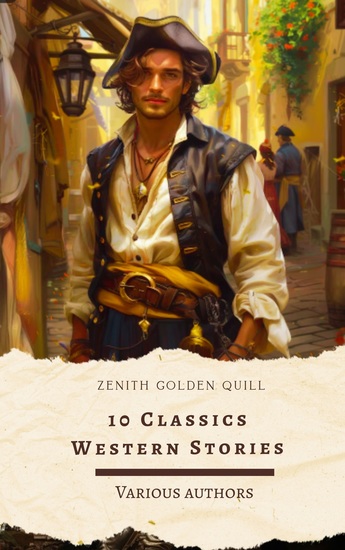
10 Classics Western Stories - Timeless Tales of Gunslingers Outlaws and Frontier Justice - cover

10 Classics Western Stories - Timeless Tales of Gunslingers Outlaws and Frontier Justice

Ambrose Bierce, Samuel Merwin, James Fenimore Cooper, Andy Adams, Marah Ellis Ryan, B. M. Bower, Frederic Balch, Zenith Golden Quill

Casa editrice: Zenith Golden Quill

  • 0
  • 0
  • 0

Sinossi

🤠 Saddle up for ten unforgettable tales from the Wild West!

10 Classics Western Stories brings together a powerful collection of stories that define the spirit of frontier life. From dusty shootouts and daring escapes to rugged landscapes and silent codes of honor, this anthology captures the raw drama, grit, and romance of the American West 🌵🐎.

Featuring beloved authors such as Zane Grey, Owen Wister, Bret Harte, and others, this collection includes fully formatted texts, historical commentary, and original illustrations—perfect for fans of Westerns, Americana, and classic action fiction.

"A roundup of Western storytelling at its best." — Western Review Weekly
"If you love the frontier spirit, this collection delivers." — True Grit Reader's Club

📘 Click Buy Now and ride into a literary sunset filled with action, justice, and unforgettable characters.
Disponibile da: 22/05/2025.
Lunghezza di stampa: 3161 pagine.

Altri libri che potrebbero interessarti

  • Here and Hereafter - Stories on Either Side of Death - cover

    Here and Hereafter - Stories on...

    Barry Pain

    • 0
    • 0
    • 0
    Barry Pain in his other mode: a linen-draper who cannot stop dreaming true, the dead who come back on quiet domestic errands, and jokes that turn cold about two-thirds through. Pain made his living being funny in Punch, which is exactly why these work — the horror arrives in the voice of a man telling you something mildly interesting at a club.
    Mostra libro
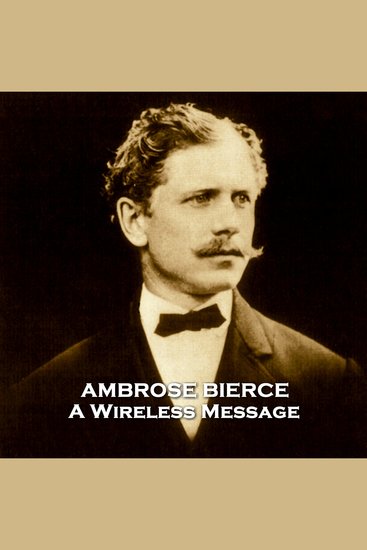
  • A Wireless Message - From their pens to your ears genius in every story - cover

    A Wireless Message - From their...

    Ambrose Bierce

    • 0
    • 0
    • 0
    Ambrose Gwinnett Bierce was born on 24th June 1842 at Horse Cave Creek in Meigs County, Ohio. His parents were poor but they introduced him to literature at an early age, instilling in him a deep appreciation of books, the written word and the elegance of language.  
    Growing up in Koscuisko County, Indiana poverty and religion were defining features of his childhood, and he would later describe his parents as “unwashed savages” and fanatically religious, showing him little affection but always quick to punish. He came to resent religion, and his introduction to literature appears to be their only positive effect. 
    At age 15 Bierce left home to become a printer’s devil, mixing ink and fetching type at The Northern Indian, a small Ohio paper. Falsely accused of theft he returned to his farm and spent time sending out work in the hopes of being published. 
    His Uncle Lucius advised he be sent to the Kentucky Military Institute. A year later he was commissioned as an Officer.  As the Civil War started Bierce enlisted in the 9th Indiana Infantry Regiment.  
    In April 1862 Bierce fought at the Battle of Shiloh, an experience which, though terrifying, became the source of several short stories. Two years later he sustained a serious head wound and was off duty for several months. He was discharged in early 1865.  
    A later expedition to inspect military outposts across the Great Plains took him all the way to San Francisco. He remained there to become involved with publishing and editing and to marry, Mary Ellen on Christmas Day 1871.  They had a child, Day, the following year.  
    In 1872 the family moved to England for 3 years where he wrote for Fun magazine. His son, Leigh, was born, and first book, ‘The Fiend’s Delight’, was published.  
    They returned to San Francisco and to work for a number of papers where he gained admiration for his crime reporting. In 1887 he began a column at the William Randolph Hearst’s San Francisco Examiner.  
    Bierce’s marriage fell apart when he discovered compromising letters to his wife from a secret admirer. The following year, 1889 his son Day committed suicide, depressed by romantic rejection. 
    In 1891 Bierce wrote and published the collection of 26 short stories which included ‘An Occurrence at Owl Creek Bridge’.  Success and further works including poetry followed.  
    Bierce with Hearst’s resources helped uncover a financial plot by a railroad to turn 130 million dollars of loans into a handout. Confronted by the railroad and asked to name his price Bierce answered “my price is $130 million dollars. If, when you are ready to pay, I happen to be out of town, you may hand it over to my friend, the Treasurer of the United States”.  
    He now began his first foray as a fabulist, publishing ‘Fantastic Fables’ in 1899.  But tragedy again struck two years later when his second son Leigh died of pneumonia relating to his alcoholism.  
    He continued to write short stories and poetry and also published ‘The Devil’s Dictionary’.  
    At the age of 71, in 1913 Bierce departed from Washington, D.C., for a tour of the battlefields where he had fought during the civil war. At the city of Chihuahua he wrote his last known communication, a letter to a friend. It’s closing words were “as to me, I leave here tomorrow for an unknown destination,” Ambrose Bierce then vanished without trace.
    Mostra libro

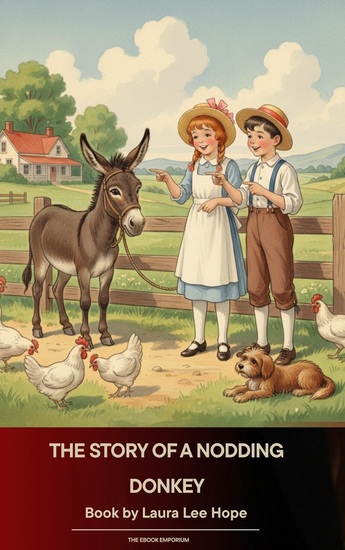
  • The Story of a Nodding Donkey - cover

    The Story of a Nodding Donkey

    Laura Lee Hope

    • 0
    • 0
    • 0
    "When the North Wind blows and the toy shop goes quiet, the real adventures begin!"
    
    Meet the Nodding Donkey—a sturdy wooden toy with a very special talent for bowing his head and shaking his ears. In The Story of a Nodding Donkey, we follow our long-eared hero from his humble beginnings on a toy-maker's workbench to the bustling shelves of a great department store. But the Donkey isn't content to just sit still; he longs for a home and a child to love him. Along the way, he meets other "living" toys—like the China Cat and the Plush Dog—and learns about the courage it takes to face the world outside the shop window. This heartwarming story captures the magic of childhood imagination and the secret bonds between children and their playthings.
    
    The Secret World of Toys: Part of the beloved Make-Believe Stories, this book relies on the charming premise that toys have their own thoughts, feelings, and social lives when humans aren't looking. It teaches young readers empathy and respect for their belongings, framing the Donkey's journey as a quest for belonging and purpose.
    
    A Nostalgic Journey: Written in 1921, the story provides a beautiful look at the toys of a bygone era. Before plastic and electronics, there were hand-painted wooden figures, glass eyes, and velvet ears. This book serves as a gentle reminder of the tactile, enduring nature of classic play.
    
    Life Lessons and Gentle Thrills: The Donkey faces many "perils," from a mischievous dog to the fear of being forgotten on a high shelf. Through his adventures, he displays a quiet resilience and a friendly spirit that makes him a perfect companion for bedtime reading. His "nodding" isn't just a mechanical trick; it's his way of saying "yes" to life's adventures.
    
    Discover the secret life of your favorite toys. Purchase "The Story of a Nodding Donkey" today.
    Mostra libro
  • The Final Problem - cover

    The Final Problem

    Arthur Conan Doyle

    • 0
    • 0
    • 0
    The Final Problem is a short story by Sir Arthur Conan Doyle featuring his detective character Sherlock Holmes. It was first published in Strand Magazine under the title "The Adventure of the Final Problem" in December 1893. It appears in book form as part of the collection The Memoirs of Sherlock Holmes. This story, set in 1891, introduced Holmes's archenemy, the criminal mastermind Professor James Moriarty. Conan Doyle later ranked "The Final Problem" fourth on his personal list of the twelve best Holmes stories.Holmes arrives at Dr. John Watson's residence one evening in a somewhat agitated state and with grazed and bleeding knuckles. Much to Watson's surprise, he had apparently escaped three separate murder attempts that day after a visit from Professor Moriarty, who warned Holmes to withdraw from his pursuit of justice against him to avoid any regrettable outcome. First, just as he was turning a street corner, a cab suddenly rushed towards him and Holmes just managed to leap out of the way in time. Second, while Holmes was walking along the street, a brick fell from the roof of a house, just missing the detective. He then called the police to search the whole area but could not prove that it was anything other than an accident. Finally, on his way to Watson's house, he was attacked by a thug armed with a cosh. Holmes managed to overcome his assailant and handed him to the police but admitted that there was virtually no hope of proving that the man was in the employ of the criminal mastermind.Famous works of the author Arthur Conan Doyle: A Study in Scarlet, The Sign of the Four, The Adventures of Sherlock Holmes, The Memoirs of Sherlock Holmes, The Hound of the Baskervilles, The Return of Sherlock Holmes, The Valley of Fear, His Last Bow, The Case-Book of Sherlock Holmes, Stories of Sherlock Holmes, The Lost World.
    Mostra libro
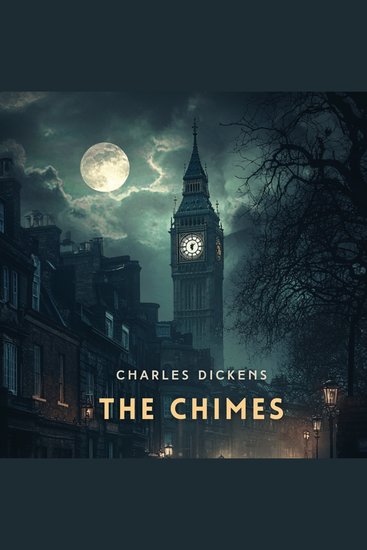
  • The Chimes - A Goblin Story - cover

    The Chimes - A Goblin Story

    Charles Dickens

    • 0
    • 0
    • 0
    Step into the world of "The Chimes: A Goblin Story" by Charles Dickens, a mesmerizing tale where the mystical meets the mundane. Follow Trotty Veck, a humble and downtrodden ticket-porter, as he confronts the chimes and goblins on New Year's Eve. These spectral beings reveal harsh truths and hidden hope, challenging Trotty's despair and rekindling his faith in humanity. A heartfelt exploration of redemption and social justice, this Dickensian gem resonates with timeless wisdom.
    Mostra libro
  • A Happy Ending - cover

    A Happy Ending

    Anton Chekhov

    • 0
    • 0
    • 0
    Lyubov Grigoryevna, a matchmaker, visits Stytchkin, the head guard, to discuss his desire to find a wife. Stytchkin is a practical and sober man who values inner qualities over external appearance in a woman.
    He wants a wife who respects him and appreciates the happiness he provides. Stytchkin does not want a wealthy bride, but also cannot marry a poor girl due to the cost of living and potential children.
    The matchmaker offers Stytchkin options of French and Greek brides, but he declines. Stytchkin is surprised by the matchmaker's fee of 25 rubles and considers it expensive.
    The matchmaker explains that earnings from matchmaking have decreased over time. Stytchkin compliments the matchmaker, suggesting she could find a practical husband for herself.
    Stytchkin reveals his salary and additional earnings from catching fare evaders. Stytchkin expresses his desire for a middle-aged wife with qualities similar to the matchmaker.
    The matchmaker giggles and eventually accepts Stytchkin's proposal. Stytchkin explains his expectations for his future wife, emphasizing his strict and respectable nature.
    Overall, the story portrays Stytchkin's search for a wife and his preferences for a practical and respectful partner. The matchmaker plays a role in facilitating this process, and Stytchkin ultimately proposes to her.
    Mostra libro