Junte-se a nós em uma viagem ao mundo dos livros!
Adicionar este livro à prateleira
Grey
Deixe um novo comentário Default profile 50px
Grey
Assine para ler o livro completo ou leia as primeiras páginas de graça!
All characters reduced
Personal Narrative of Travels to the Equinoctial Regions of America: 1799-1804 - Expedition in Central & South America - cover
LER

Personal Narrative of Travels to the Equinoctial Regions of America: 1799-1804 - Expedition in Central & South America

Alexander von Humboldt, Aimé Bonpland

Tradutor Aimé Bonpland

Editora: DigiCat

  • 0
  • 0
  • 0

Sinopse

In 'Personal Narrative of Travels to the Equinoctial Regions of America: 1799-1804,' Alexander von Humboldt and Aimé Bonpland offer a vivid tapestry of exploration, scientific curiosity, and cultural encounters through their meticulous documentation of the New World. The anthology navigates through the lush landscapes and diverse ecosystems of South America, articulated with profound insight into the natural world and the intricate interconnections between human cultures and their environments. This work, embedded in the Enlightenment's spirit of inquiry and Romantic era sensibilities, stands as a testament to the unyielding human desire to comprehend the vastness and complex beauty of the Earth. Humboldt and Bonpland, renowned polymaths of their time, transcended traditional boundaries of 18th and 19th-century scientific exploration and travel writing. They celebrated a holistic approach to understanding geography, botany, and cultural diversity, paving the way for modern ecology and ethnography. Their prolific contributions to natural sciences, combined with their respect for Indigenous knowledge, resonate with historical and cultural movements that seek to bridge scientific inquiry with human narratives. This collection curates their expansive observations, enriched by their pioneering methodologies and collaborative ethos that redefine the era's exploration and documentation. This anthology is an invaluable resource for readers eager to embrace the kaleidoscope of perspectives offered by Humboldt and Bonpland's experiences. It invites readers into a multifaceted exploration of nature and cultures, seamlessly blending empirical observations with poetic reflections. The volume's pages encourage a deeper appreciation for the interconnectedness of life and the enduring dialogue between humanity and the natural world. Ideal for scholars, students, and curious readers alike, this collection promises an enlightening journey through its rich tapestry of discovery and reflection.
Disponível desde: 22/11/2023.
Comprimento de impressão: 1320 páginas.

Outros livros que poderiam interessá-lo

  • The Hungarian Who Walked to Heaven - The Remarkable Story of Csoma de Kőrös - cover

    The Hungarian Who Walked to...

    Edward Fox

    • 0
    • 0
    • 0
    This is a delightful short biography of an eccentric Hungarian scholar who became one of the fathers of Western studies of the Tibetan language and culture. Educated at an austere Calvinist school until aged 31 where he demonstrated exceptional skills as a linguist, Csoma de Korös (1784-1842) finally set out alone on a pilgrimage to the East. His personal mission was to discover the roots of the Hungarian people, whom he and others of the time theorized to be descended from Attila the Hun. 
     
    Due to a Chinese decree restricting foreign entry to Tibet he was sadly never to reach Yarkand in the Western plains of China, where he hoped to find linguistic proof of the Central Asian origins of the Hungarian race. However on his way, via many adventures, misfortunes and disguises, he expanded his repertoire to as many as 14 languages and became one of the first Europeans to enter Ladakh, Tibetan in language and culture, but politically part of India. Supported by the British vet and superintendent of the East India Company's Stud, William Moorcroft, Csoma was encouraged to use his extraordinary facility for languages to learn Tibetan, (largely unknown in the West), and produce the first English-Tibetan dictionary. He studied with Lama Sangye Phuntsog in a remote monastery in Zanskar. For 16 months the two men studied the Tibetan language and its vast religious canon in austere freezing conditions in a tiny nine-foot square cell. The fruits of this arduous but pioneering effort, the first reliable grammar and dictionary of Tibetan, was finally published in two volumes in 1834 - using a Tibetan font that had to be specially made. Csoma spent the last years of his life working for the Asiatic Society of Bengal in Calcutta, mastering Marathi, Bengali and Sanskrit, before dying of malaria on a final courageous attempt to travel across Tibet to Western China. Csoma’s life-story and achievements gradually became known in Hungary, and he is now a revered national figure. A fascinating little book.
    Ver livro
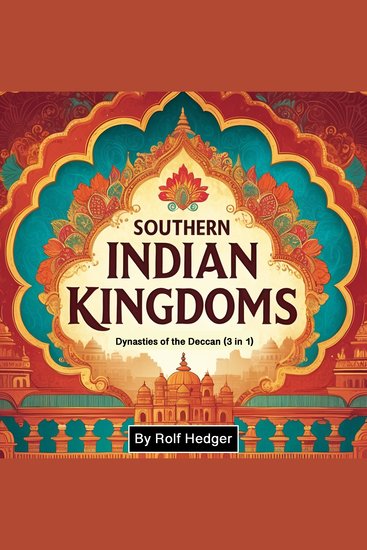
  • Southern Indian Kingdoms - Dynasties of the Deccan (3 in 1) - cover

    Southern Indian Kingdoms -...

    Rolf Hedger

    • 0
    • 0
    • 0
    The southern Indian kingdoms played a crucial role in shaping the history and culture of the subcontinent. Among them, the Chera, Chola, and Pandya dynasties stood out for their military power, economic influence, and contributions to art and literature.  
    The Chera Dynasty, known for its control over important trade routes, established strong maritime links with Rome, China, and Southeast Asia.  
    The Chola Empire, one of the most formidable powers of medieval India, expanded its influence beyond the Indian subcontinent, boasting a powerful navy and an advanced administrative system.  
    The Pandya Empire, with its deep roots in Tamil culture, was known for its patronage of Sangam literature and its strategic dominance over key trade centers. These dynasties not only shaped the political landscape of southern India but also contributed to its rich artistic, architectural, and literary heritage. Through their extensive trade networks and cultural achievements, the Cheras, Cholas, and Pandyas left an enduring legacy that continues to influence South Indian traditions today.
    Ver livro
  • The Virgin Islands - Exploring Adventure Wellness And Natural Wonders In The Virgin Islands - cover

    The Virgin Islands - Exploring...

    Owen Jones

    • 0
    • 0
    • 0
    Welcome to The Virgin Islands - Exploring Adventure, Wellness, and Natural Wonders in the Virgin Islands your ultimate guide to experiencing the breathtaking beauty and diverse offerings of this Caribbean paradise.  
    Nestled in the turquoise waters of the Caribbean Sea, the Virgin Islands beckon with their pristine beaches, lush landscapes, and rich cultural heritage. Whether you`re an adrenaline junkie seeking thrilling adventures, a wellness enthusiast in search of relaxation and rejuvenation, or a nature lover eager to explore eco-tourism wonders, this book is your passport to an unforgettable journey. 
    Discovering the Virgin Islands: The Virgin Islands, both the U.S. and British territories, offer a tapestry of experiences that cater to every traveller`s desires. From the vibrant streets of St. Thomas to the tranquil shores of St. John, each island has its own unique charm and allure. In this book, we will embark on a comprehensive exploration of the Virgin Islands, uncovering hidden gems, must-visit attractions, and insider tips to make the most of your stay. 
    Adventure Awaits: For the adventure seekers, the Virgin Islands are a playground of exhilarating activities. Zip-lining through lush forests in St. Thomas, kayaking amidst mangrove forests in St. John, and scuba diving in crystal-clear waters are just a few of the adrenaline-pumping experiences that await. Whether you`re soaring through the treetops or diving into the depths of the Caribbean Sea, each adventure promises a thrill unlike any other.
    Ver livro
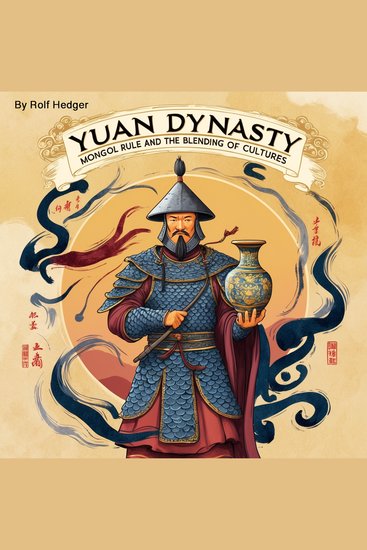
  • Yuan Dynasty - Mongol Rule and the Blending of Cultures - cover

    Yuan Dynasty - Mongol Rule and...

    Rolf Hedger

    • 0
    • 0
    • 0
    The Yuan Dynasty emerged from the ambitions of Kublai Khan, the grandson of Genghis Khan, who sought to consolidate Mongol rule over China. Before the establishment of the Yuan, the Mongols had waged a relentless military campaign against the Song Dynasty, the ruling power in southern China. After decades of conflict, Kublai Khan successfully defeated the Song in 1279, marking the first time in history that all of China was under foreign rule. His ascension to the throne not only signified the dominance of the Mongols but also introduced a new era of governance that blended Mongol traditions with Chinese administration. 
    Kublai Khan declared himself emperor in 1271 and named his dynasty "Yuan," meaning "Great Origin," a term rooted in Chinese philosophy and symbolic of the vast scope of Mongol rule. Unlike his predecessors, who maintained a nomadic lifestyle, Kublai recognized the necessity of adopting Chinese customs to effectively govern a vast and diverse population. He moved the capital from Karakorum to Dadu, present-day Beijing, reinforcing his commitment to ruling as a Chinese emperor while still maintaining Mongol authority. His reign sought to balance the military-driven expansion of his ancestors with the complexities of ruling a settled, bureaucratic society. 
    Despite his efforts to integrate into Chinese political traditions, Kublai faced challenges in legitimizing his rule. Many Han Chinese viewed the Mongols as outsiders and resisted their authority. To solidify his claim, Kublai adopted Confucian principles and retained elements of the Chinese imperial structure, appointing Chinese officials in lower government positions while keeping key positions reserved for Mongols and trusted foreign allies. This approach ensured Mongol dominance while utilizing the administrative expertise of the Chinese.
    Ver livro
  • Edo Period - Tokugawa Rule Isolation and the Samurai Code - cover

    Edo Period - Tokugawa Rule...

    Rolf Hedger

    • 0
    • 0
    • 0
    The Edo period in Japan began with the dramatic rise of Tokugawa Ieyasu and the establishment of the Tokugawa Shogunate, which would bring over two centuries of relative peace and stability to the country. This transformation was not immediate but was set into motion by the pivotal Battle of Sekigahara in 1600. Ieyasu, a powerful daimyo and skilled strategist, emerged victorious in this decisive conflict, defeating rival factions and securing his dominance over the fractured Japanese landscape. This battle marked the end of the Warring States period, a time of nearly constant civil war, and laid the foundation for a new era of centralized feudal rule. 
    In 1603, Ieyasu was granted the title of shogun by the emperor, officially establishing the Tokugawa Shogunate. Although the emperor remained a symbolic figurehead, true political power rested with the shogun. Ieyasu’s government was based in Edo, a small fishing village that quickly developed into a sprawling political and economic center—modern-day Tokyo. From here, the Tokugawa clan implemented a system of governance that emphasized strict control, social hierarchy, and regional oversight. The shogunate devised a complex administrative structure that allowed it to maintain authority over hundreds of semi-autonomous domains ruled by daimyo, while ensuring loyalty through a combination of military strength, economic policy, and social regulation. 
    One of the key strategies used by Tokugawa Ieyasu to solidify his power was the creation of the han system. Under this arrangement, each daimyo governed a specific territory but was subject to strict oversight from the shogunate. The policy of sankin-kotai, or alternate attendance, required daimyo to spend alternating years in Edo, effectively draining their resources and keeping them under close surveillance. Their families were often kept in Edo as virtual hostages, ensuring obedience and discouraging rebellion.
    Ver livro
  • History of Machu Picchu - The Greatest Symbol of the Inca Empire - cover

    History of Machu Picchu - The...

    Kelly Mass

    • 0
    • 0
    • 0
    Machu Picchu, one of the most iconic symbols of Inca civilization, is a 15th-century fortress perched high on a mountain crest in southern Peru's Eastern Cordillera. Sitting at an altitude of 2,430 meters (7,970 feet), it is located 80 kilometers (50 miles) northwest of Cusco, within the Machupicchu District of Urubamba Province. The fortress overlooks the Sacred Valley, and the Urubamba River winds through the valley below, cutting through the Cordillera and forming a tropical mountain canyon. This stunning geographical setting has made Machu Picchu one of the most visited and revered archaeological sites in the world. 
    Unlike the Mayans, the Incas had no written language, and thus, no records of the site existed during its operation. The first Europeans to visit Machu Picchu did so only in the 19th century, and as a result, much of its history remained shrouded in mystery. Modern archaeologists, relying on tangible evidence such as graves and structural remains, have attributed names and proposed functions for the buildings, but much of the site’s exact purpose remains speculative. 
    Most contemporary archaeologists believe that Machu Picchu was built as a royal estate for the Inca emperor Pachacuti, who ruled from 1438 to 1472. Constructed in 1450, the site functioned as a private residence for the emperor and his court. Over time, Machu Picchu became the most well-known image of Inca civilization and is often referred to as the "Lost City of the Incas." However, the estate was abandoned in the early 16th century, following the Spanish conquest of the Inca Empire. Recent radiocarbon dating indicates that the site was occupied from around 1420 to 1532.
    Ver livro