Unisciti a noi in un viaggio nel mondo dei libri!
Aggiungi questo libro allo scaffale
Grey
Scrivi un nuovo commento Default profile 50px
Grey
Iscriviti per leggere l'intero libro o leggi le prime pagine gratuitamente!
All characters reduced
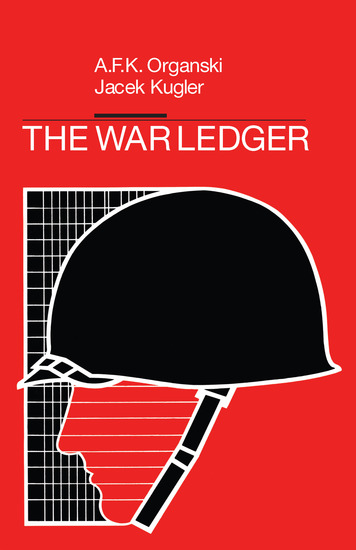
The War Ledger - cover

The War Ledger

A.F.K. Organski, Jacek Kugler

Casa editrice: The University of Chicago Press

  • 0
  • 0
  • 0

Sinossi

The War Ledger provides fresh, sophisticated answers to fundamental questions about major modern wars: Why do major wars begin? What accounts for victory or defeat in war? How do victory and defeat influence the recovery of the combatants? Are the rules governing conflict behavior between nations the same since the advent of the nuclear era? The authors find such well-known theories as the balance of power and collective security systems inadequate to explain how conflict erupts in the international system. Their rigorous empirical analysis proves that the power-transition theory, hinging on economic, social, and political growth, is more accurate; it is the differential rate of growth of the two most powerful nations in the system—the dominant nation and the challenger—that destabilizes all members and precipitates world wars. Predictions of who will win or lose a war, the authors find, depend not only on the power potential of a nation but on the capability of its political systems to mobilize its resources—the "political capacity indicator." After examining the aftermath of major conflicts, the authors identify national growth as the determining factor in a nation's recovery. With victory, national capabilities may increase or decrease; with defeat, losses can be enormous. Unexpectedly, however, in less than two decades, losers make up for their losses and all combatants find themselves where they would have been had no war occurred. Finally, the authors address the question of nuclear arsenals. They find that these arsenals do not make the difference that is usually assumed. Nuclear weapons have not changed the structure of power on which international politics rests. Nor does the behavior of participants in nuclear confrontation meet the expectations set out in deterrence theory.
Disponibile da: 31/07/2015.
Lunghezza di stampa: 299 pagine.
Altri libri che potrebbero interessarti

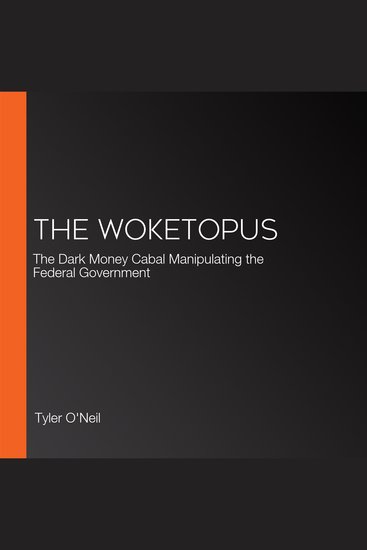
  • The Woketopus - The Dark Money Cabal Manipulating the Federal Government - cover

    The Woketopus - The Dark Money...

    Tyler O'Neil

    • 0
    • 0
    • 0
    Why did the Biden White House celebrate Transgender Day of Visibility on Easter Sunday? Why is the bureaucracy prioritizing electric vehicles and less reliable forms of energy when Americans struggle to pay the bills amid historic inflation and higher gas prices? 


    America's bureaucrats appear to live on a different planet from the working class in this country, and that's no accident. The Woketopus explains how America's elites are pulling the strings in Washington to prioritize their pet projects over the needs of the American people. O'Neil's prose reveals how the left's NGO apparatus pursues its woke agenda, maneuvering like an octopus by circumventing Congress and entrenching its interests in the federal government. 


    Discover how the donors who helped prop up the anti-Israel protests on college campuses are impacting policy in Washington; pull back the curtain on how federal agencies became engines of cultural change; and find out how the Left's dark money influences federal law enforcement to demonize conservatives in an attempt to silence anyone who wants to criticize this agenda.
    Mostra libro
  • Nuclear Revolution - Powering the Next Generation - cover

    Nuclear Revolution - Powering...

    Jack Spencer

    • 0
    • 0
    • 0
    “Jack Spencer tells it the way it is and needs to be to make nuclear energy an affordable choice for America. Read this thoughtful and provocative book written by one of America’s great conservative thinkers.” — William Martin, Former Deputy Energy Secretary; Chair, Nuclear Energy Advisory Committee
    		 
    Skyrocketing energy prices are placing downward pressure on economic growth throughout the world. There seems to be no relief in sight, with hundreds of millions without access to reliable energy and with global energy consumption expected to grow by 50 percent over the next 30 years. Some would impose energy rationing―or in other words, slow human progress. But with nearly 46 percent of the world’s population living on less than $5.50 per day, slowing human progress is unacceptable. The only solution is more energy and lots of it.
    		 
    Jack Spencer, in his upcoming book, Nuclear Revolution: Powering the Next Generation, argues that nuclear energy offers real answers to power our homes and industries, clean our air and water, and maybe even take us to Mars. However, we have been getting nuclear power wrong for decades.
    		 
    Skeptics say that nuclear energy is too expensive and threatens the world with the proliferation of nuclear weapons material and radioactive waste. Proponents say that nuclear power needs and deserves the support of the state and the taxpayer, cradle to grave. The time has come, Spencer argues, to think big nuclear energy and pull it out of the time capsule that pop culture, environmental activists, lobbyists, peaceniks, and policymakers are all too content to leave nuclear in.
    		 
    Spencer writes that while the government-industry partnership that defined the early years of America’s commercial nuclear rise was essential to the nation’s security, reluctance to modernize that relationship has prevented the American nuclear industry from reaching its full potential. In its place, Spencer offers an alternative that shatters how we think about nuclear energy policy and realigns the responsibilities of government and industry with the incentives that will drive America to success.
    		 
    Nuclear Revolution describes why government intervention in the nuclear industry is a problem, how to move from the status quo to something new, and why such reforms will kick off an era of nuclear entrepreneurship and innovation. Over 70 years ago, nuclear energy entered the scene with great promise. Now more than ever, the world needs that promise delivered, and America can lead the way.
    Mostra libro
  • More Stories from Langley - Another Glimpse inside the CIA - cover

    More Stories from Langley -...

    Edward Mickolus

    • 0
    • 0
    • 0
    Who knew the CIA needed librarians? More Stories from Langley reveals the lesser-known operations of one of the most mysterious government agencies in the United States. 


    Edward Mickolus is back with more stories to answer the question, "What does a career in the CIA look like?" Advice and anecdotes from both current and former CIA officers provide a look at the side of intelligence operations that is often left out of the movies. What was it like working for the CIA during 9/11? Do only spies get to travel? More Stories from Langley has physicists getting recruited to "the agency" during the Cold War, foreign-language majors getting lucky chances, and quests to "learn by living" turning into sweaty-palmed calls to the U.S. embassy after being detained by Russian intelligence officers. 


    The world only needs so many suave super spies. More Stories from Langley shows how important academics, retired soldiers, and bilingual nannies can be in preserving the security of our nation.
    Mostra libro
  • I Am the Law - How Judge Dredd Predicted Our Future - cover

    I Am the Law - How Judge Dredd...

    Michael Molcher

    • 0
    • 0
    • 0
    He is the law—and you better believe it! 


    Judge, jury, and executioner, Judge Dredd is the brutal comic book cop policing the chaotic future urban jungle of Mega-City One, created by John Wagner and Carlos Ezquerra and launching in the pages of 2000 AD in 1977. 


    But what began as a sci-fi action comic quickly evolved into a searing satire on hardline, militarized policing and "law and order" politics, its endless inventiveness and ironic humor acting as a prophetic warning about our world today—and with important lessons for our future. 


    Blending comic book history with contemporary radical theories on policing, I Am The Law takes key Dredd stories from the last forty-five years and demonstrates how they provide a unique wake up call about our gradual, and not so gradual, slide towards authoritarian policing. 


    From the politicization of policing to "zero tolerance," from violent suppression of protest to the rise of the surveillance state, I Am The Law examines how a comic book warned us about the chilling endgame of today's "law and order" politics.
    Mostra libro
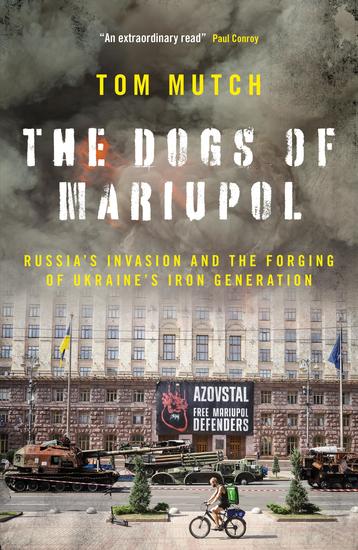
  • The Dogs of Mariupol - Russia's Invasion and the Forging of Ukraine's Iron Generation - cover

    The Dogs of Mariupol - Russia's...

    Tom Mutch

    • 0
    • 0
    • 0
    When Russia invaded Ukraine in 2022, Kateryna hung up her dresses, Oksana and Stanislav put down their lawyers' briefs and Oksen slammed shut his philosophy textbooks. Alongside thousands of their fellow citizens, they strapped on armour, picked up weapons and chose to risk their lives for the freedom and independence of their homeland. Many would never return.
    Journalist Tom Mutch woke up in Kyiv on 24 February to a world changed for ever. Making a fateful choice to stay and cover the invasion, he witnessed the forging of an 'iron generation' of young Ukrainians. With first-hand reporting from all the major battlegrounds and front lines, The Dogs of Mariupol recounts the war's notorious encounters, such as the Battle of Kyiv and the Siege of Mariupol, but also uncovers untold stories, like the 1st Tank Brigade's desperate defence of Chernihiv and the civilian guerrilla army fighting overwhelming odds in Sumy.
    This is not a triumphalist account of Ukraine's fight, however. It painstakingly documents the immense human catastrophe wrought on Ukrainian society and the divisions between those who fought and those who fled. It also delves deeper into events to answer important historical questions: could the Russian plan to capture Kyiv have succeeded? Did Ukraine make a fatal error by committing for so long to the defence of Bakhmut? And with more western support, could Ukraine have won this terrible war outright?
    Mostra libro
  • The India Way - Strategies for an Uncertain World - cover

    The India Way - Strategies for...

    S. Jaishankar

    • 0
    • 0
    • 0
    The global order is always evolving, and in that sense, change could well be seen as a constant factor. But that ongoing evolution has now been given a sharper edge by the impact of the coronavirus pandemic, developments in Afghanistan, the Ukraine conflict and greater friction among key powers. 'One Trend and Four Shocks' are thus creating a new landscape. 
    The 'Four Shocks' have, each in their own way, led to heightened global anxiety and insecurity. This era of upheaval entails greater expectations from India, putting it on the path to becoming a leading power. 
    In The India Way, S. Jaishankar, India's Minister of External Affairs, analyses these challenges and spells out possible policy responses. In doing so, he is very conscious of balancing India's national interest with international responsibilities. He places this thinking in the context of history and tradition, appropriate for a civilizational power that seeks to reclaim its place on the world stage.
    Mostra libro